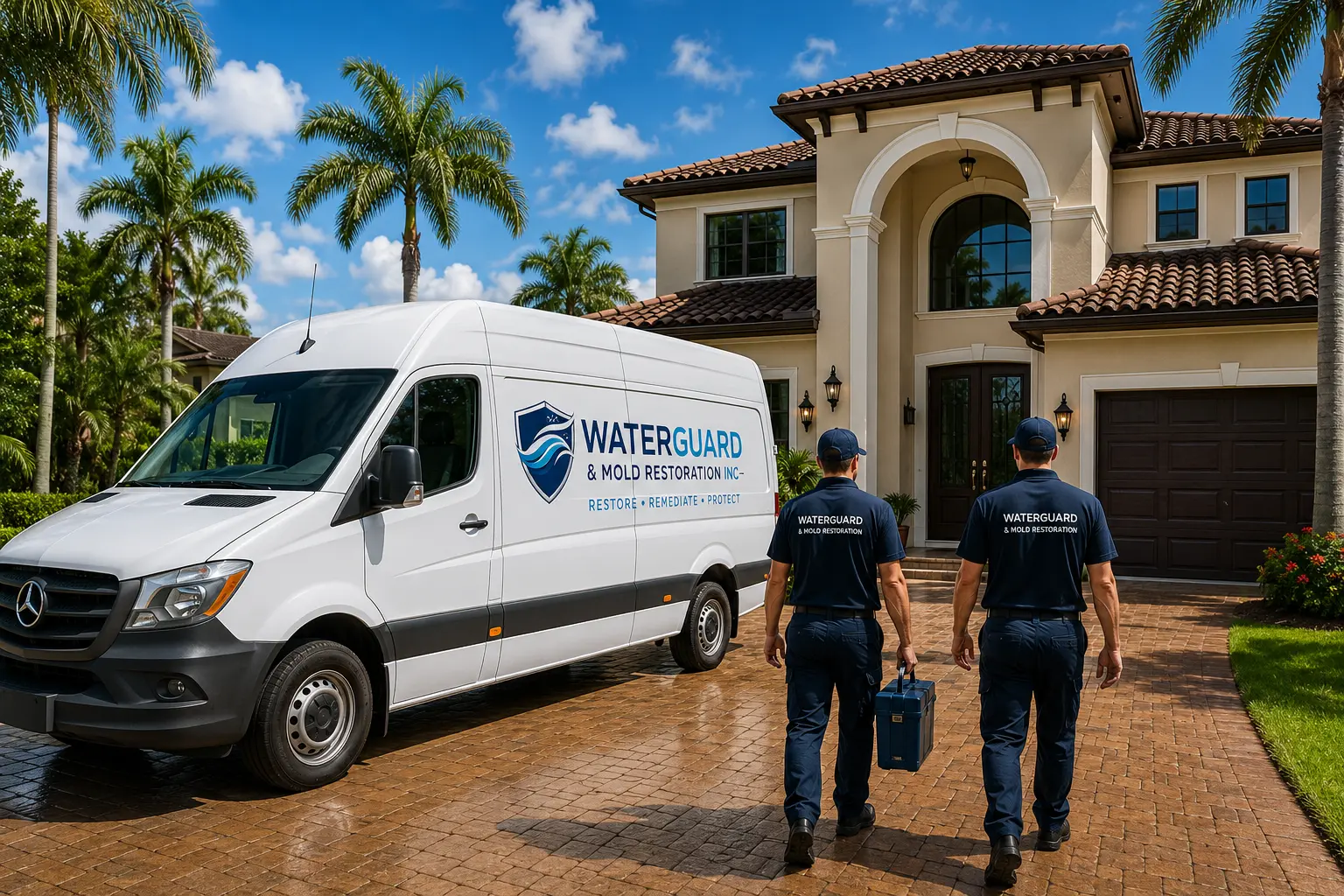
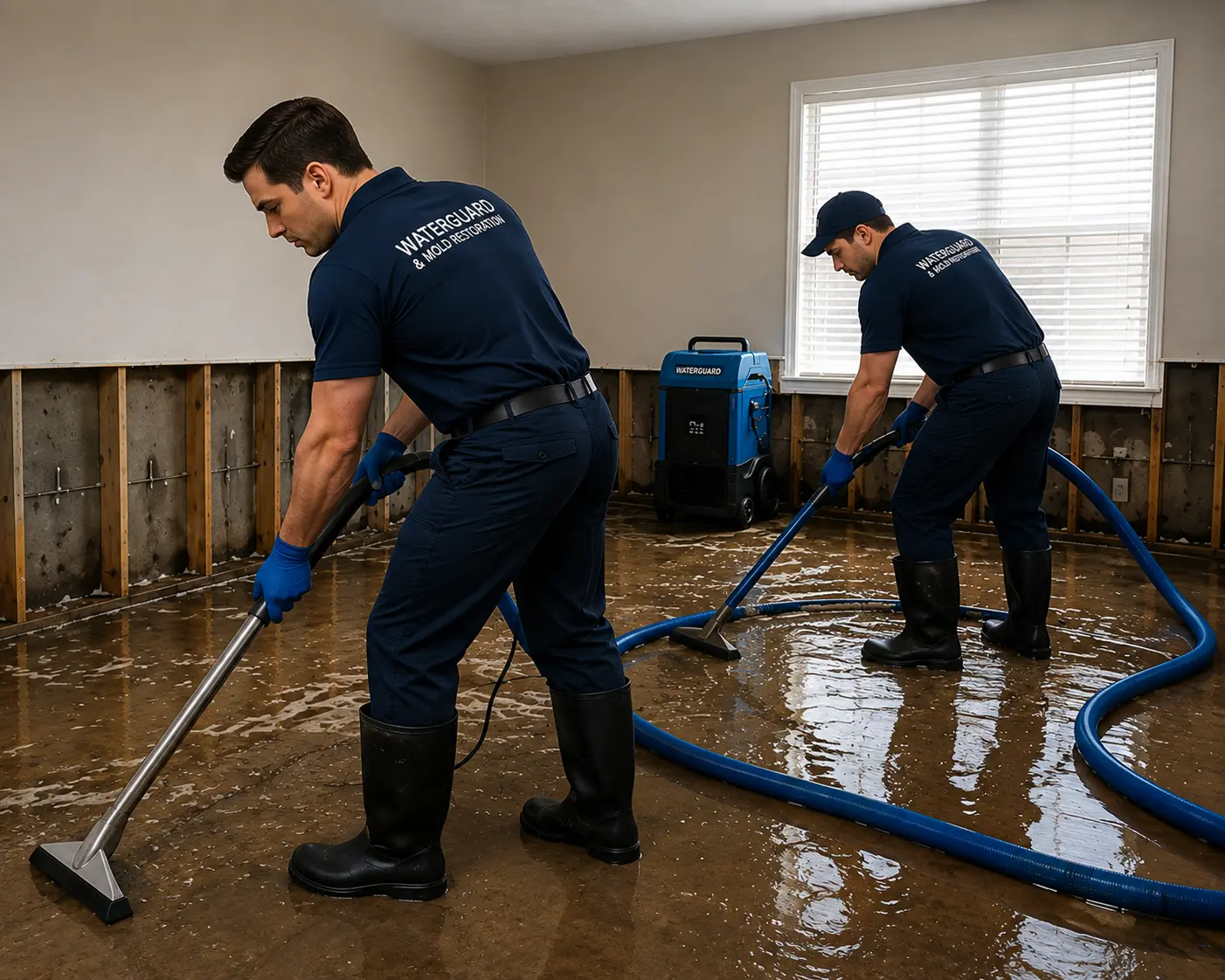
Professional Flood Cleanup & Water Extraction in Boca Raton
When significant water enters a home or business, removing the visible water is only the first step.
WaterGuard provides professional water extraction, moisture assessment, structural drying, cleanup and restoration to help return affected areas to a dry, clean and usable condition.
- 24/7 Emergency Response
- Professional Water Extraction
- Documented Moisture Verification
- Licensed & Insured
- Residential & Commercial
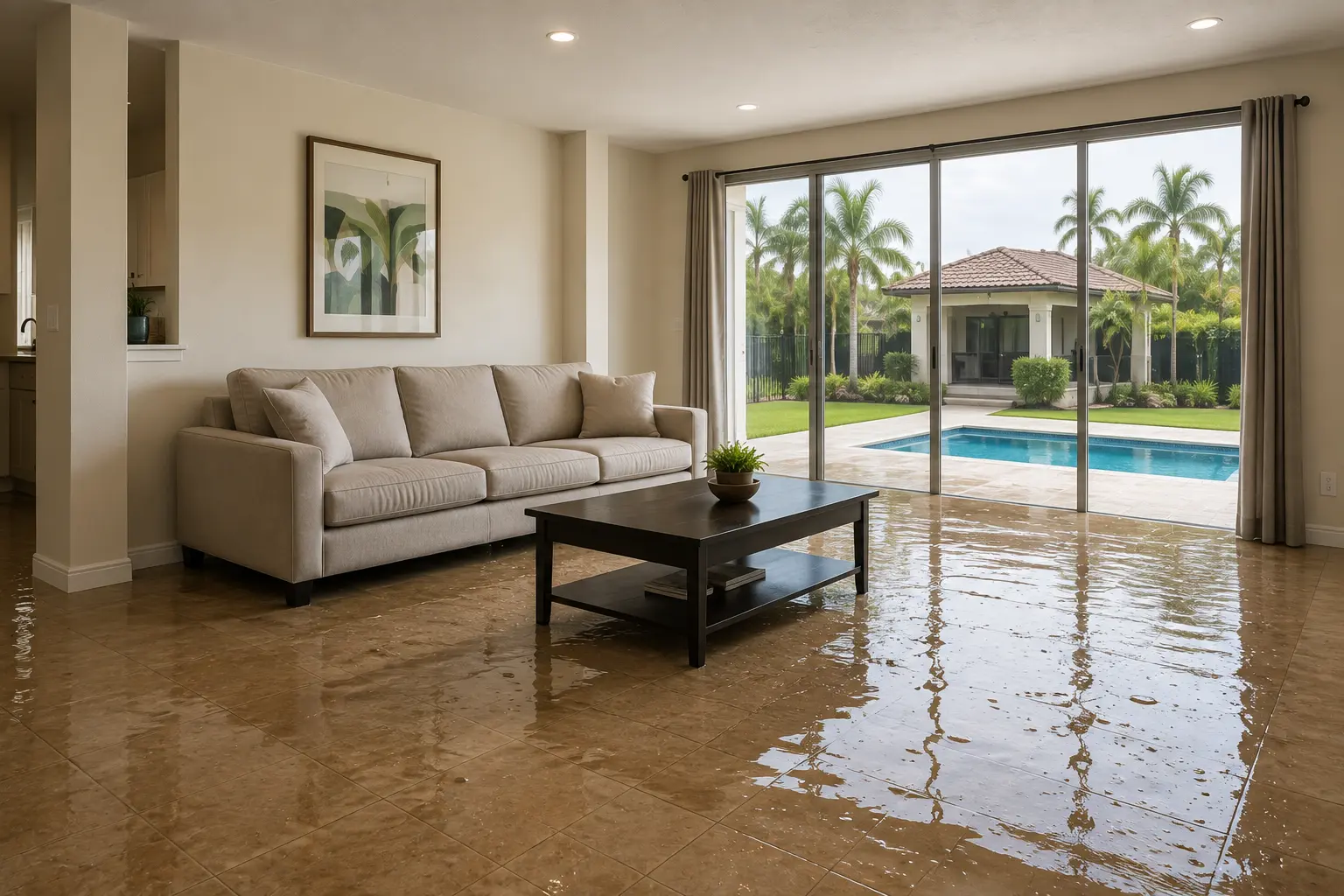
What to Do When You Discover Flooding
A short, practical checklist for the first few minutes — before any equipment arrives.
Stop the Source if Safe
If the flooding comes from a plumbing fixture or appliance and the water can be shut off safely, stopping the source can help limit additional damage.
Watch for Electrical Hazards
Do not enter standing water when electrical outlets, appliances or wiring may be affected.
Protect Important Belongings
If conditions are safe, move small valuables and easily movable belongings away from wet areas.
Document the Damage
Photos and videos taken before cleanup begins may be useful when documenting the loss.
Avoid Contaminated Water
Water from sewage backups, outdoor flooding or unknown sources should not be treated like ordinary clean water.
Request Professional Assessment
Standing water can move underneath flooring and into walls, cabinets and other building materials. Professional inspection helps determine the actual extent of the affected area.
Why Flood Water Can Affect More Than the Floor
Water follows gravity and whatever pathway is available to it. Once it is inside, it moves beneath flooring, under baseboards, into drywall and insulation, below cabinets and through the openings around plumbing lines into adjacent rooms. The visible water line does not necessarily define the whole affected area, which is why the wet footprint is measured before cleanup begins.
Flooring
Water can travel underneath tile assemblies, laminate, wood flooring and other finish materials depending on the construction.
Drywall
The lower portion of drywall can absorb moisture and may require drying or removal depending on condition and water source.
Insulation
Wet insulation can retain moisture inside wall cavities.
Baseboards & Trim
Trim can trap moisture against drywall and framing.
Cabinets
Water may travel underneath or behind built-in cabinetry.
Structural Materials
Framing and other structural materials may require controlled drying and moisture verification.
The Source of the Water Changes the Cleanup Approach
Not all flood water is the same. Where the water came from, how long it has been in contact with building materials, and which materials were affected all influence what can be dried, what should be removed and what cleaning is appropriate.
Clean Water Sources
Examples may include certain plumbing supply failures or other relatively clean sources. The priority is stopping the source, extracting water and beginning drying quickly.
Water With Increased Contamination Risk
Some appliance discharges, drainage events or water that has remained in contact with building materials may require additional cleaning considerations.
Sewage or Outdoor Flood Water
Water involving sewage, storm runoff or other contaminated sources may require more extensive material removal, cleaning and protective procedures.
Water is not classified by color or appearance alone. A technician evaluates the source, the affected materials and the conditions at the property before recommending a scope of work.
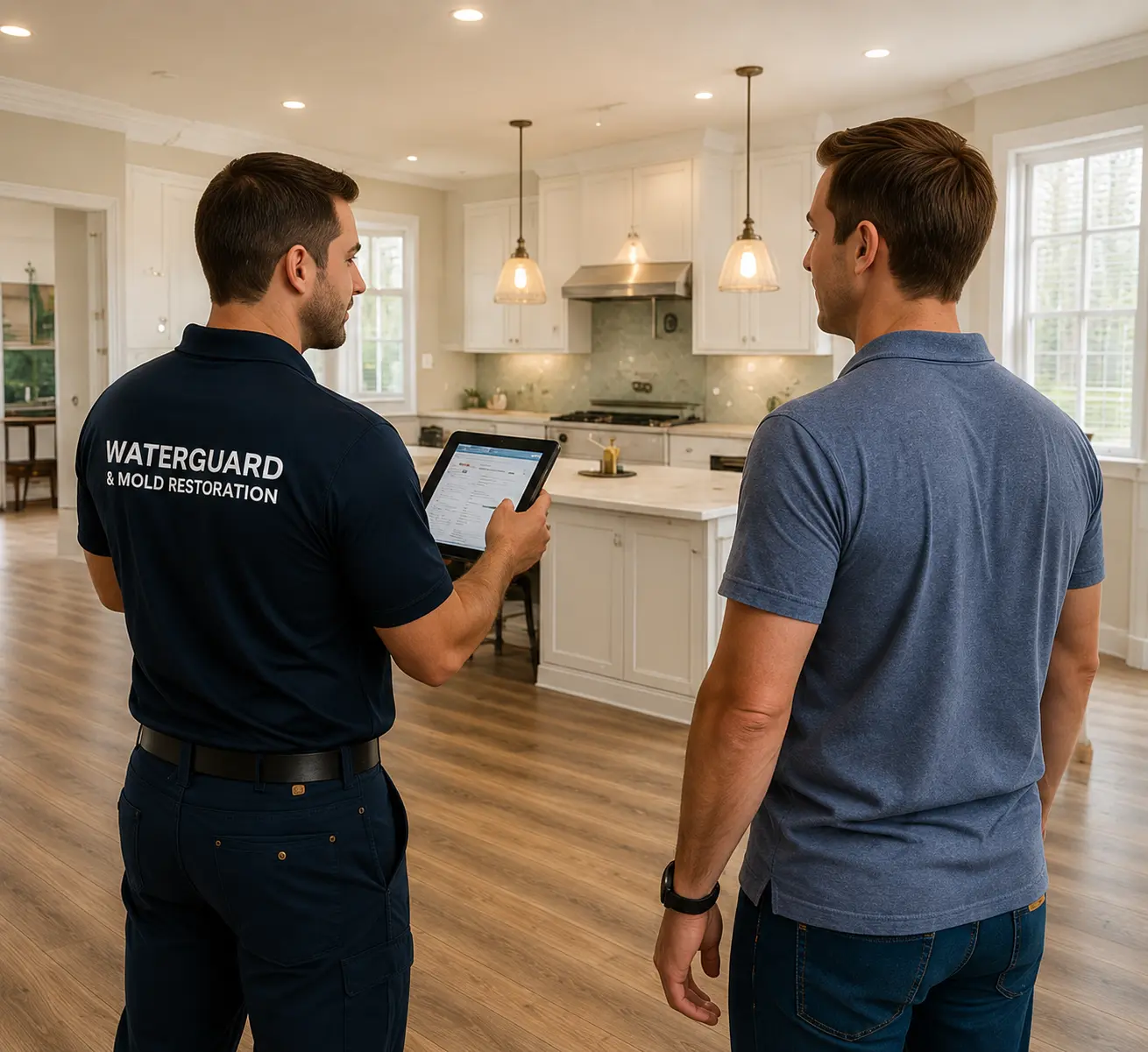
What Happens After You Call WaterGuard
Six clear steps between your phone call and the start of extraction — so you know what to expect before anyone arrives.
Step 1
You Contact WaterGuard
Where the water is coming from and whether the source has been stopped.
Step 2
Initial Assessment
Apparent urgency, inspection and extraction equipment prepared.
Step 3
Arrival
A technician arrives and evaluates the affected areas.
Step 4
Moisture Inspection
Visible water and hidden moisture documented where appropriate.
Step 5
Cleanup Plan
Recommended extraction, drying, removal and restoration steps explained.
Step 6
Work Begins
Extraction and cleanup proceed according to the agreed scope.
Our Step-by-Step Flood Cleanup Process
From standing water to a finished room: extraction, material decisions, controlled drying, verification, cleaning and repairs — handled in sequence by one local team.
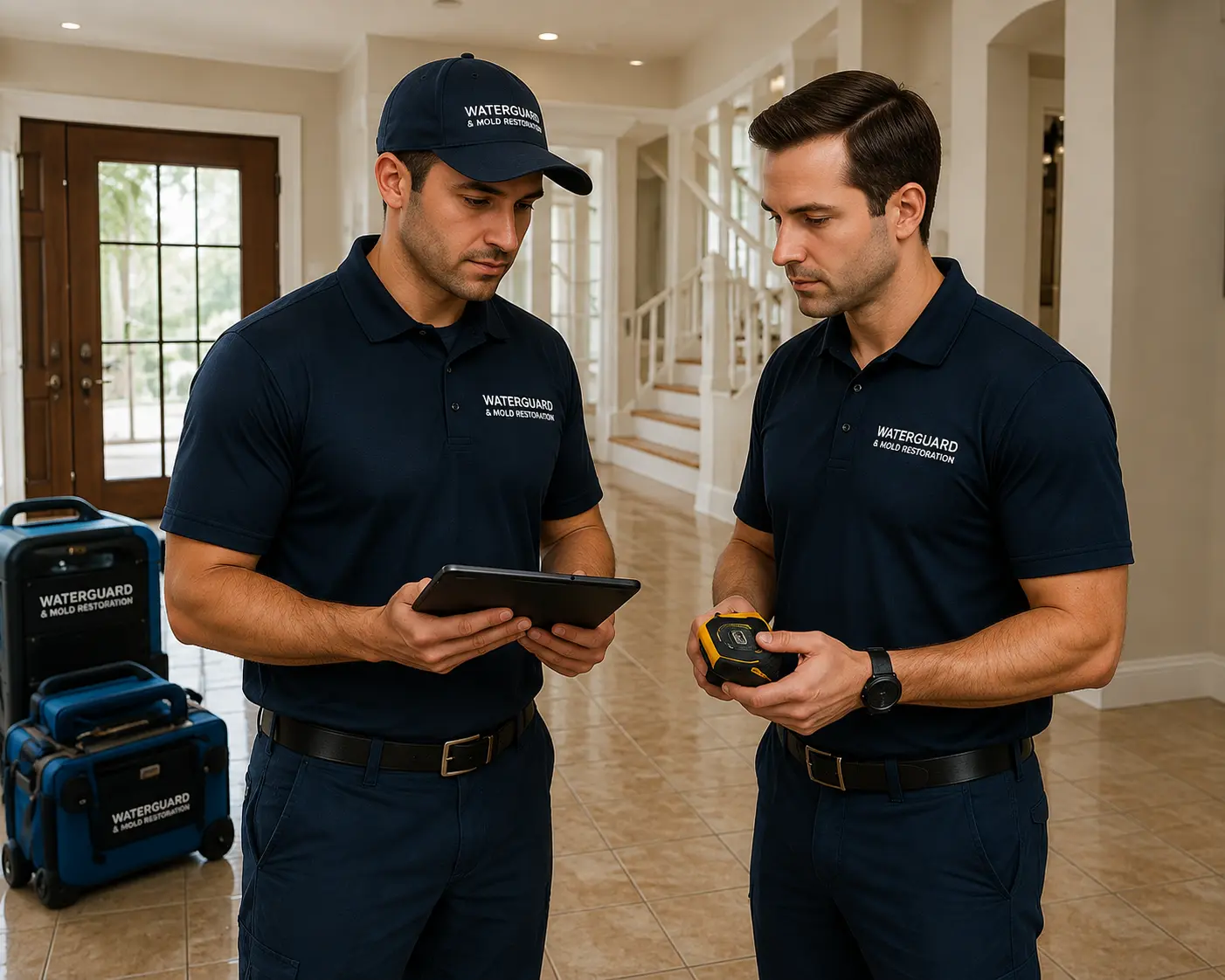
Emergency Arrival & Inspection
Flood cleanup begins with understanding how far the water has already traveled. Technicians look at the flood source, the standing water, the affected rooms, and the materials at the edges of the visibly wet area — flooring, walls, baseboards and cabinets — using moisture-detection equipment where appropriate. Establishing that footprint before extraction begins is what keeps the rest of the project measurable rather than improvised.
- Flood source, standing water and affected rooms reviewed
- Flooring, drywall, baseboards and cabinets checked
- Hidden moisture identified where appropriate
- Findings explained before cleanup begins
Standing Water Extraction
Large volumes of standing water are removed with professional extraction equipment. Every gallon extracted is a gallon that never has to evaporate through a dehumidifier, so thorough extraction shortens the drying phase that follows. Extraction can be repeated as water continues to release from flooring assemblies and wall cavities, and technicians keep evaluating adjacent materials while they work.
- Professional extraction equipment for bulk standing water
- Extraction reduces the moisture that must later evaporate
- Repeat passes where materials continue releasing water
- Ongoing evaluation of flooring and adjacent materials
Damaged Material Removal
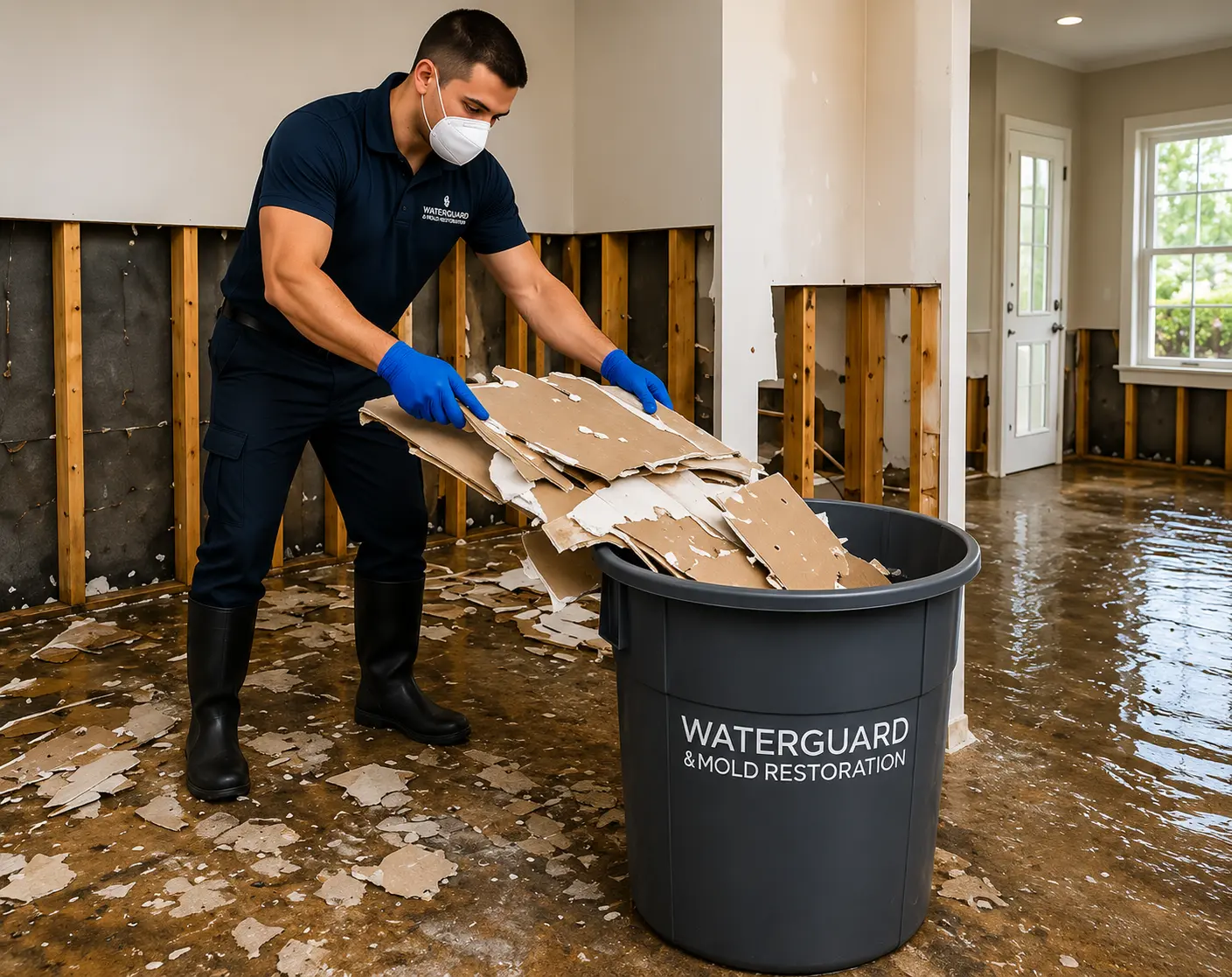
Flood cleanup does not automatically mean tearing everything out. Whether a material is removed or dried in place depends on the water source, possible contamination, the material type, how saturated it is, whether it is physically damaged, and whether it can realistically be dried. Materials that can be restored are dried; materials that cannot are removed and documented so the repair scope stays accurate.
- Removal decisions based on condition, not routine demolition
- Water source and contamination risk considered
- May involve drywall, insulation, baseboards or flooring
- Removed materials documented for the project record
Structural Drying
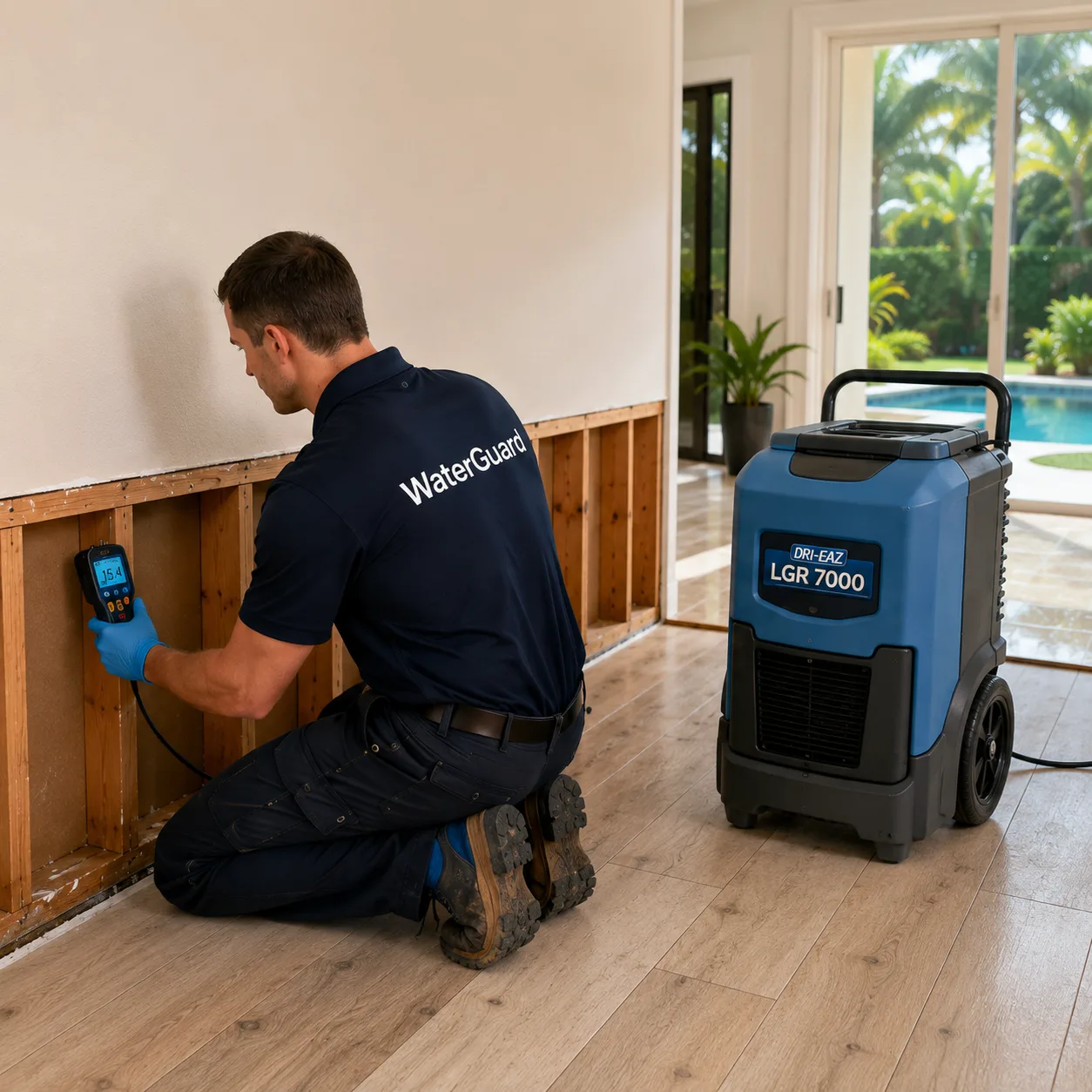
Once bulk water is gone, moisture usually remains inside building materials where you cannot see or feel it. Controlled structural drying combines LGR dehumidification with directed airflow so that moisture leaves the materials and the air at a rate the equipment can actually capture. Temperature, humidity and material readings are monitored while equipment runs, and the plan is adjusted as the property responds.
- LGR dehumidification sized to the affected area
- Controlled airflow directed at wet materials
- Humidity and material moisture monitored during drying
- Equipment adjusted as conditions change
Moisture Verification
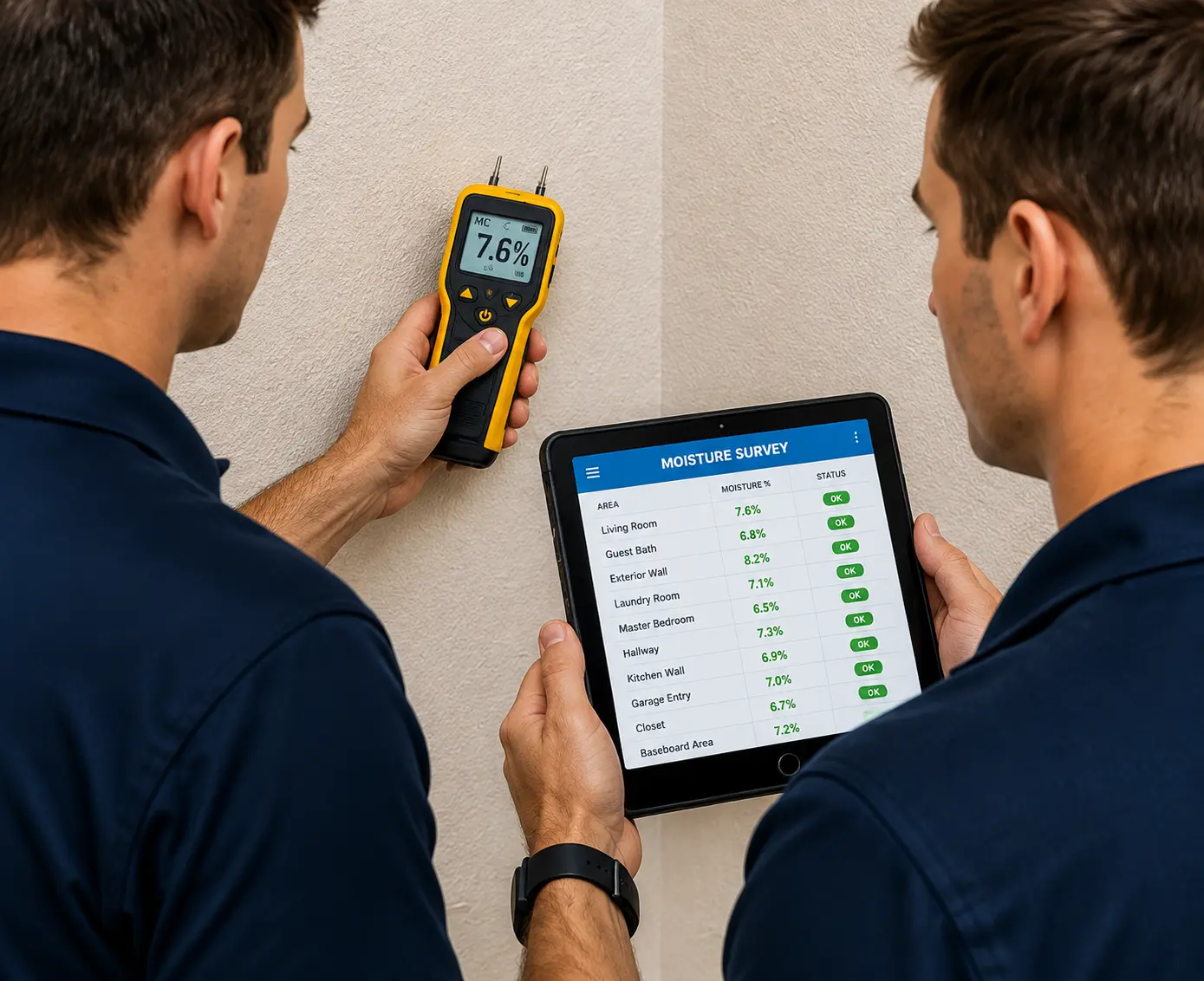
A surface can feel dry long before the moisture inside the material has returned to acceptable conditions. Verification is what separates a finished drying project from an assumption. Meter readings are taken from the same locations over time, mapped so affected areas can be compared with unaffected ones, and recorded so progress can be shown rather than described.
- Moisture meter readings taken from building materials
- Moisture mapping compares affected and unaffected areas
- Thermal imaging can guide further investigation
- Drying records documented throughout the project when appropriate
Cleaning & Sanitization
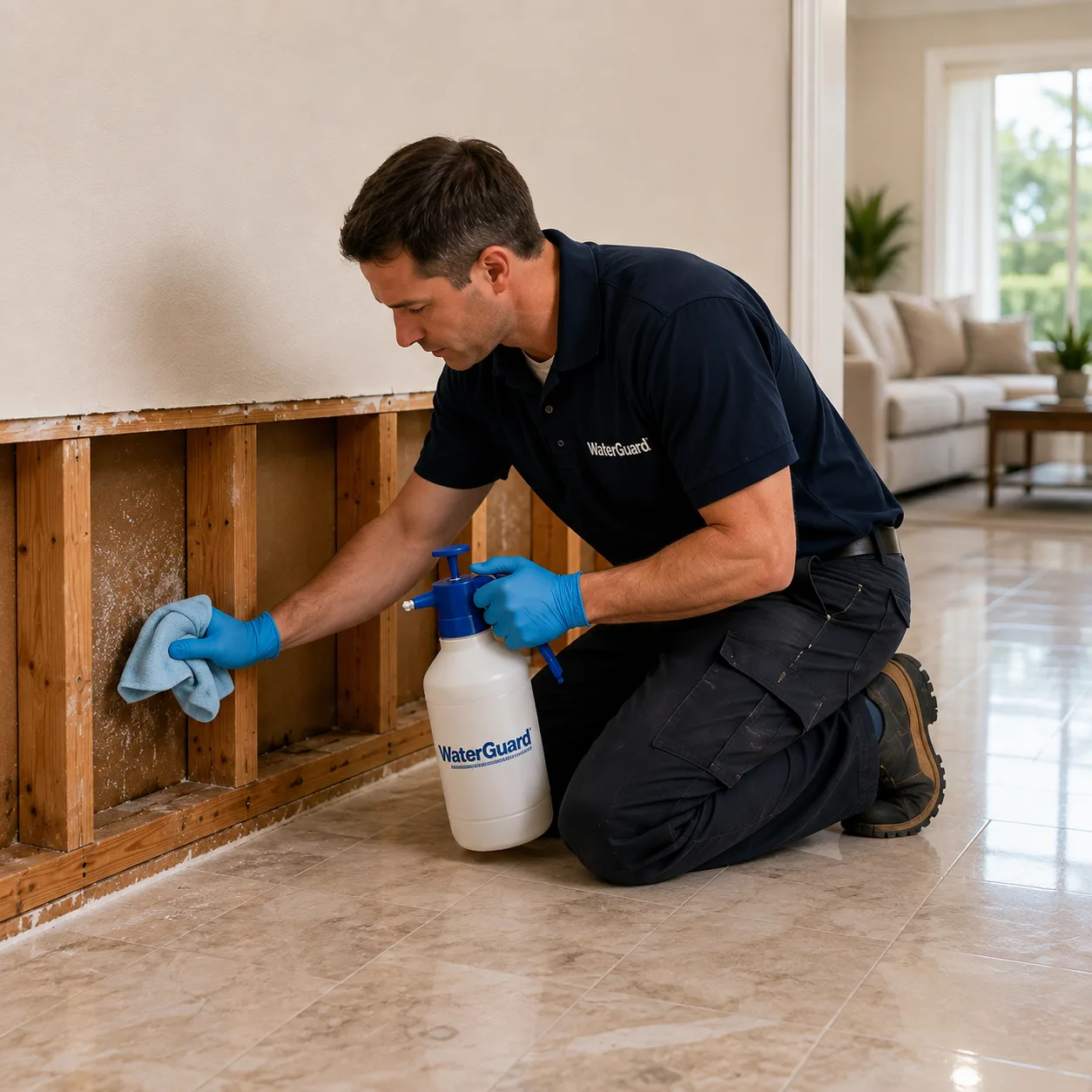
Cleaning requirements depend on where the water came from and which materials it touched. After extraction and the removal of unsalvageable materials, affected surfaces may need physical cleaning, debris removal, HEPA vacuuming, surface treatment or odor control before repairs begin. Treatment products support cleaning — they do not replace the physical removal of soil, debris and unsalvageable materials.
- Physical cleaning and debris removal
- HEPA vacuuming when conditions call for it
- Surface treatment and odor control when appropriate
- Affected area prepared for repairs
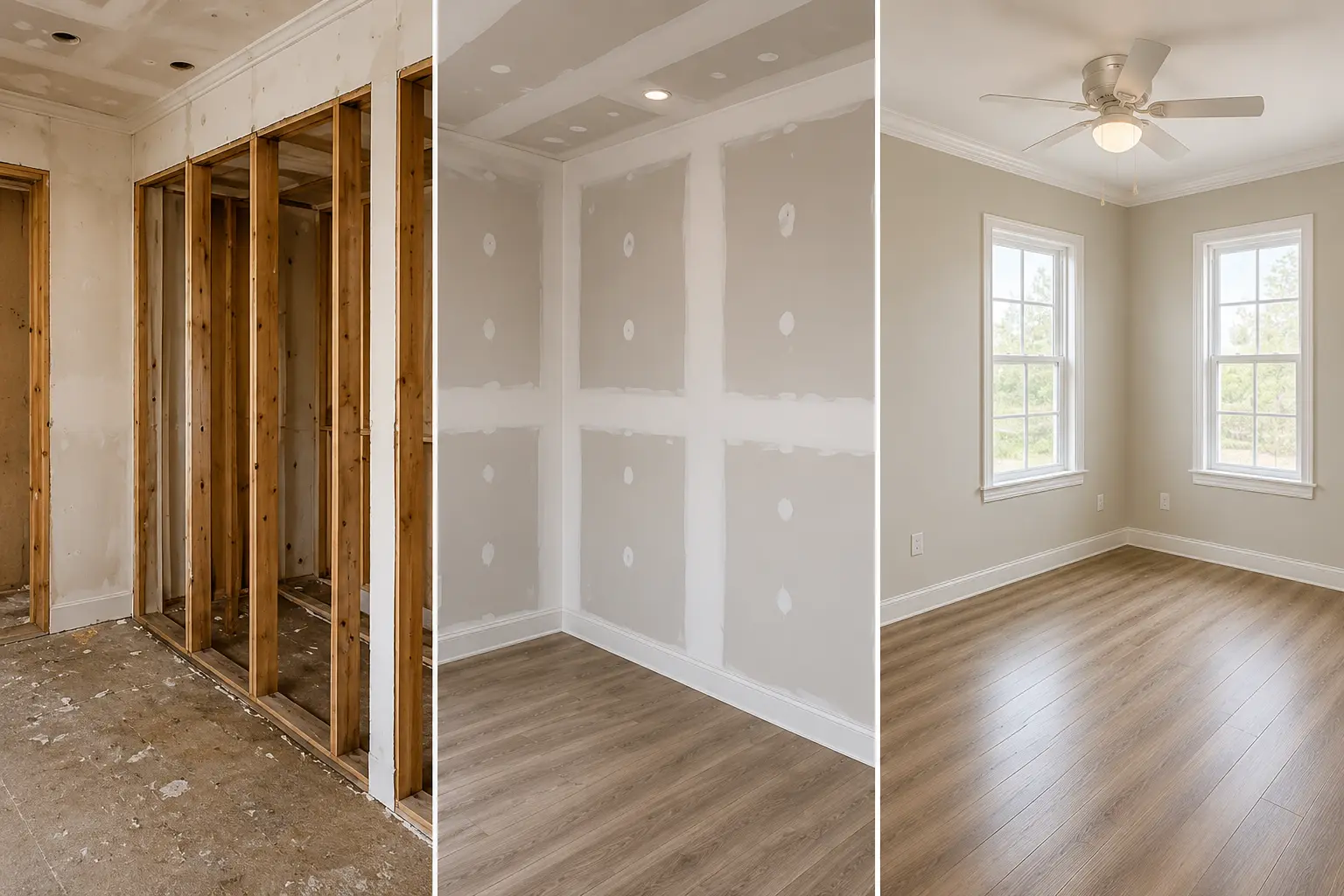
Repairs & Reconstruction
WaterGuard's process does not have to end when the structure is dry. Where reconstruction is included in the agreed scope, the same team that removed the materials puts them back — drywall, insulation, baseboards, flooring, texture, paint and finish work — so you are not left coordinating a second contractor after mitigation. The goal is a finished, usable room rather than a dried-out shell.
- Drywall and insulation replacement
- Baseboards, trim and flooring
- Texture matching, painting and finish work
- One team from extraction through completion
From Standing Water to a Usable Space
Flood cleanup is only part of the restoration process. After extraction and drying, affected materials can be repaired so the space can return to normal use.
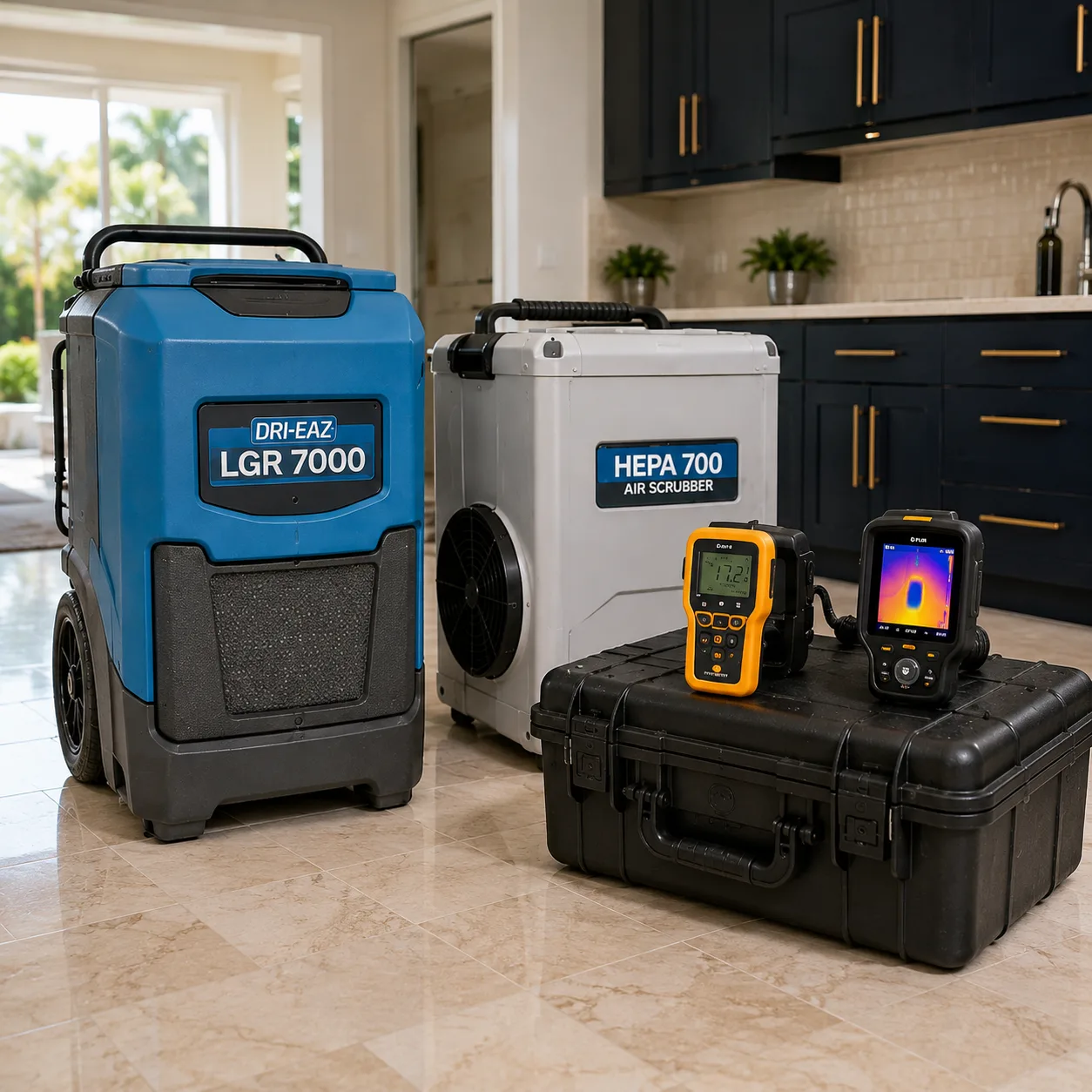
Professional Equipment for Water Extraction & Drying
Flood cleanup depends on removing water faster than the building can absorb it, then drying what remains under controlled conditions. Each piece of equipment has a specific job in that sequence.
Commercial Water Extraction Equipment
Used to remove bulk standing water efficiently from affected areas so drying can begin sooner.
LGR Dehumidifier
Removes moisture from the air to support controlled structural drying of the surrounding materials.
Air Movement Equipment
Supports evaporation from wet building materials where appropriate, working alongside dehumidification.
Moisture Meter
Provides measurable information about moisture conditions inside building materials rather than surface impressions.
Thermal Imaging Camera
Helps technicians identify temperature patterns that may indicate areas needing further moisture investigation.
HEPA Filtration & Cleaning Equipment
May be used when conditions call for airborne particle control or detailed cleaning of affected areas.
Equipment quantity and placement are based on the affected area, the materials involved and the moisture readings taken at the property.
Common Causes of Interior Flooding
Most of the flood cleanup calls we take across Palm Beach and Broward County trace back to one of these six situations.
Burst or Broken Pipe
A failed supply line can release a large amount of water in a short period, often spreading across several rooms before it is noticed. Adjacent flooring, baseboards and wall cavities are commonly affected, which is why the wet area is measured rather than assumed.
Overflowing Fixture
Bathtubs, sinks and toilets can affect flooring and nearby rooms when overflow continues unnoticed. Water often reaches hallways and shared walls, so an assessment usually extends beyond the bathroom itself.
Appliance Failure
Washing machines, dishwashers and refrigerator lines can release water into kitchens, laundry rooms and adjacent areas. Cabinet bases and subfloors are frequently involved, and those are difficult to evaluate without moisture equipment.
Water Heater Failure
A failed tank or connection can affect utility rooms, garages and nearby interior spaces. Because these rooms are visited less often, water may sit long enough to move into adjoining walls before anyone notices.
Heavy Rain or Storm Intrusion
Wind-driven rain and exterior water intrusion can affect walls, flooring and multiple rooms at once. Entry points are not always obvious, so inspection focuses on both the interior damage and the likely path of the water.
Drainage or Backup Event
Water entering through drains or other drainage systems may require additional contamination precautions. The cleanup approach depends on the source, so professional assessment is important before materials are handled.
Residential & Commercial Flood Cleanup
Every property is evaluated individually — the priorities on an occupied condominium floor are not the priorities of a retail space that needs to reopen.
Residential Flood Cleanup
We work in luxury homes, condominiums, townhomes, apartments, rental properties and vacation homes throughout Boca Raton, Delray Beach, Highland Beach and the surrounding communities. In a residence, protecting existing finishes and limiting unnecessary demolition matter as much as the drying itself — a floor or cabinet run that can be dried is usually preferable to one that has to be matched and replaced.
Vacation and seasonal homes bring an added consideration: flooding can go unnoticed for days, so the affected footprint is often larger than it first appears and warrants a careful moisture survey.
Commercial Flood Cleanup
We also serve offices, retail spaces, restaurants, medical offices, apartment communities, HOA common areas, hotels, schools and churches across Fort Lauderdale, West Palm Beach, Pompano Beach and Miami-Dade County. Commercial projects usually require additional coordination around access hours, affected tenant areas and continued operation of the parts of the building that are unaffected.
Scope, sequencing and equipment placement are planned with property managers and association boards so the work fits the way the building is actually used.
Documentation for Flood & Water Damage Claims
WaterGuard can document conditions at the property and the work performed in ways that may assist you during an insurance claim. The intent is simple: your carrier should be able to see what was found, what was done and why.
- Initial photographs
- Source & affected-area documentation
- Moisture readings
- Moisture maps
- Extraction documentation
- Equipment logs
- Drying records
- Material removal documentation
- Progress photographs
- Final project documentation
Insurance coverage depends on the individual policy, cause of loss and claim determination. WaterGuard does not determine coverage or guarantee claim approval.
A Structured Approach From Extraction to Restoration
Eight things that shape how a WaterGuard flood cleanup project runs — and what each one means for you.
Emergency Assessment
We work to understand the source and extent of the flooding before any equipment goes down, so the plan matches the property.
Professional Water Extraction
Bulk water is removed efficiently with professional extraction equipment, which shortens the drying phase that follows.
Moisture Detection
We check beyond the visibly wet surfaces so hidden moisture is addressed rather than sealed behind a finished wall.
Controlled Structural Drying
Drying equipment is placed according to actual moisture conditions, not a fixed template applied to every job.
Detailed Documentation
Readings, photographs and scope records are maintained through the project when appropriate, which supports your claim file.
Careful Material Removal
Materials are removed based on condition and drying potential rather than unnecessary demolition.
Reconstruction Capability
When repairs are part of the scope, the transition from cleanup to rebuild happens without handing you to another company.
Clear Communication
You are told what is happening, what has been found and what comes next, at each stage of the project.
From Flooded Property to Restored Home
The objective of flood cleanup is not simply to remove water. A complete project moves through extraction, drying, verification, cleaning, repairs and a final review — so the space you walk back into is finished rather than merely dry.
Flood Cleanup FAQ
Detailed answers to the questions South Florida property owners ask most about standing water, drying, materials, insurance and timelines.
What should I do first if my house is flooded?
How quickly should standing water be removed?
What is the difference between flood cleanup and water damage restoration?
How do you remove standing water from a home?
How long does flood cleanup usually take?
How long does structural drying take?
Does all wet drywall have to be removed?
Can wet insulation be dried?
Can tile flooring survive a flood?
Can hardwood flooring be saved after flooding?
What happens if water gets underneath flooring?
How do you find water behind walls?
What equipment is used for flood cleanup?
What is an LGR dehumidifier?
How do you know when a flooded area is completely dry?
Can mold develop after a flood?
Is flood water always contaminated?
Can I stay in my home during flood cleanup?
Should I clean up flood water myself?
Does homeowners insurance cover flood cleanup?
Do you provide documentation for insurance claims?
Do you remove damaged drywall and flooring?
Can WaterGuard repair the property after drying?
Do you provide commercial flood cleanup?
What areas of South Florida do you serve?
Important Information
Every property loss is different. The information on this page is for general guidance and does not constitute insurance, legal, or restoration advice. Response times, work durations, and outcomes depend on the specific conditions of your property, materials, weather, and the scope of damage. Insurance coverage, reimbursement, and your right to choose a contractor are governed by your individual policy terms. WaterGuard recommends reviewing your policy and contacting your carrier directly for coverage details. A written scope of work will be provided before any work begins.
Flood Cleanup Across South Florida
WaterGuard & Mold Restoration Inc. provides emergency flood cleanup, water extraction, structural drying and reconstruction throughout Palm Beach, Broward and Miami-Dade County. Local dispatch is what makes fast extraction realistic.
Interior flooding in South Florida rarely stays in one room. Slab construction, tile over mortar beds and shared condominium walls all give water pathways that are hard to see from the doorway, which is why the affected footprint is measured before extraction plans are set.
Local dispatch and coordinated reconstruction services mean extraction can begin sooner — and the project can continue from drying through repairs without unnecessary handoffs.
- Licensed & Insured
- Residential & Commercial
- 24/7 Emergency Response
- Insurance Claim Assistance
- Industry-Recognized Drying Standards
Need Professional Flood Cleanup?
If standing water has entered your home or business, WaterGuard provides professional water extraction, moisture assessment, structural drying, cleanup and restoration services throughout South Florida.
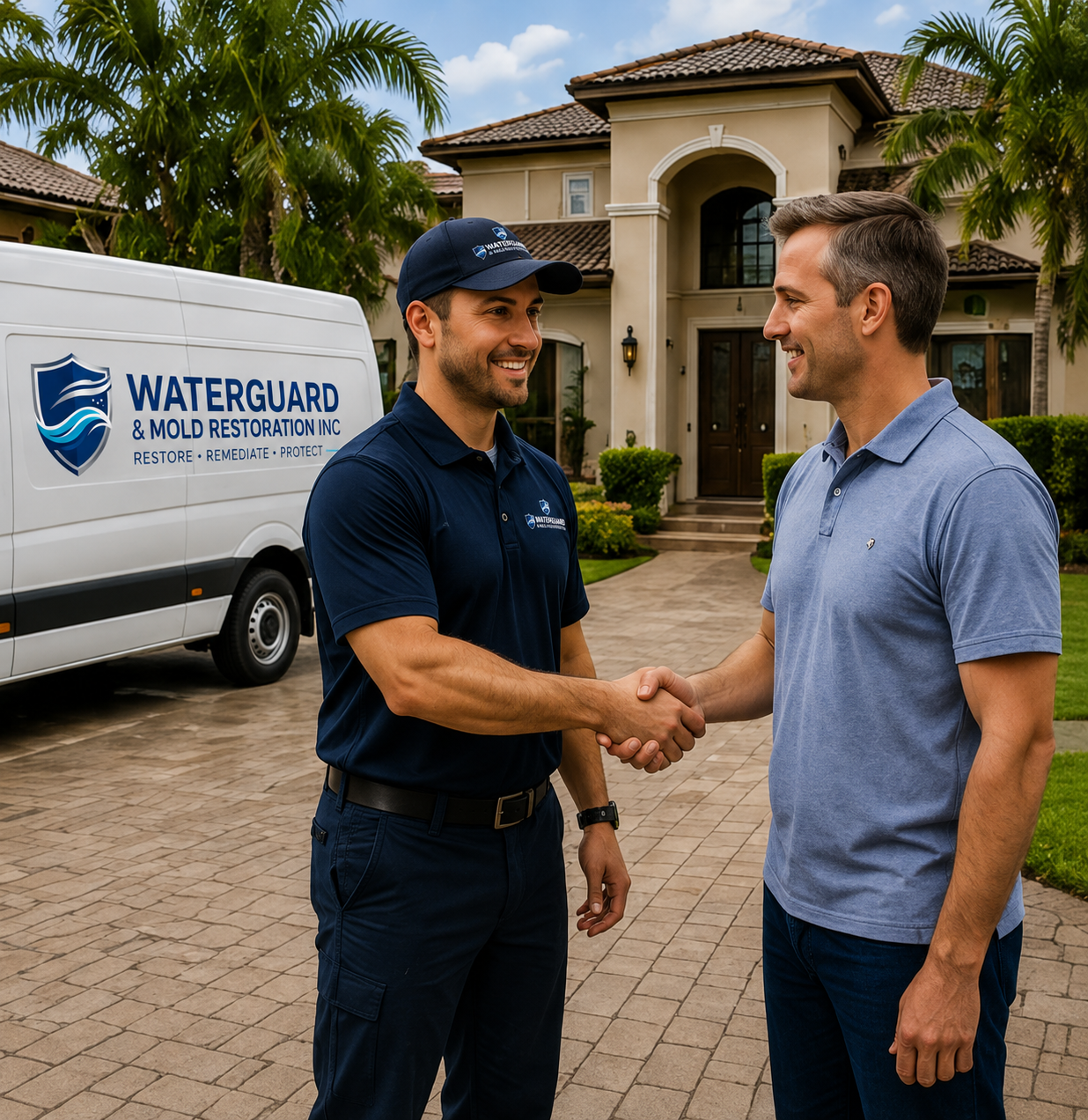
A Local Team, Dispatched to Your Door
From the first extraction pass to the final walkthrough, one WaterGuard crew handles your flood cleanup across South Florida.