Structural Drying & Moisture Detection

Structural Drying & Moisture Detection in South Florida

Moisture can remain trapped in drywall, flooring, cabinetry, and structural materials after visible water is gone. WaterGuard identifies affected areas, takes moisture measurements, establishes controlled drying conditions, and documents monitoring throughout the process.

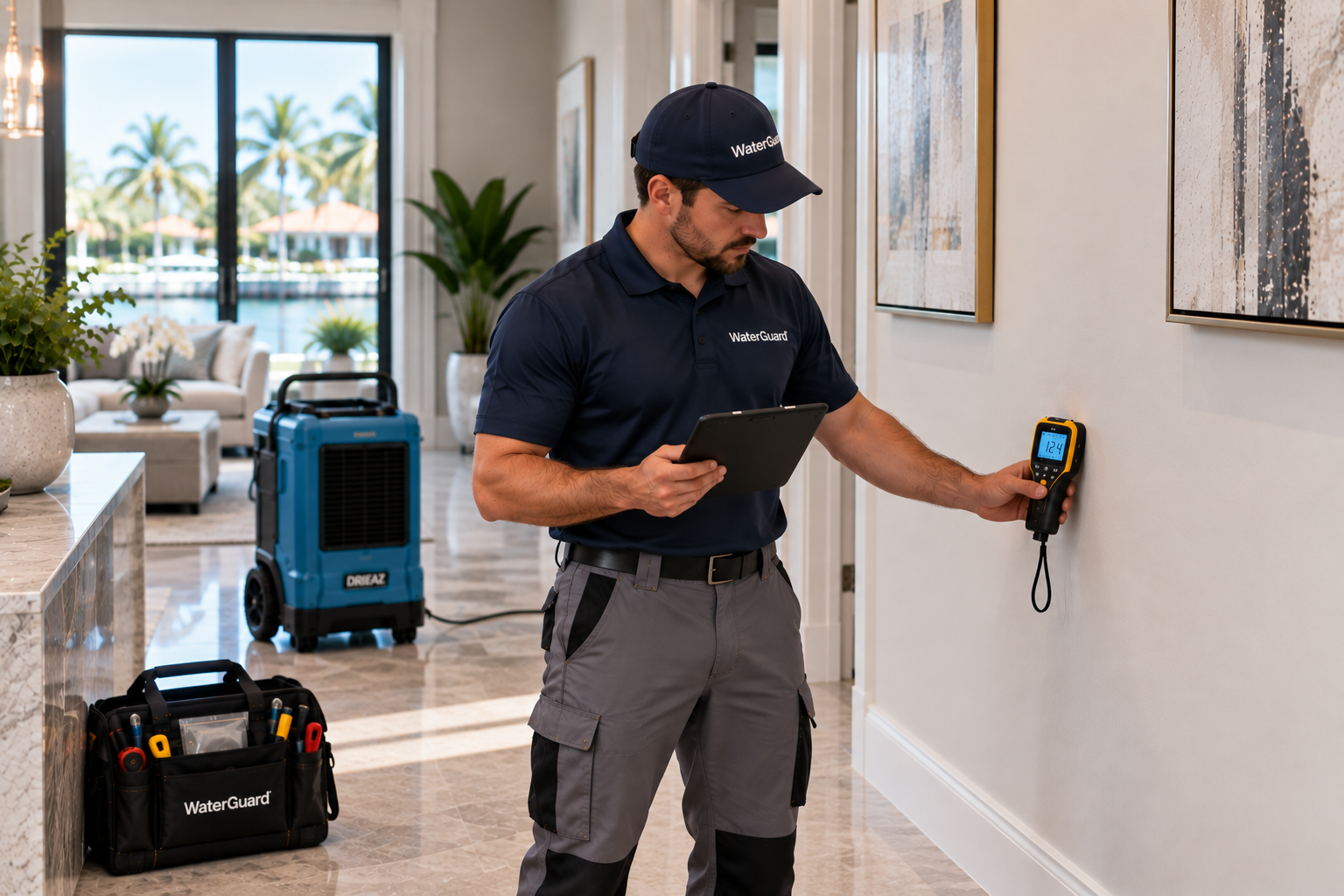
WaterGuard technician standing while using a moisture meter and recording findings on a tablet
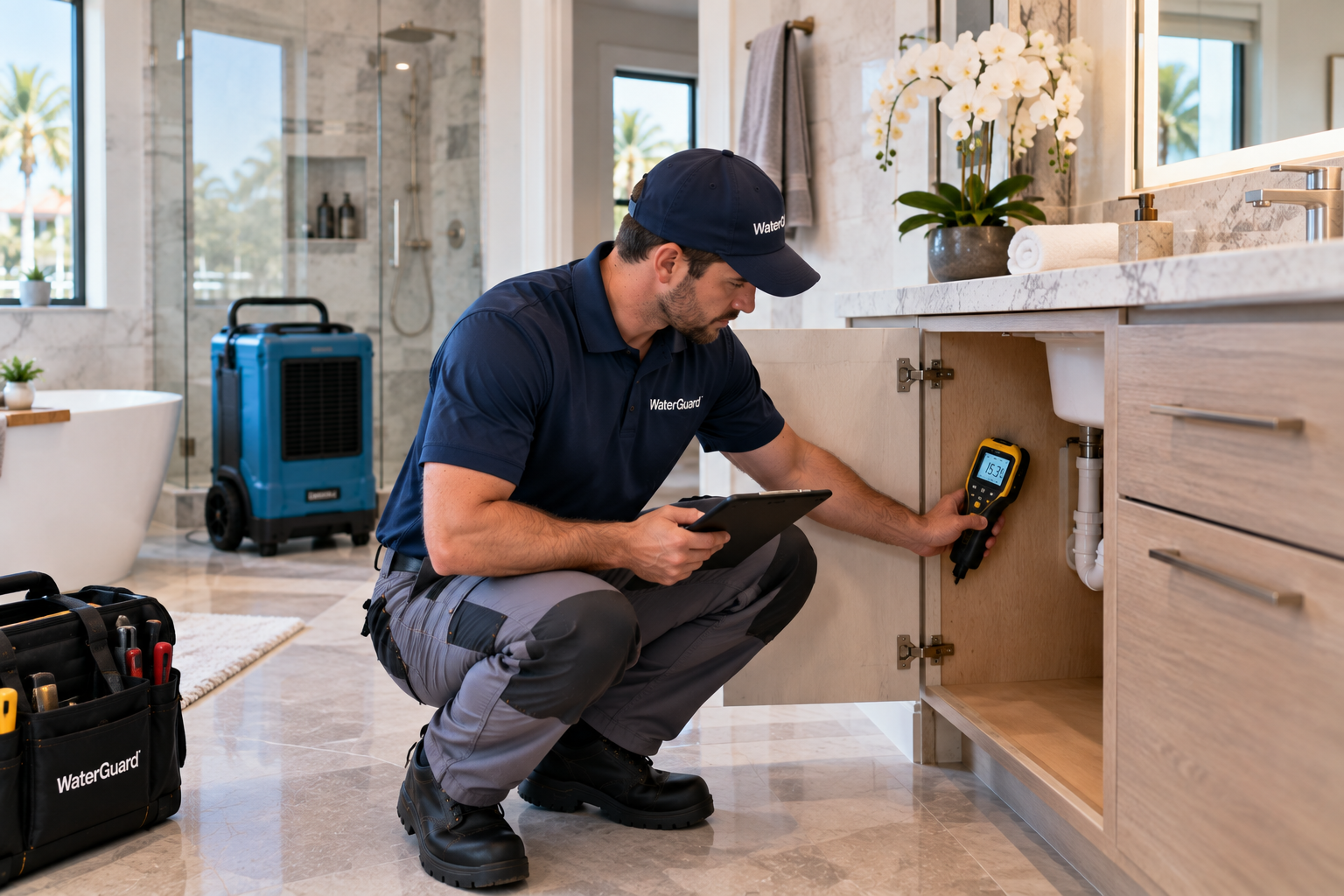
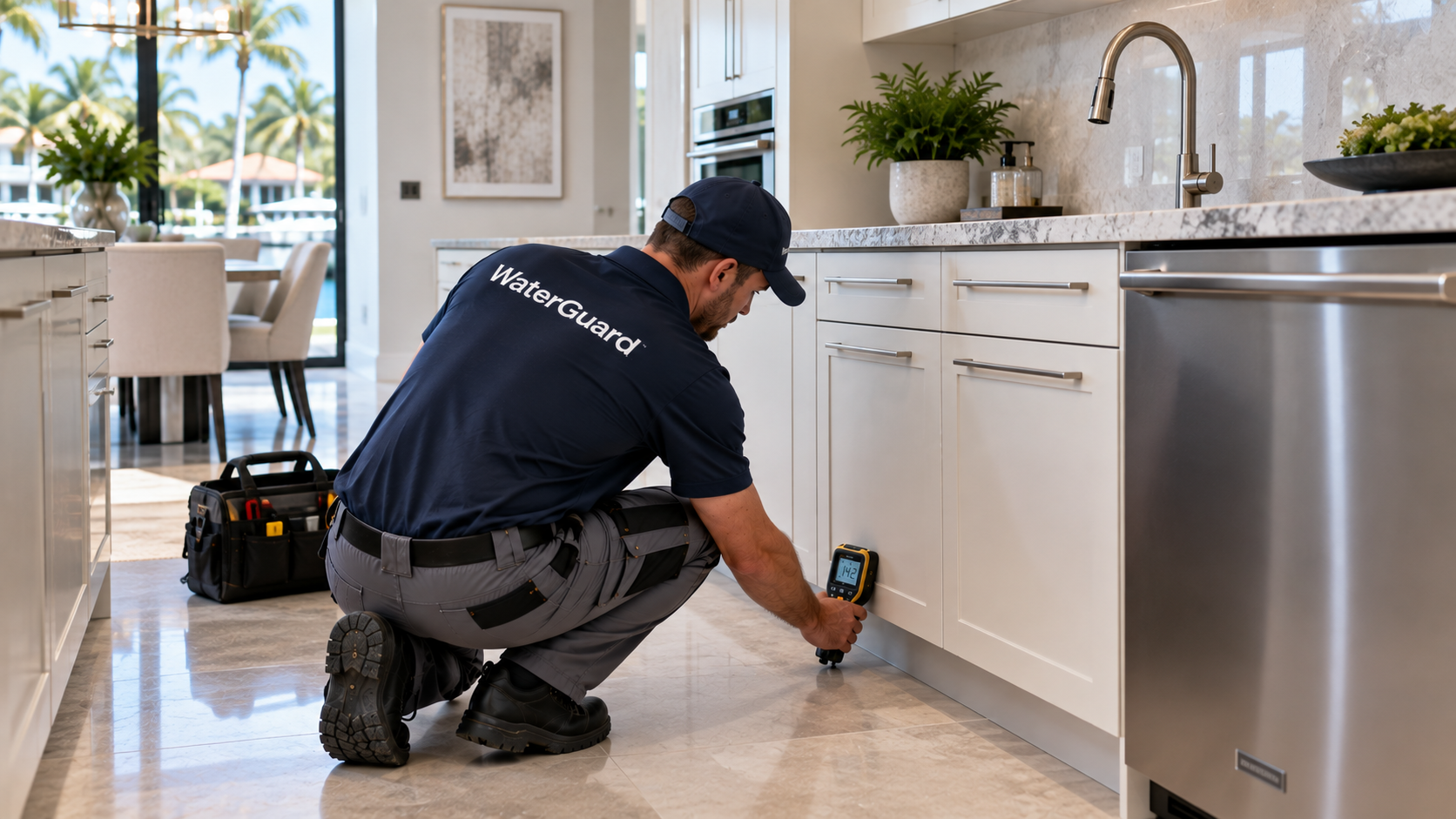
Technician checking kitchen cabinetry for concealed moisture
Hidden Moisture

A Surface Can Look Dry While Moisture Remains Behind It

After surface water is removed, moisture may remain in porous or concealed areas such as drywall, baseboards, flooring, subfloors, cabinetry, wall cavities, and areas around plumbing fixtures.

Professional moisture measurements help determine where closer investigation or controlled drying may be appropriate. The goal is to make decisions from measured conditions rather than appearance alone.

Our Process

Detect. Measure. Dry. Monitor. Verify.

Professional structural drying starts with understanding where moisture is present and continues by measuring how material and environmental conditions change.

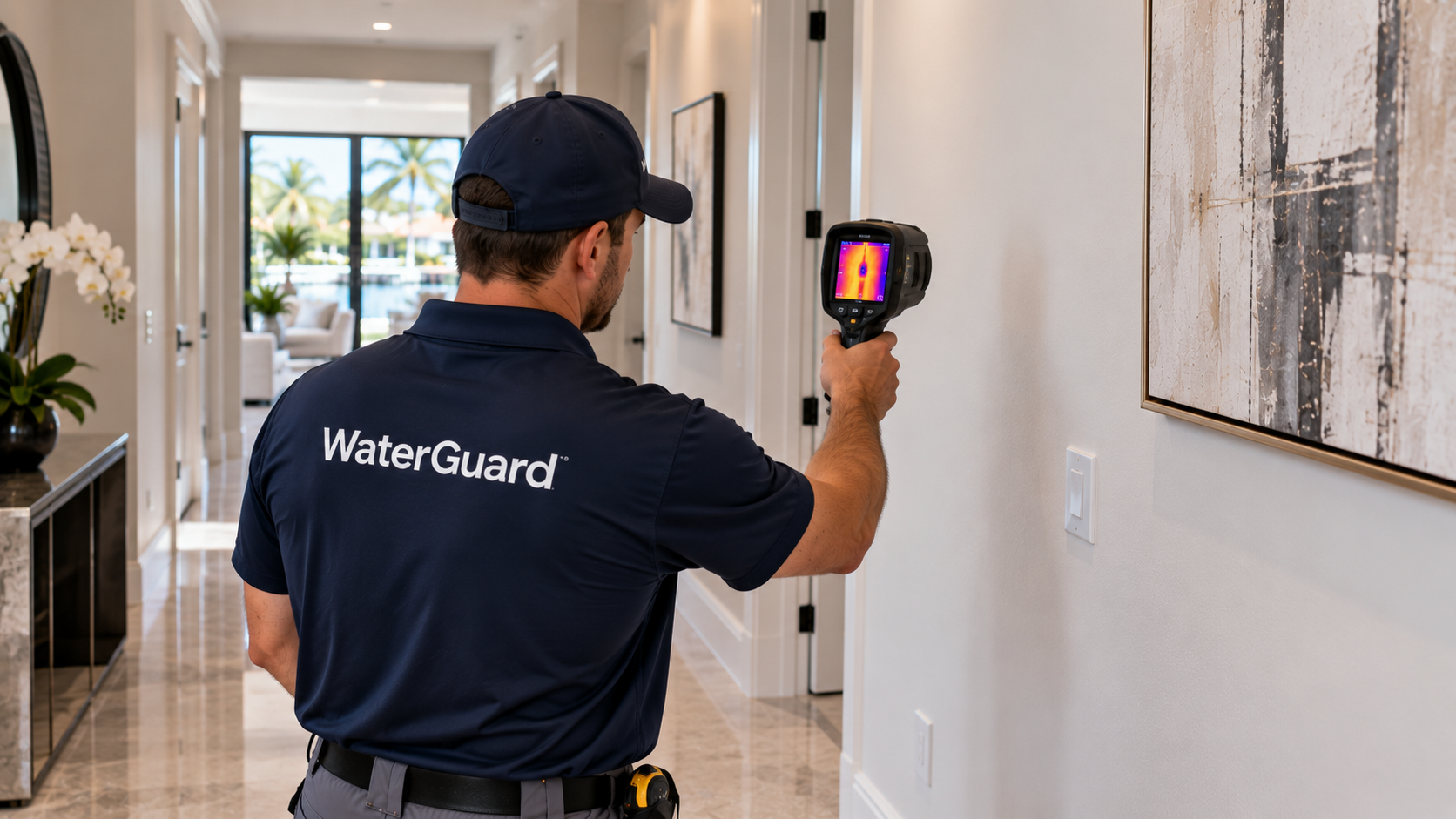
Technician using a thermal imaging camera during a moisture investigation in a South Florida property
Step 01

Detect

We begin with a visual inspection and diagnostic tools to identify temperature patterns and areas that may require closer moisture investigation.

  • Review the water source and affected path
  • Inspect visible and concealed-risk areas
  • Use thermal imaging as one investigative tool
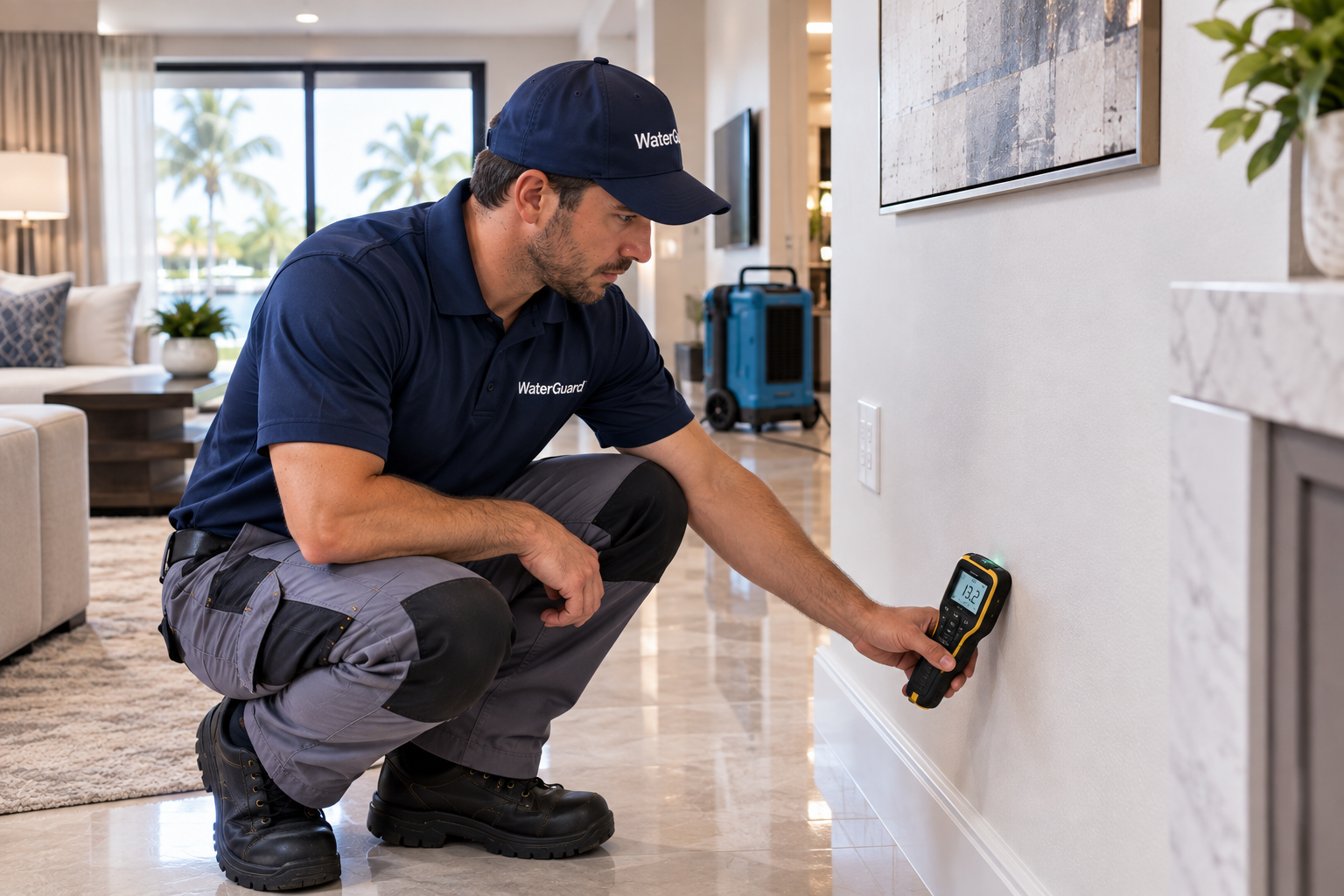
WaterGuard technician taking a direct moisture reading from an affected wall material
Step 02

Measure

Direct readings from appropriate building materials establish a measurable baseline and help define which areas may need controlled drying.

  • Measure drywall, flooring, and other materials
  • Document initial readings by area
  • Use findings to guide the drying plan
Approved professional dehumidification equipment supporting controlled structural drying
Step 03

Dry

Equipment is selected and placed according to the materials involved, moisture conditions, affected area, and surrounding environment.

  • Support controlled evaporation and dehumidification
  • Adapt the setup to the affected materials
  • Avoid a one-size-fits-all equipment plan
Technician monitoring moisture conditions near a concealed area in a property
Step 04

Monitor

Material and environmental readings are checked throughout the project so the plan can respond to changing conditions rather than relying on appearance alone.

  • Track material moisture readings
  • Record temperature and relative humidity
  • Adjust the approach when conditions indicate
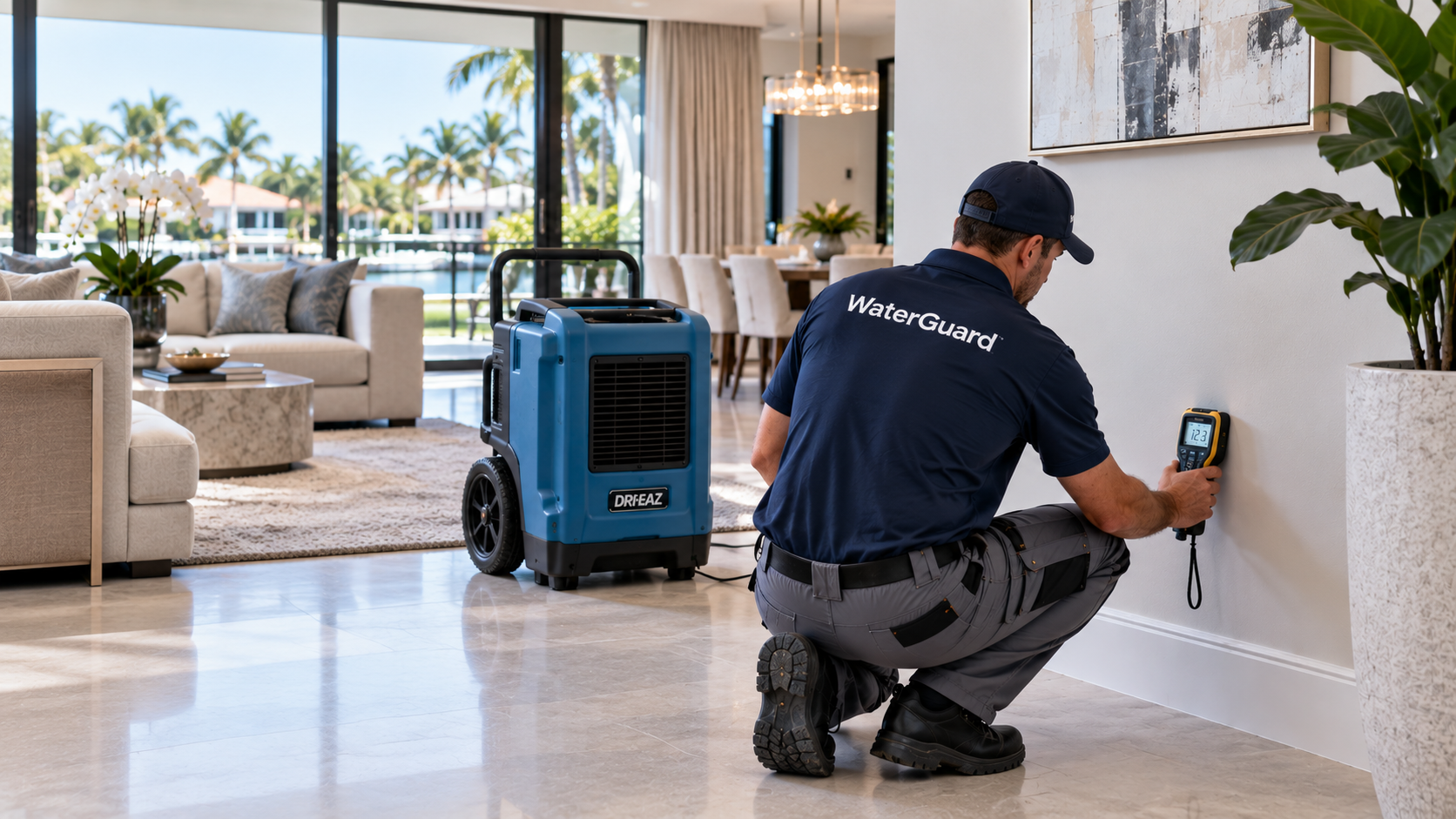
WaterGuard technician checking a wall during structural drying verification
Step 05

Verify

Final measurements help evaluate whether affected materials have reached appropriate drying conditions based on the specific project.

  • Compare final and earlier measurements
  • Document the condition of affected materials
  • Review results before the drying phase concludes
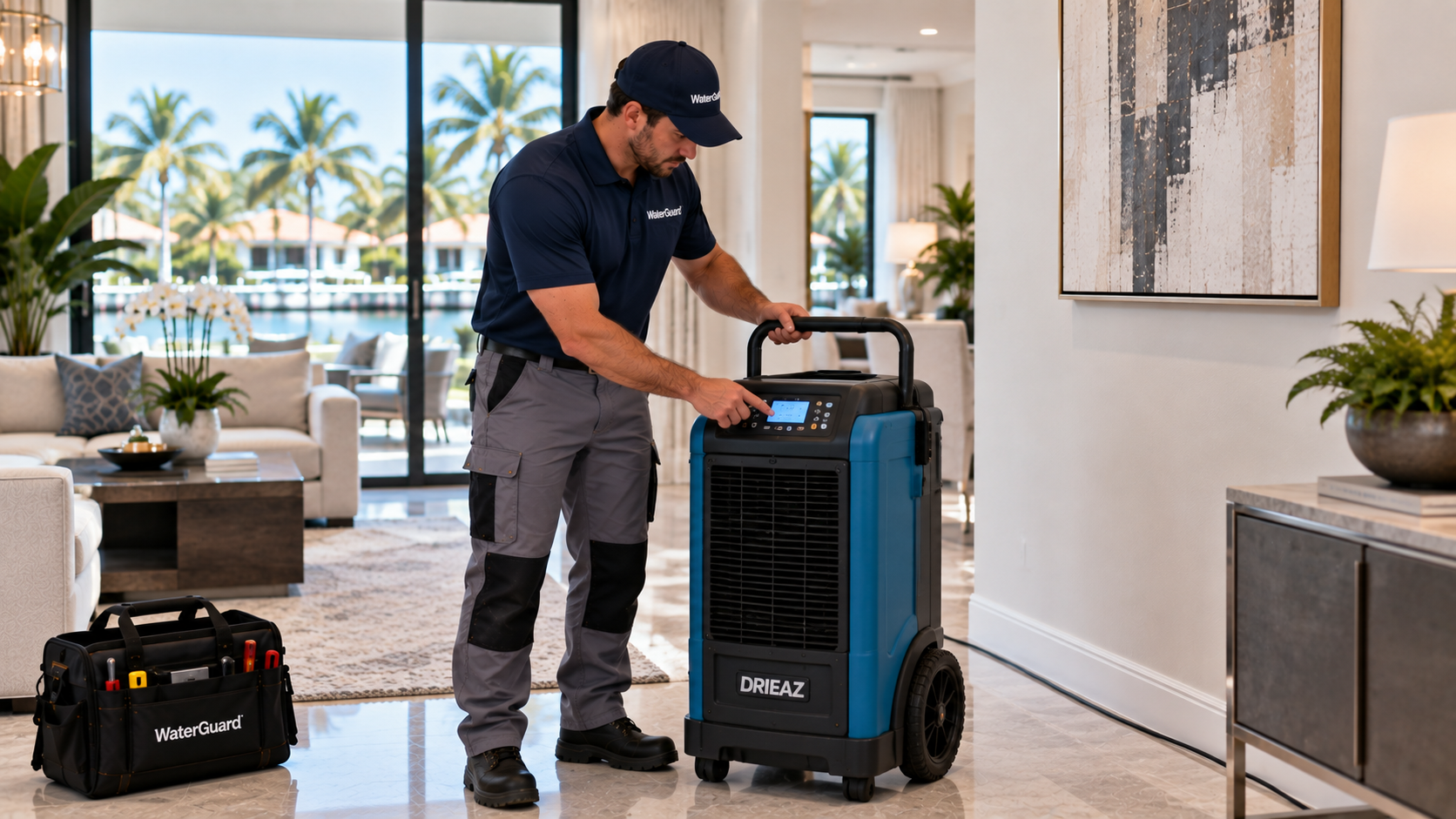
WaterGuard technician standing beside professional dehumidification equipment
Professional Equipment & Moisture Detection

Tools for Controlled Drying & Moisture Detection

Structural drying requires more than simply placing equipment in a room. WaterGuard uses moisture measurements, environmental monitoring, and professional drying equipment to evaluate conditions and track drying progress.

LGR Dehumidification

Helps remove moisture from the air and supports controlled drying conditions.

Moisture Meters

Used to obtain material moisture readings and track changes during the drying process.

Thermal Imaging

Can help identify temperature patterns that may indicate areas requiring closer investigation.

Environmental Monitoring

Temperature and relative humidity measurements help evaluate conditions during drying.

Measured From Start to Finish

See How Drying Progress Is Documented

Structural drying is a process that is tracked over time. Moisture and environmental readings help document changing conditions and provide a clearer picture of drying progress.

01

Initial Reading

Establish initial moisture conditions in affected materials and appropriate reference areas.

02

Drying Progress

Monitor material moisture and environmental conditions while controlled drying continues.

03

Final Verification

Take final readings to help evaluate whether the drying goals for affected materials have been reached.

Moisture conditions, drying time, and target readings vary by material, environmental conditions, and the circumstances of each property loss.

Common Areas

Where Moisture Can Remain

Drywall & Ceilings

Flooring & Subfloors

Cabinets & Built-ins

Wall Cavities

Concrete & Masonry

Areas Around Plumbing Fixtures

Drying Verification

Drying Is Measured — Not Guessed

Drying time varies based on the materials involved, moisture conditions, environmental conditions, and the extent of water intrusion. Final measurements help evaluate drying progress rather than relying only on a fixed number of days.

Common Situations

When Structural Drying May Be Needed

Plumbing & Pipe Leaks

Appliance Leaks

Roof & Ceiling Leaks

Bathroom Water Damage

Flooding

Water Remaining After Extraction

Moisture Discovered During Remodeling

Structural drying may follow water damage restoration or flood cleanup. If suspected mold is found, the conditions should be evaluated separately through an appropriate mold remediation process.

A Clear Drying Record

Affected-area photos, moisture readings, observations, and applicable equipment or monitoring records organized for your files.

Documented Process

Documentation for Your Records and Insurance Process

When appropriate, WaterGuard documents affected areas and drying progress to provide a clearer record of observed conditions and work performed.

  • Photos of affected areas
  • Moisture readings
  • Drying progress observations
  • Environmental readings
  • Equipment records where applicable
  • Monitoring records where applicable

Insurance coverage depends on the cause of loss and the terms of the individual policy. WaterGuard provides documentation but does not determine or guarantee coverage.

Related Restoration Services

Structural Drying Is Part of the Restoration Process

Structural drying is one part of a larger restoration process. WaterGuard coordinates services from water removal and moisture detection through appropriate remediation and reconstruction, based on the needs of the property.

Why Professional Drying Matters

Why Controlled Structural Drying Matters

  • Helps reduce prolonged moisture exposure
  • Supports drying of affected building materials when conditions allow
  • Documented readings help track drying progress
  • May help reduce unnecessary material removal when materials can be appropriately dried
Service Area

Structural Drying & Moisture Detection Across South Florida

WaterGuard serves Boca Raton and communities throughout Palm Beach County, Broward County, and Miami-Dade County.

FAQ

Structural Drying & Moisture Detection FAQs

How long does structural drying take?

It depends on the materials, moisture levels, environmental conditions, and extent of intrusion. Moisture readings and ongoing monitoring provide a better indication than a fixed number of days.

How do you know if moisture is still inside a wall?

Moisture meters, visual inspection, environmental readings, and, when appropriate, thermal imaging can help identify areas for further investigation.

Can drywall be dried without removing it?

In some situations drywall may be dried in place. The appropriate approach depends on the water source, material condition, contamination concerns, and moisture levels.

Do you use thermal imaging?

Yes, as an investigative tool to identify temperature patterns warranting closer evaluation. It does not directly measure moisture, so findings should be evaluated with other inspection methods.

Why is moisture monitoring important?

It tracks changes in material and environmental conditions and provides information used to evaluate drying progress.

Can hardwood floors be dried?

Some affected wood flooring may be candidates for controlled drying depending on flooring type, exposure duration, water source, and material condition. An inspection helps determine the appropriate approach.

Will insurance cover structural drying?

Coverage depends on the cause of loss and the individual policy. WaterGuard can provide documentation, but coverage decisions are made by the insurance carrier.

What happens if mold is discovered?

Suspected mold conditions should be evaluated separately and appropriate mold-related procedures followed. Learn more about our mold remediation services.

Request a Callback

Tell us what's happening — a team member will call you back fast.

Or call us 24/7: (728) 219-0831

Important Information

Every property loss is different. The information on this page is for general guidance and does not constitute insurance, legal, or restoration advice. Response times, work durations, and outcomes depend on the specific conditions of your property, materials, weather, and the scope of damage. Insurance coverage and reimbursement are governed by your individual policy terms, and WaterGuard does not guarantee coverage. WaterGuard recommends reviewing your policy and contacting your carrier directly for coverage details. A written scope of work will be provided before any work begins.

Moisture Detection & Drying

Concerned About Hidden Moisture?

Get professional moisture detection and structural drying throughout South Florida.