
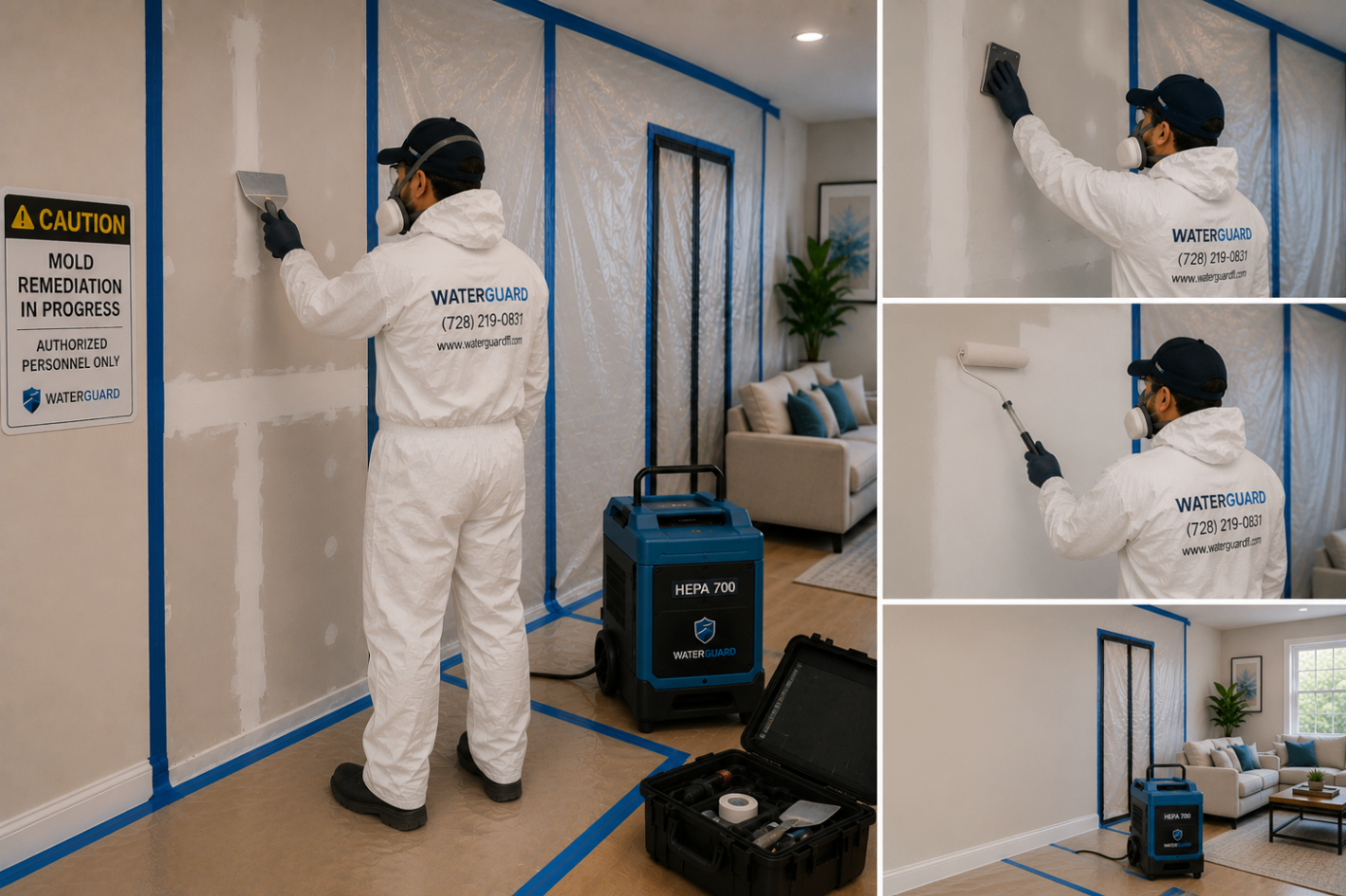
Reconstruction
Rebuilding What Was Removed
Once containment is released and materials are verified dry, we reinstall drywall, trim, insulation, cabinetry, and finishes — restoring the space to the condition it was in before the loss.

Sealed containment, HEPA air filtration, careful removal.
One licensed local team — assessment to verification.
Insurance-ready documentation on every project.
From your first call to a verified-clean space, every step is contained, documented, and professionally managed.
Step 1
Live 24/7 dispatch
Step 2
≈ 60 minutes on-site
Step 3
Moisture + visual inspection
Step 4
Sealed work area
Step 5
Negative pressure setup
Step 6
Affected materials
Step 7
Surfaces treated & dried
Step 8
Post-remediation check
Step 1
Live 24/7 dispatch
Step 2
≈ 60 minutes on-site
Step 3
Moisture + visual inspection
Step 4
Sealed work area
Step 5
Negative pressure setup
Step 6
Affected materials
Step 7
Surfaces treated & dried
Step 8
Post-remediation check
Not every dark spot on a wall or ceiling is mold — and not every mold problem is the size of the visible growth. Active mold on drywall paper, wood framing, or insulation is a symptom of moisture that is still present, and the visible patch is often only part of what is actually growing. Verify what you're seeing before any material is touched.
Green, black, or brown patches on porous materials. Musty odor. Requires professional remediation.
Yellow or brown rings from a past leak. Cosmetic — but check if the source is truly fixed.
White crystalline deposits on concrete or masonry from mineral salts. Not mold — but signals moisture migration.
Recurring wet spots near AC vents, windows, or cold walls. A humidity problem, not always mold — yet.
Dark buildup on registers, corners, and baseboards. Wipes clean. Cosmetic maintenance, not remediation.
They look similar and get confused every day — but the response is very different. Knowing which one you have is the first step to solving it properly.
Light gray, white, or yellow powdery film on non-porous surfaces — grout, shower tile, window sills, fabric. Wipes off with a household cleaner. Rarely penetrates the material underneath. Cosmetic maintenance, not remediation.
Darker green, black, brown, or gray patches on porous materials — drywall paper, wood framing, insulation, cabinet backs. Often with a musty odor. A symptom of an underlying moisture problem, and appropriate for professional remediation with containment.
A calm, structured, seven-step response that turns a stressful mold discovery into a measurable project with a real endpoint. Every step is documented, every decision is backed by data.
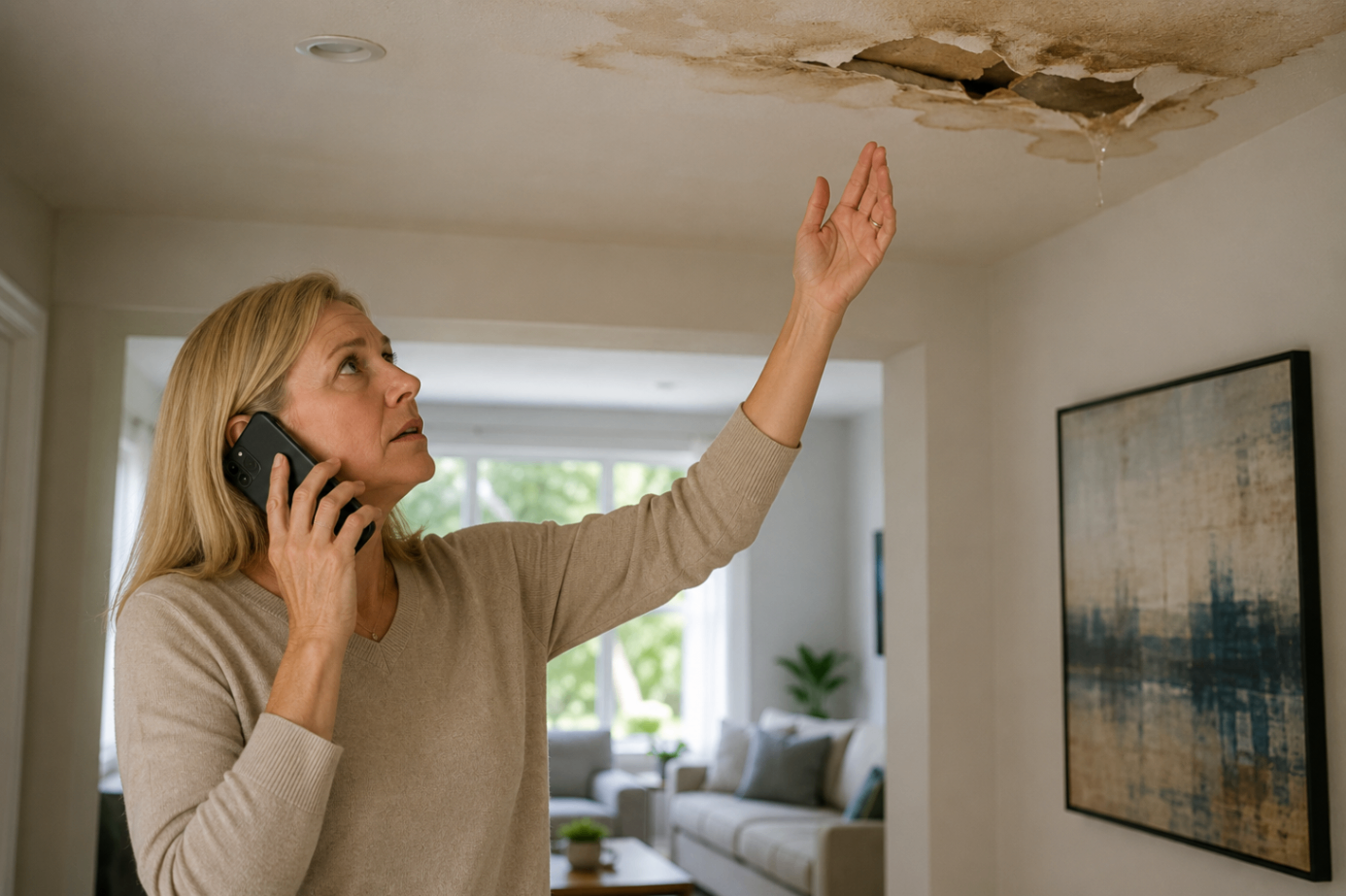
Every mold remediation project begins with the moisture source, not the visible growth. A trained WaterGuard technician surveys the affected area with a professional moisture meter, inspects walls, baseboards, subfloor, cabinetry, and any ceiling assemblies above the growth, and maps exactly where water is still present. Removing mold without stopping the moisture that fed it guarantees it returns — the assessment is what turns a stubborn recurring problem into a project with a real endpoint.
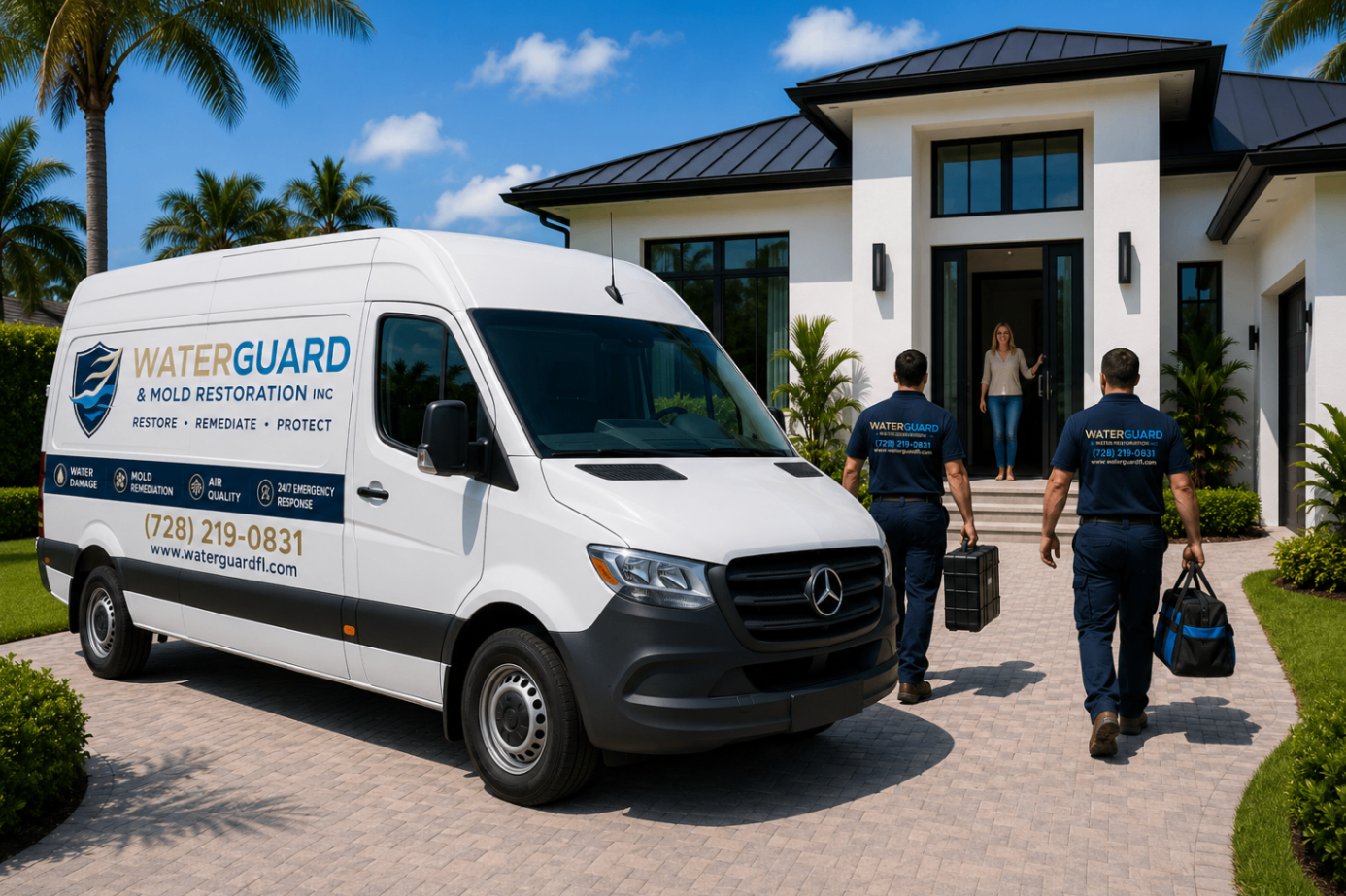
Mold you can see is only part of the story. In South Florida's humidity, the moisture that feeds mold routinely hides behind cabinetry, above ceilings, inside wall cavities, and around AC condensate lines and supply-line penetrations. Thermal imaging reveals the cool signature of trapped moisture without cutting a single hole first, so the remediation scope reflects the real footprint of the problem — not just the visible corner.
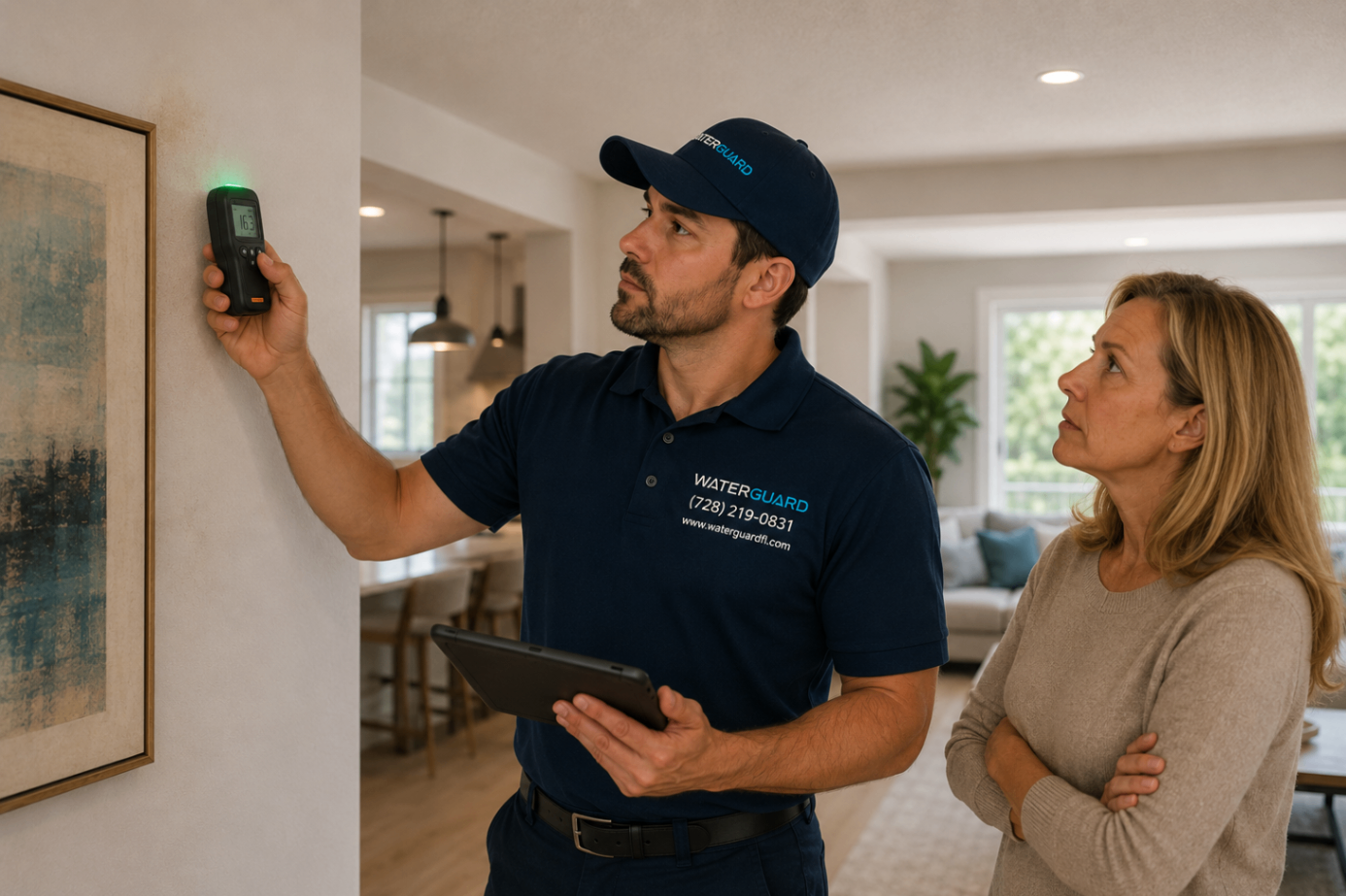
Containment is what separates professional mold remediation from a cleaning service. We seal the affected area with clear plastic sheeting and blue painter's tape, install a zippered access panel, and set up a negative air machine with HEPA filtration that vents outside the containment. Air inside the work zone is drawn away from the rest of your home — spores stay where the work is happening, not on the other side of the door.
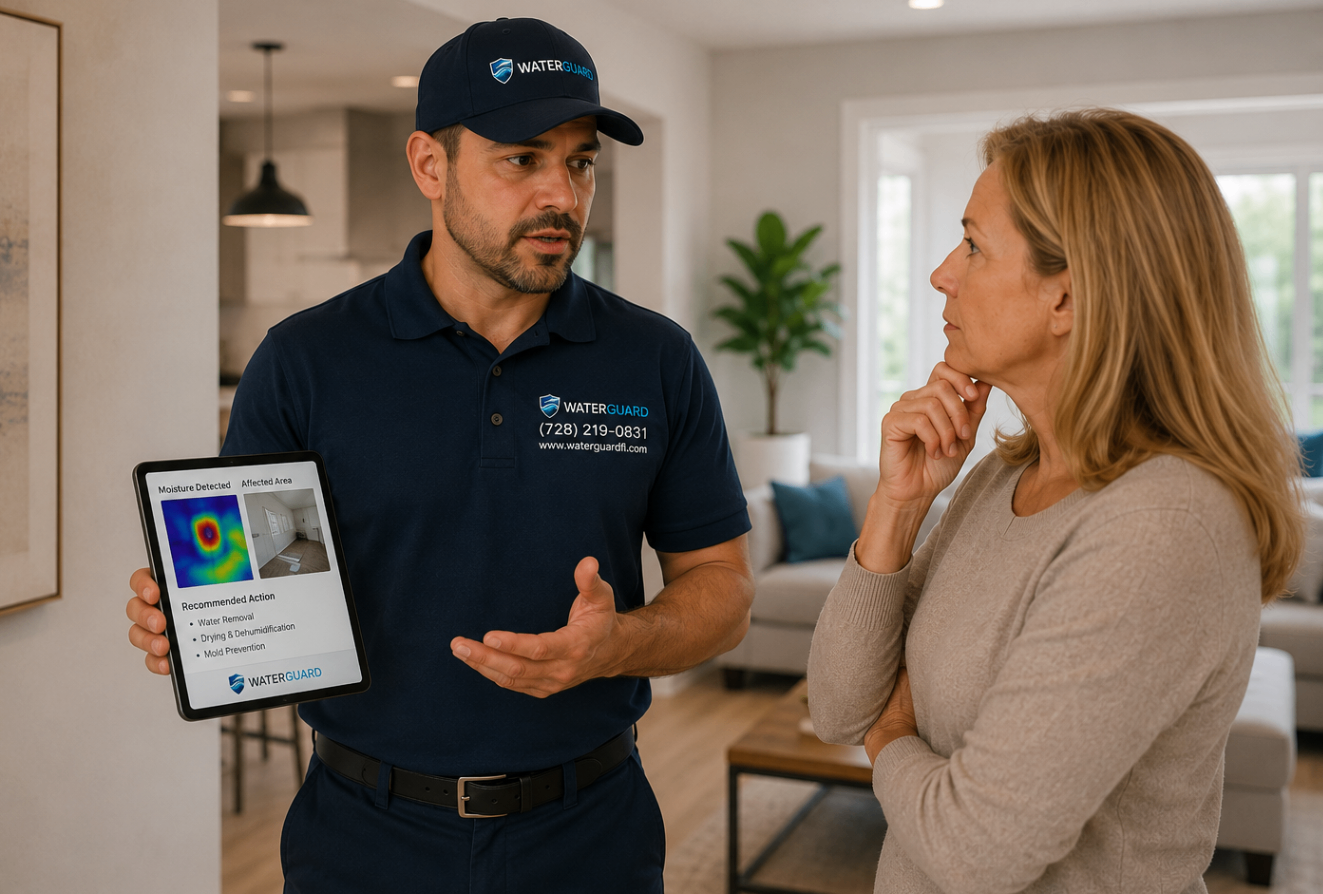
Inside the sealed work area, HEPA air scrubbers filter the air continuously through hospital-grade filters that capture particles down to 0.3 microns. Air is turned over several times an hour so airborne spores released during removal are pulled into the filter rather than settling on adjacent surfaces. Scrubbers keep running through cleaning and drying — not just during demolition — because that final airborne load is what determines how clean the space really is when we open it back up.
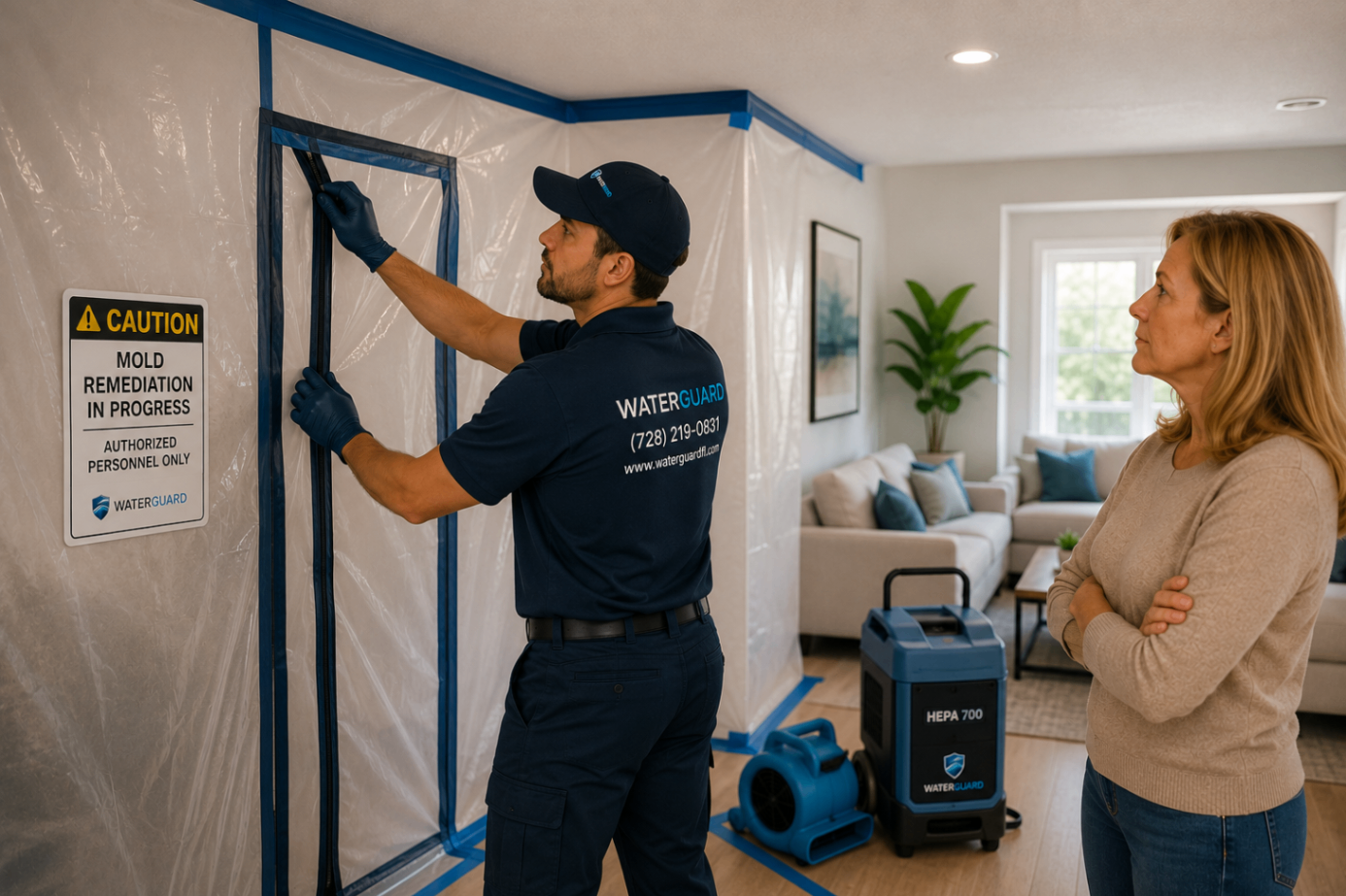
Materials that cannot be safely cleaned — saturated drywall paper, mold-affected insulation, delaminated baseboards, wet particle board — are cut out cleanly, double-bagged inside the containment, and removed through the zippered access to a lined disposal path. Structural materials that can be cleaned are cleaned in place. Every decision is documented so the scope your insurance sees matches the work that was actually performed.
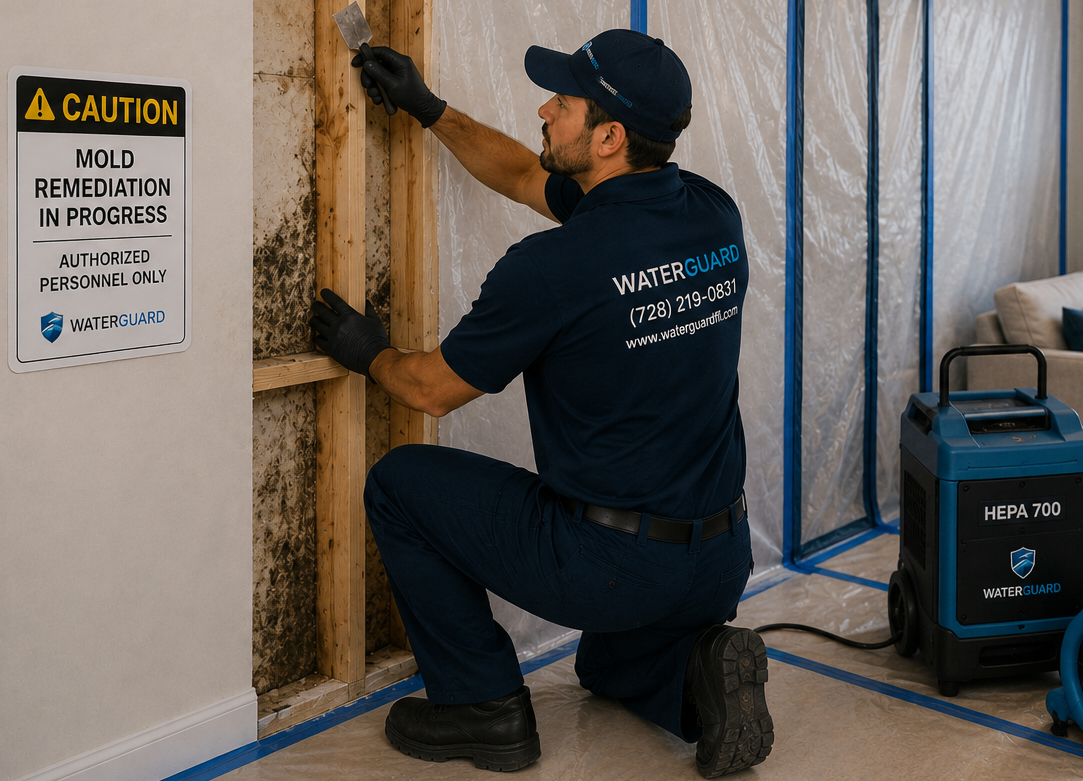
Cleaning is what most homeowners think mold remediation is — but it is only meaningful once containment, air filtration, and material removal are complete. Remaining structural surfaces are HEPA-vacuumed, damp-wiped with professional antimicrobial agents, and then dried thoroughly with air movers and dehumidifiers. Skipping the drying stage is one of the most common ways a mold problem returns weeks after the crew leaves.
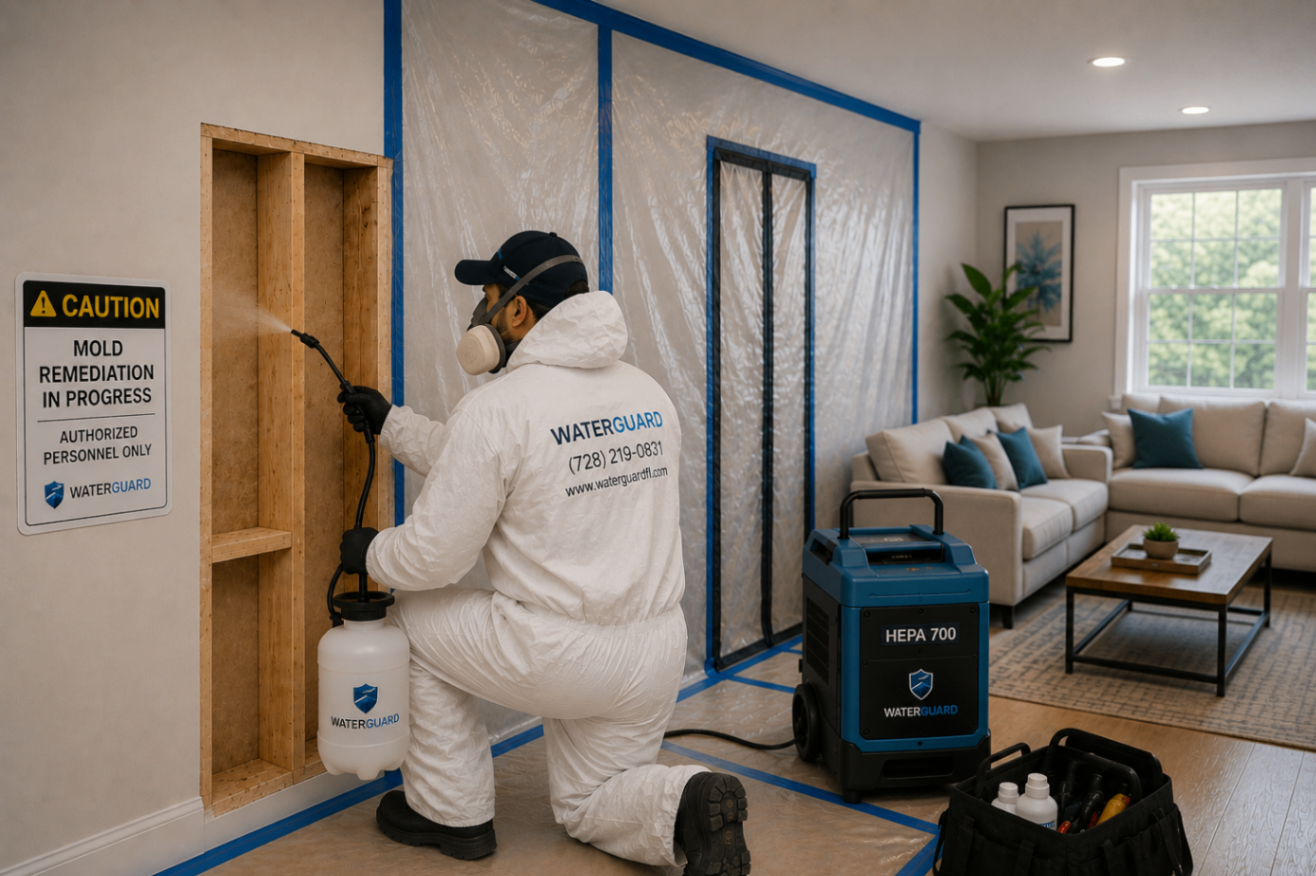
The last step is a structured verification that the work is actually complete. We perform a visual re-inspection with the containment still in place, confirm moisture readings have returned to normal, and — for larger losses — coordinate independent third-party clearance testing when appropriate for your situation. Containment stays up until the numbers and the visual inspection both support release, not before.
Remediation is only complete when the affected space is rebuilt, verified with you in person, and formally closed out with documentation you can keep.
Once containment is released and materials are verified dry, we reinstall drywall, trim, insulation, cabinetry, and finishes — restoring the space to the condition it was in before the loss.
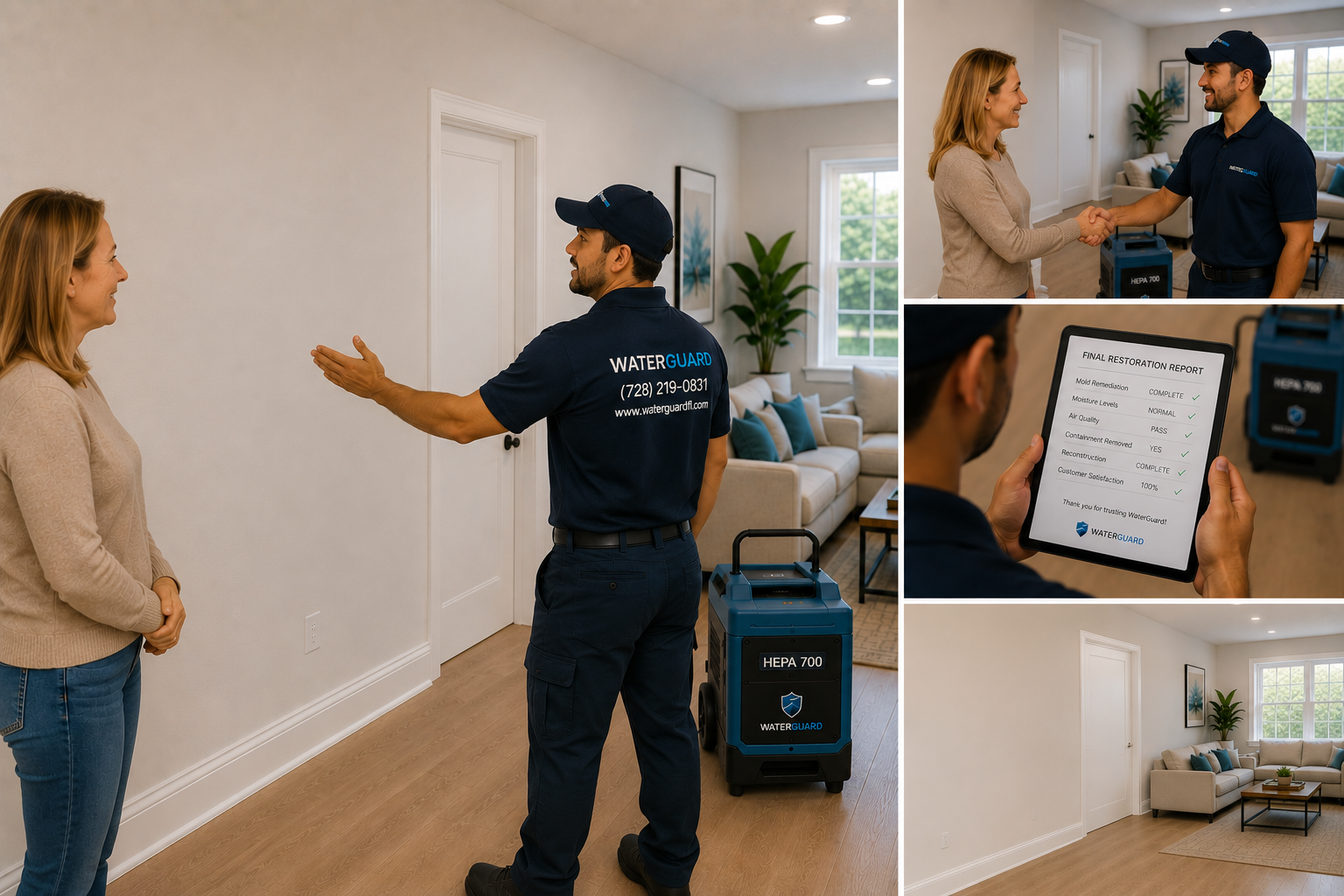
Before we close the file, a WaterGuard lead walks the completed space with you room by room — moisture readings confirmed, finishes reviewed, and any final touch-ups noted and scheduled.
You receive the completed restoration report, warranty documentation, and adjuster-ready records. Your home is handed back clean, dry, rebuilt, and formally signed off.
Long-Term Protection
Fix the moisture first. Verify materials are dry. Document the outcome.
<60%
Humidity
24h
Leak Response
100%
Verified Dry
Yes — if the underlying moisture source is not addressed. This is the single most important thing to understand about mold remediation. Removing visible growth without fixing the water that caused it virtually guarantees recurrence.
Our process is built around that reality: identify the moisture source first, confirm it is fixed or scheduled, then remediate. After the job we give you practical steps to reduce future risk in South Florida's humidity.
Real feedback from Boca Raton, Fort Lauderdale, and Delray Beach clients we've helped through mold problems in homes and businesses.
“After a slow shower leak, mold appeared in our master bath ceiling. WaterGuard set up containment the same day, walked us through every step, and the space came back cleaner than before. Beyond professional.”
Patricia S.
Boca Raton, FL
“Our office had a musty smell we couldn't trace. Their thermal imaging found moisture behind a break-room wall no one suspected. Fast, discreet remediation with almost no disruption to our team.”
Marcus T.
Fort Lauderdale, FL
“They found the moisture source before touching a single wall — an AC condensate issue two other companies had missed. Careful containment, clear communication, and no upsell. Truly premium.”
Elena R.
Delray Beach, FL
Six specific reasons South Florida property owners call us — and refer their neighbors — when they discover mold.
A live team answers the phone day or night. When mold appears after a leak or flood, a technician is dispatched immediately across Boca Raton and South Florida.
Photo records, moisture logs, containment placement, and adjuster-ready scopes of work. We provide the paper trail your claim needs to move.
Thermal cameras, pin and pinless meters, and structured moisture mapping locate hidden moisture before it becomes tomorrow's mold problem.
Every mold job — no matter how small — gets sealed containment and negative air. Spores stay in the work area, not on the other side of the door.
Assessment, containment, removal, drying, and reconstruction under one licensed roof. One point of contact, one accountable team, no handoffs.
We follow professional protocols and document our work. We do not make medical claims and we do not upsell demolition — we do the job properly.
Six professional-grade systems and protocols included on every WaterGuard mold remediation project — no optional add-ons, no hidden equipment charges.
Pin and pinless moisture readings mapped by room and material so we know exactly what is wet before any work begins.
Infrared scanning locates hidden moisture behind walls, ceilings, and cabinetry without invasive demolition.
Hospital-grade HEPA air scrubbers capture particles down to 0.3 microns and run until verification supports release.
Sealed containment barriers and negative-pressure airflow keep spores isolated in the work area, not your home.
Professional antimicrobial application on remaining structural surfaces after removal and HEPA vacuuming.
Moisture readings are verified normal and documented before containment is released and the project is closed.
We work discreetly in homes and after-hours or in phases for businesses. Every project gets the same containment protocol, adjusted to keep your home livable or your business operating.
Single-family estates and waterfront properties with discreet, protective containment.
Unit-level remediation coordinated with associations and building management.
Offices, retail, and restaurants scoped after-hours or in phases to keep you operating.
Guest rooms and public spaces remediated on a schedule that protects occupancy.
Classrooms and facilities addressed with strict containment and clear documentation.
Medical and dental practices remediated under negative-pressure protocols.
Adjuster-Ready Reporting
A written scope, moisture logs, and photo documentation — packaged for your carrier.
We prepare adjuster-ready documentation that helps streamline your mold claim.
WaterGuard builds a complete record of the loss — moisture readings, containment placement, materials removed, and a written scope of work — and communicates directly with your carrier when it helps move the claim.
Mold coverage in Florida varies by policy. We do not guarantee claim outcomes. We provide thorough documentation that supports your conversation with your insurer.
Catching mold early is the single largest factor in reducing project scope. If you notice any of these signs, call for a professional moisture inspection.
Black, green, gray, or brown patches on drywall, grout, baseboards, or wood — especially in bathrooms, laundry rooms, and around AC handlers.
A persistent damp, earthy, or musty smell — even without visible growth — is one of the strongest early indicators of hidden mold.
Any water loss left untreated for more than 24–48 hours in South Florida's humidity is a candidate for mold growth in wall cavities and under flooring.
Ceiling or wall stains that return after painting almost always mean moisture — and often mold — is still active behind the surface.
Sustained indoor humidity above 60% creates the conditions mold needs to grow, even without a specific leak or flood event.
Condensate line backups, undersized ducts, and dirty coils are the single most common source of hidden mold in South Florida homes.
Detailed answers to the questions Boca Raton homeowners and property managers ask most — including timing, cost, insurance, testing, and what really happens inside containment.
Every property loss is different. The information on this page is for general guidance and does not constitute insurance, legal, or restoration advice. Response times, work durations, and outcomes depend on the specific conditions of your property, materials, weather, and the scope of damage. Insurance coverage, reimbursement, and your right to choose a contractor are governed by your individual policy terms. WaterGuard recommends reviewing your policy and contacting your carrier directly for coverage details. A written scope of work will be provided before any work begins.
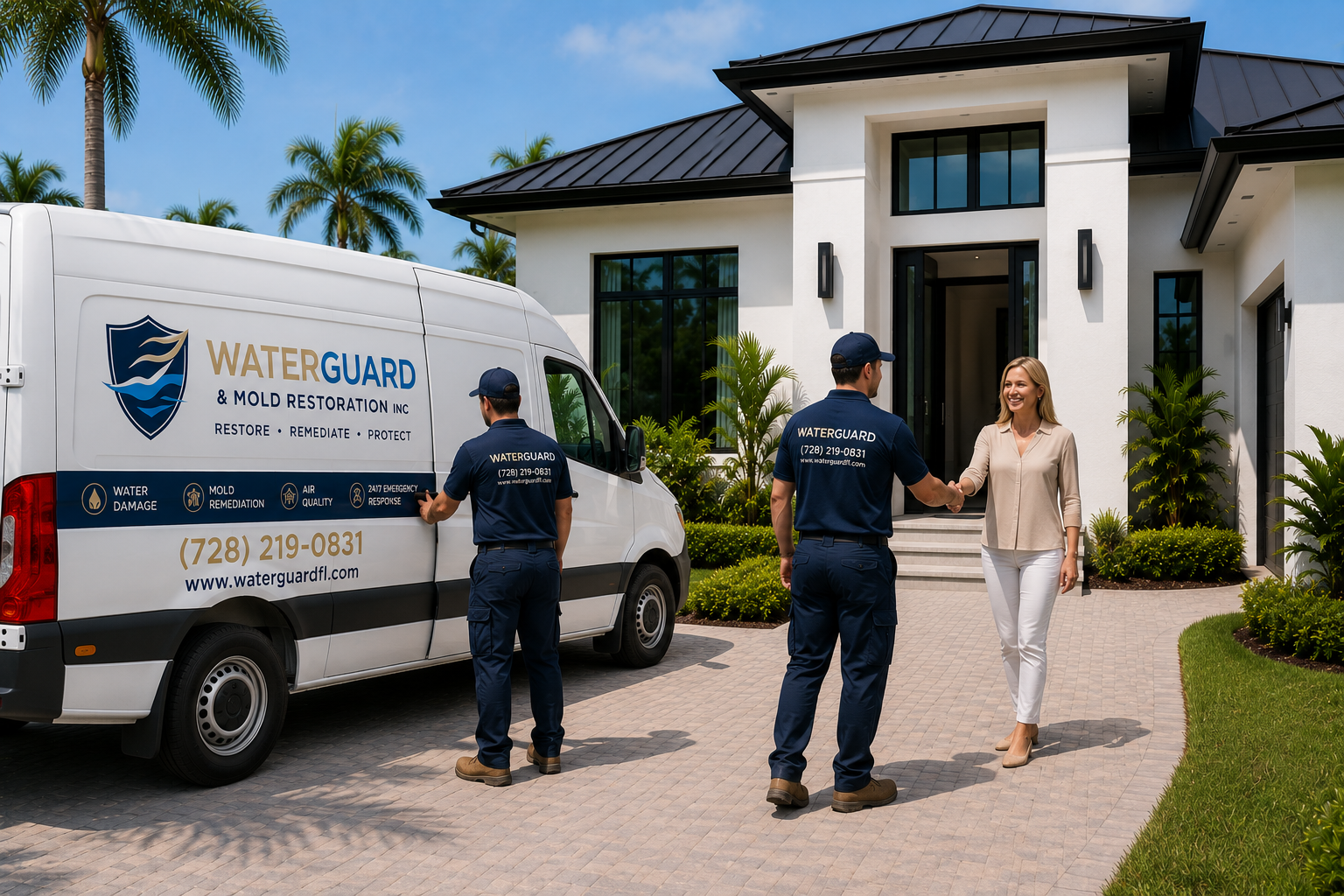
WaterGuard & Mold Restoration Inc. provides professional mold remediation, containment, post-remediation verification, and moisture-source-focused cleanup throughout Palm Beach, Broward, and Miami-Dade County. Local dispatch means shorter arrival times — and tighter project timelines.
Every day mold sits, it grows into materials you cannot see. Talk to a WaterGuard technician now — a local team is standing by across Boca Raton and South Florida.
From the first assessment to the final verification, WaterGuard is with you every step of the way.