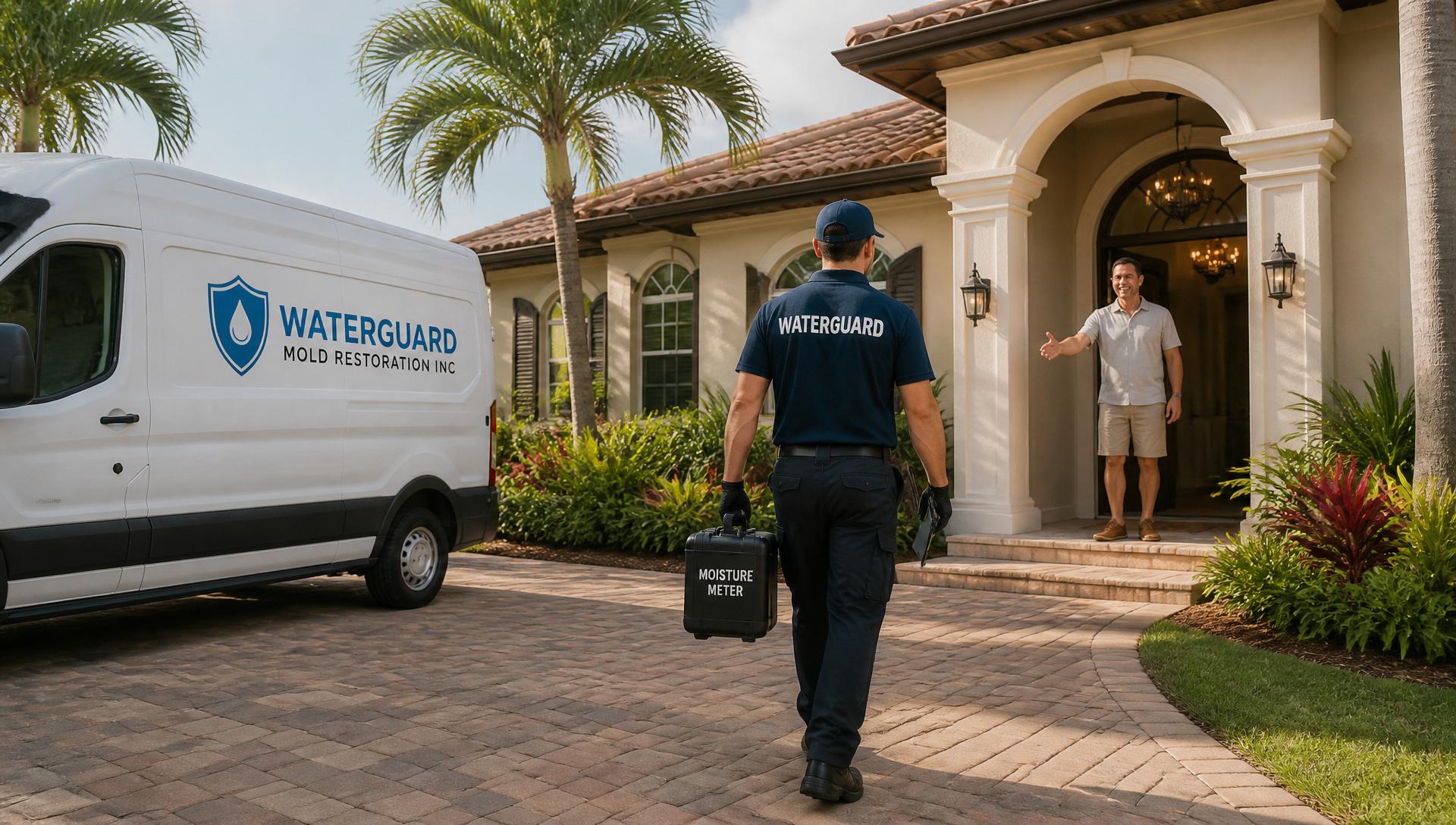
WaterGuard technician arriving at a luxury Boca Raton home to greet a homeowner for a water damage inspection
24/7 Emergency Response

Water Damage Restoration in Boca Raton & South Florida

Emergency water extraction, drying, and mold prevention — 24/7.

One licensed local team, from first phone call to final paint.

Adjuster-ready documentation and daily moisture monitoring.

  • Industry-Recognized Drying Standards
  • Insurance Claim Assistance
  • 24/7 Emergency Response
  • Licensed & Insured
  • Residential & Commercial
How It Works

Your Restoration Journey

From your first emergency call to a fully restored home, every step is documented, measured, and professionally managed.

  1. Step 1

    Emergency Call

    Live 24/7 dispatch

  2. Step 2

    Arrival

    Fast local dispatch

  3. Step 3

    Inspection

    Moisture & thermal mapping

  4. Step 4

    Water Extraction

    Commercial extractors

  5. Step 5

    Structural Drying

    LGR + air movers

  6. Step 6

    Daily Monitoring

    Readings logged daily

  7. Step 7

    Final Verification

    Dry standard confirmed

  8. Step 8

    Reconstruction Complete

    Goal: restored to pre-loss

Our Process

Our Water Damage Restoration Process

A calm, structured, seven-step response that turns a chaotic emergency into a measurable project. Every step is documented, every decision is backed by data, and every homeowner knows what happens next.

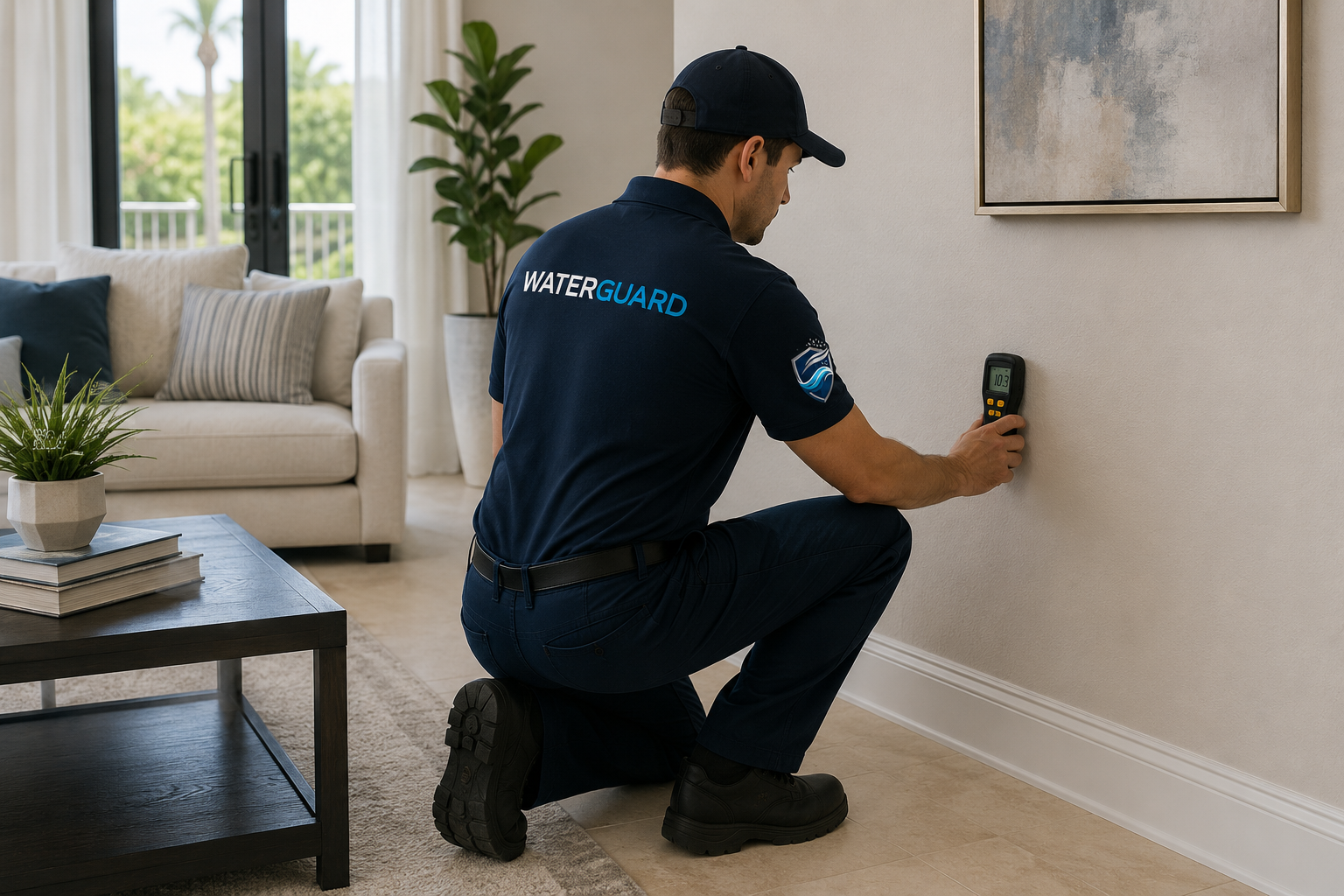
WaterGuard technician measuring moisture on a wall with a professional moisture meter in a Boca Raton living room
01

Moisture Inspection

Every water damage restoration project begins with a precise moisture reading, not a guess. A trained WaterGuard technician surveys every affected room with a professional moisture meter, checking drywall, baseboards, subfloor, and cabinetry to map which materials are wet and which are dry. This baseline is what turns a chaotic emergency into a controlled, measurable drying plan.

  • Pin and pinless moisture meters for accurate readings
  • Room-by-room inspection of walls, floors, and baseboards
  • Documented baseline readings for your insurance claim
  • Clear scope of affected areas before any work begins
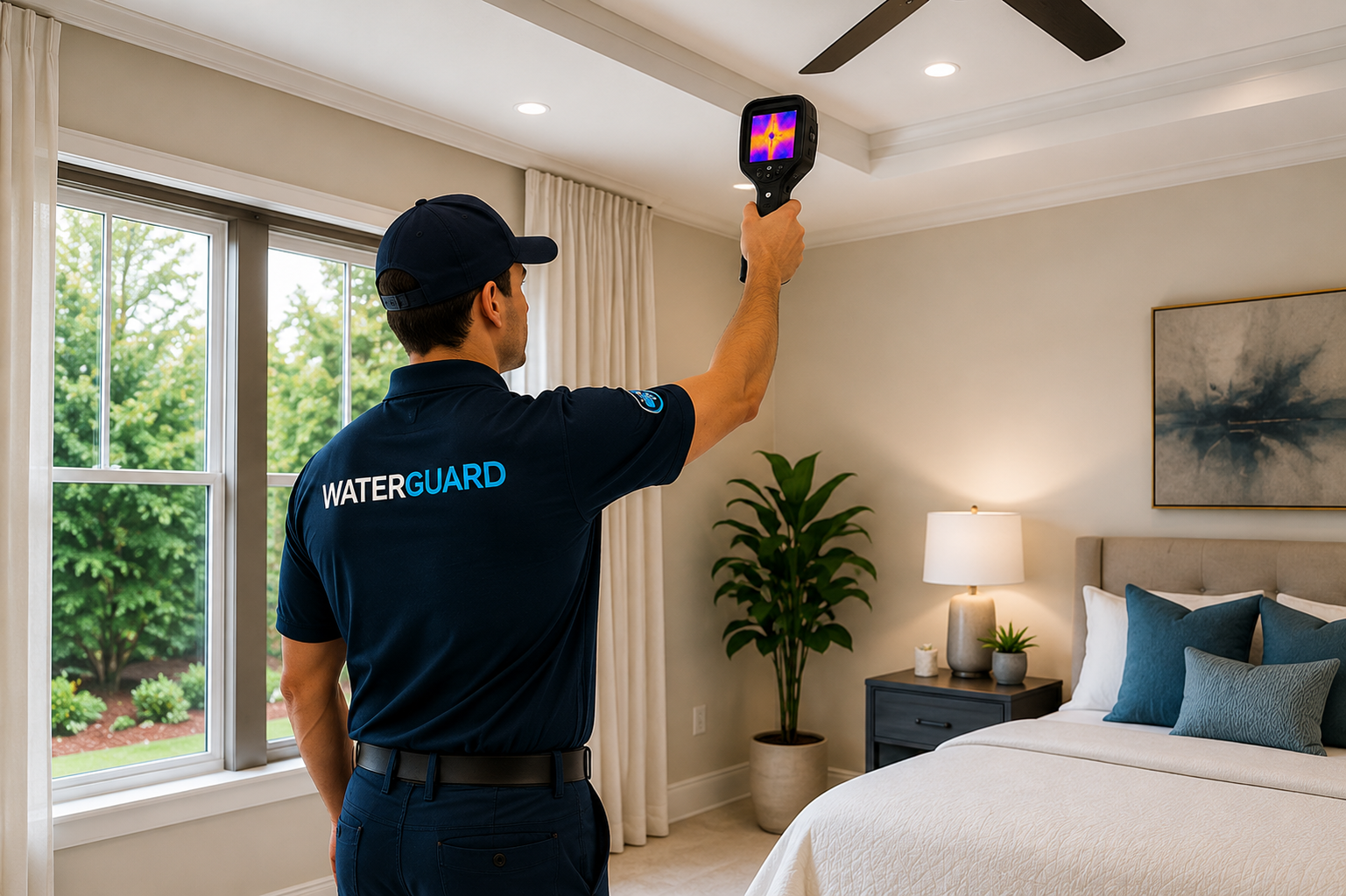
Technician scanning a ceiling with a thermal imaging camera to locate hidden moisture
02

Thermal Imaging

Water rarely stays where you can see it. Thermal imaging reveals the cool signature of trapped moisture behind drywall, above ceilings, and under flooring — often exposing damage that would otherwise be missed until mold appeared weeks later. We use infrared alongside moisture meters so drying targets the real affected area, not just the visible one.

  • Infrared scanning of ceilings, walls, and floor assemblies
  • Locates hidden moisture without invasive demolition
  • Confirms the true footprint of the water damage
  • Reduces guesswork on cabinets, wall cavities, and subfloors
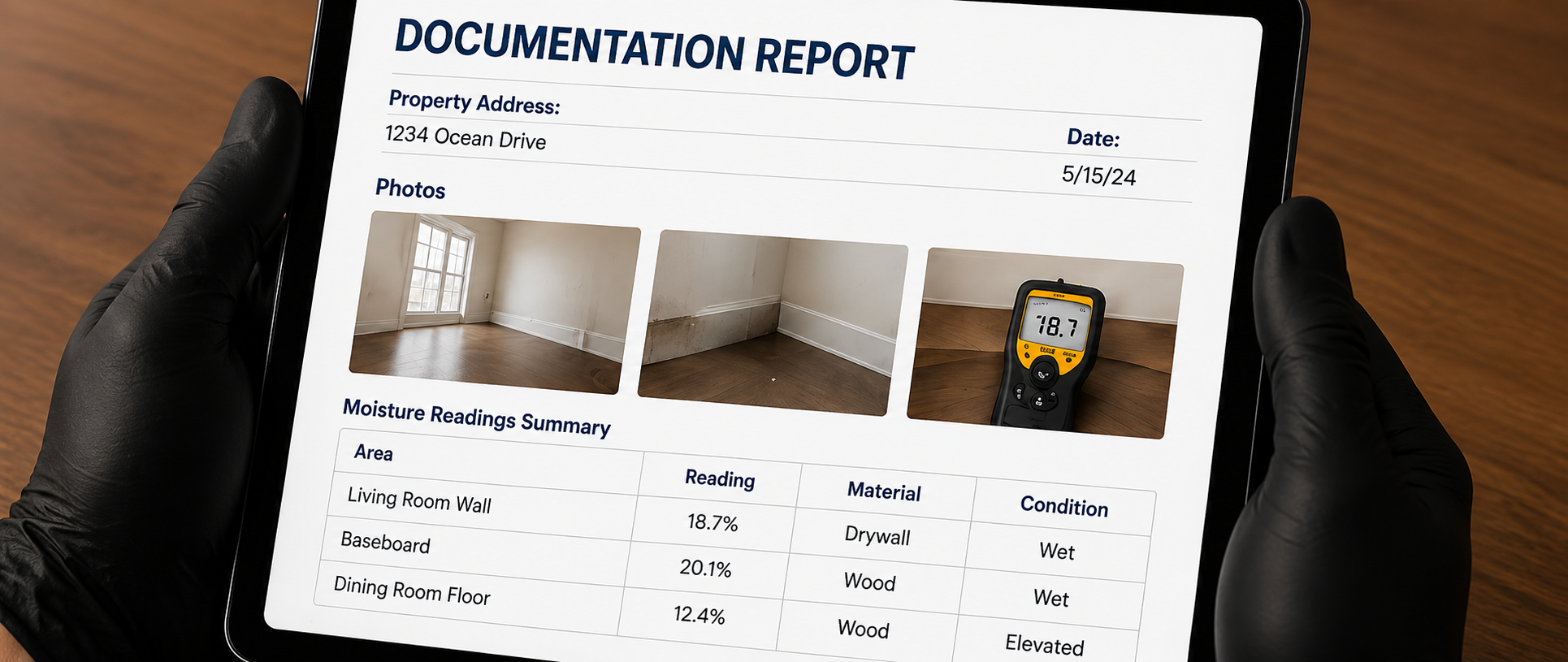
Documentation report on a tablet showing moisture readings and inspection photos for a water damage insurance claim
03

Insurance Documentation

Water damage claims are evaluated based on documentation, not on descriptions alone. Before a single air mover is placed, we build a structured record of the loss: dated photos, meter readings, affected-area diagrams, and a clear scope of work. Your adjuster receives what they need to evaluate the claim, and you keep a complete file for your records.

  • Property address, date, and dated inspection photos
  • Moisture readings logged by area and material
  • Written scope of work and equipment plan
  • Daily progress updates through completion
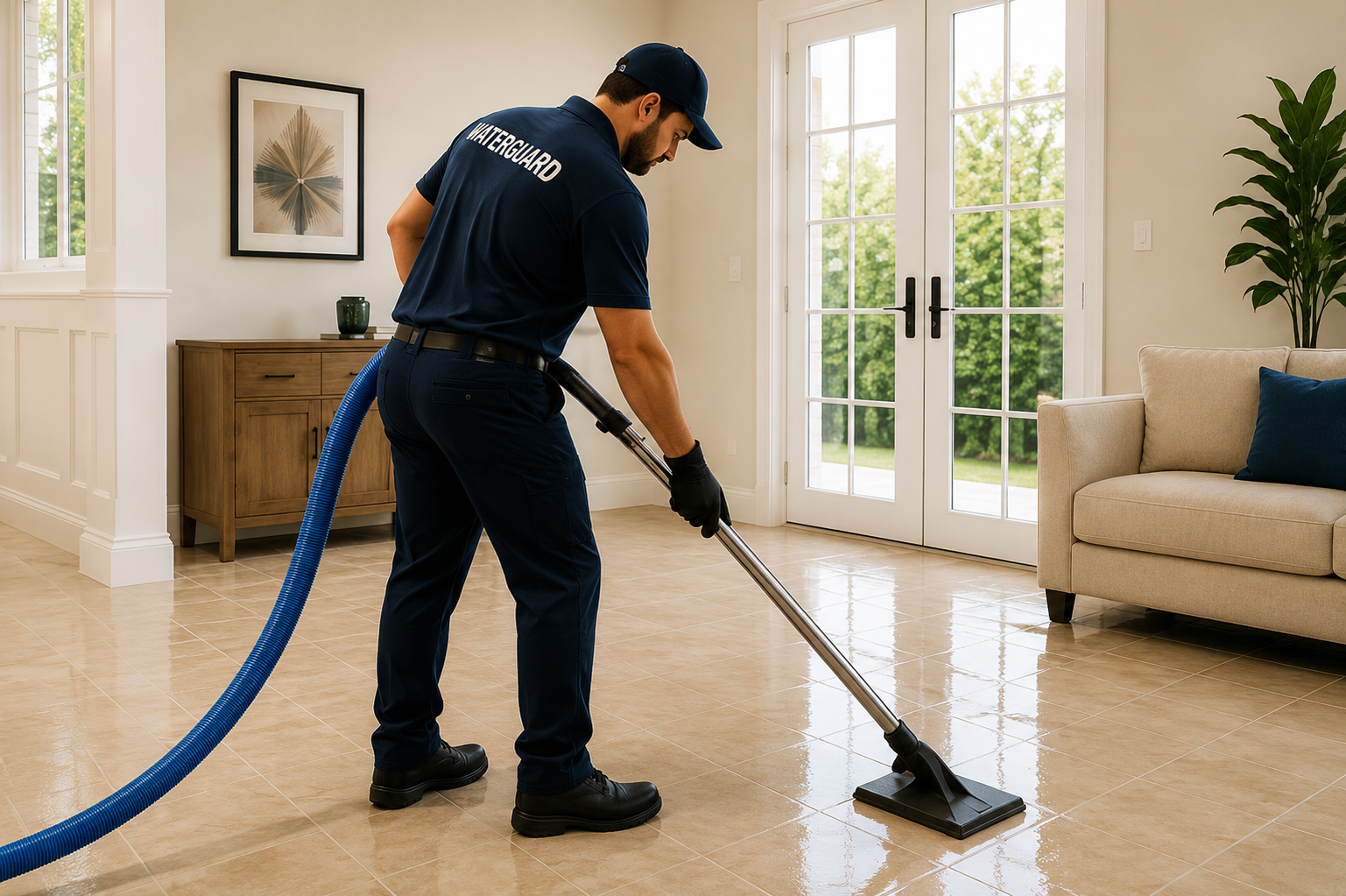
WaterGuard technician extracting standing water from a tile floor with a commercial extraction wand
04

Water Extraction

Standing water is a major driver of secondary damage. Given enough time, it migrates further into subfloors, baseboards, and wall cavities. Our commercial extractors remove water quickly and thoroughly so drying can start promptly — which can significantly improve the chance of saving flooring and cabinetry compared to delayed extraction.

  • Truck-rated and portable commercial water extractors
  • Fast removal from tile, hardwood, carpet, and pad
  • Extraction from wall cavities where accessible
  • Prepares the space for controlled structural drying
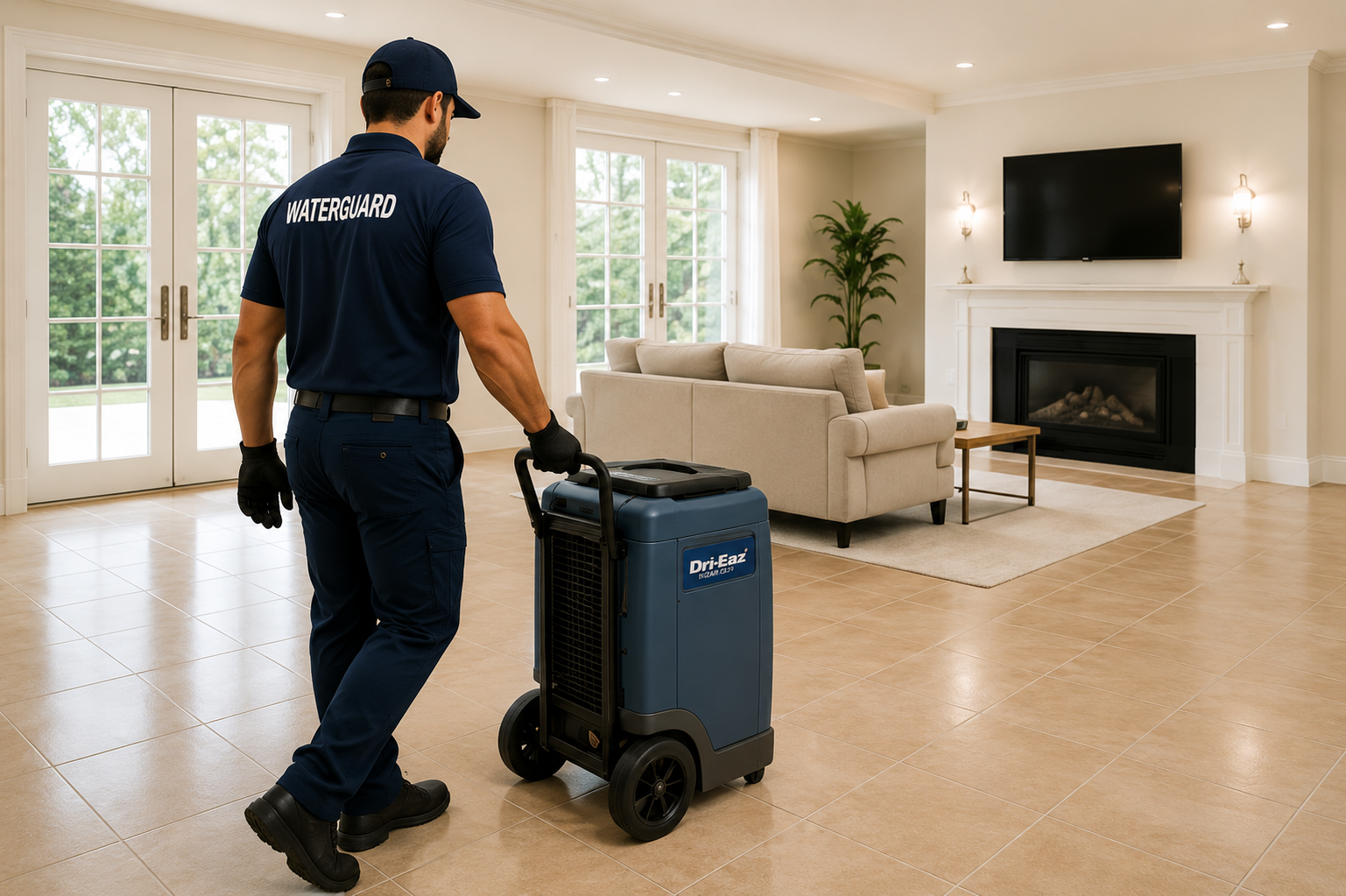
WaterGuard technician moving an LGR dehumidifier into position in a luxury living room for structural drying
05

Structural Drying

Structural drying is where restoration is won or lost. We place commercial air movers and LGR dehumidifiers based on cubic footage, materials, and moisture readings — not a fixed template. Equipment runs continuously, readings are logged daily, and we don't pull the fans until materials return to a normal, verified moisture level.

  • LGR (low-grain refrigerant) dehumidifiers
  • High-velocity air movers positioned for full coverage
  • Daily moisture monitoring and equipment adjustments
  • Dry standard verified before equipment is removed
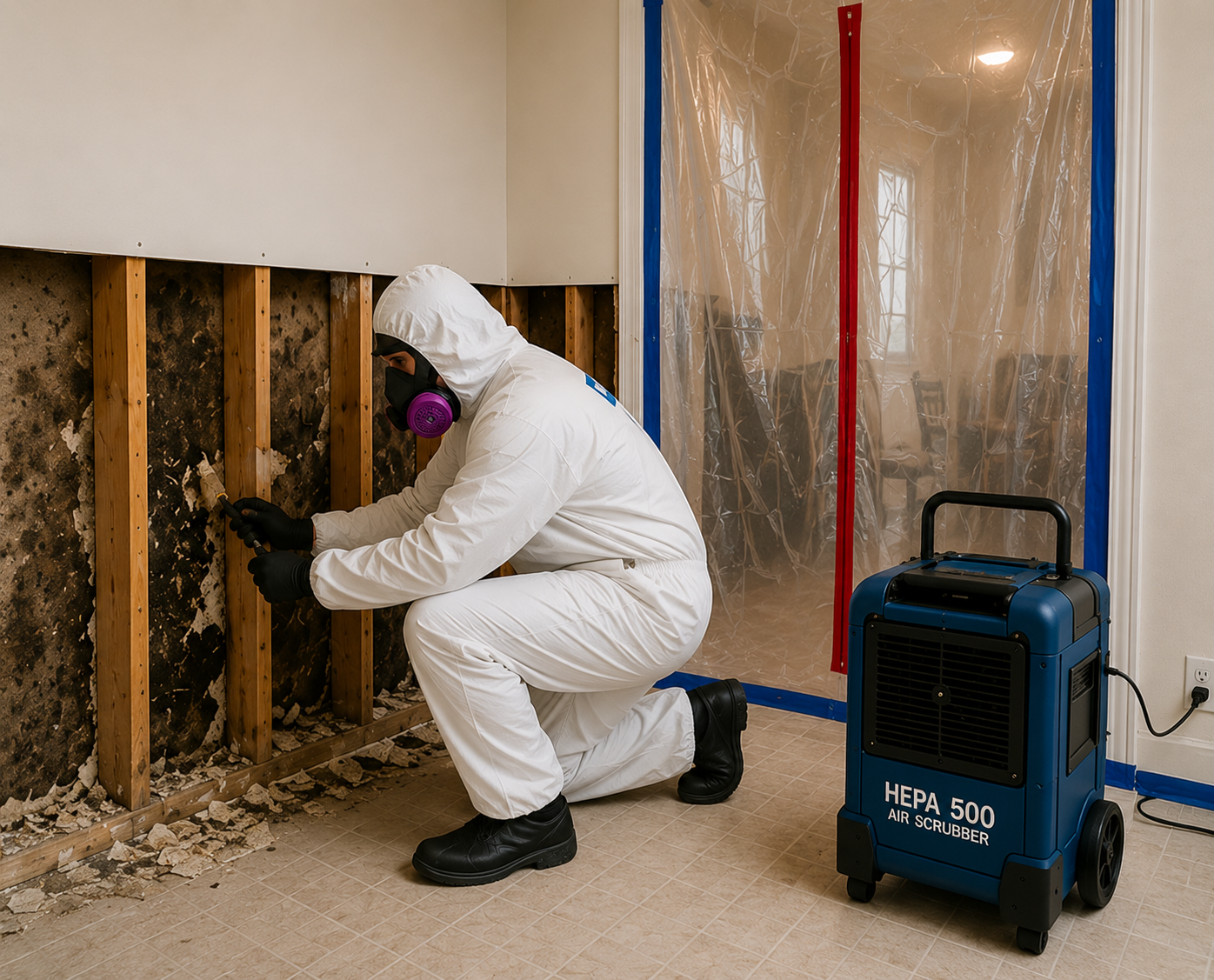
Technician in protective suit and respirator removing mold-affected drywall with a HEPA air scrubber running nearby
06

Mold Prevention & Remediation

Moisture left untreated can increase the risk of mold growth, depending on the material, humidity, temperature, and airflow. In South Florida, conditions can support microbial growth within 24 to 48 hours, but that is not guaranteed. When mold is already present, we contain the affected area, remove contaminated materials, and run HEPA air scrubbers to keep spores from spreading through the rest of the property.

  • Containment barriers and negative-pressure setup
  • HEPA air scrubbers to filter airborne particles
  • Safe removal of mold-affected drywall and materials
  • Clearance readings before reconstruction begins
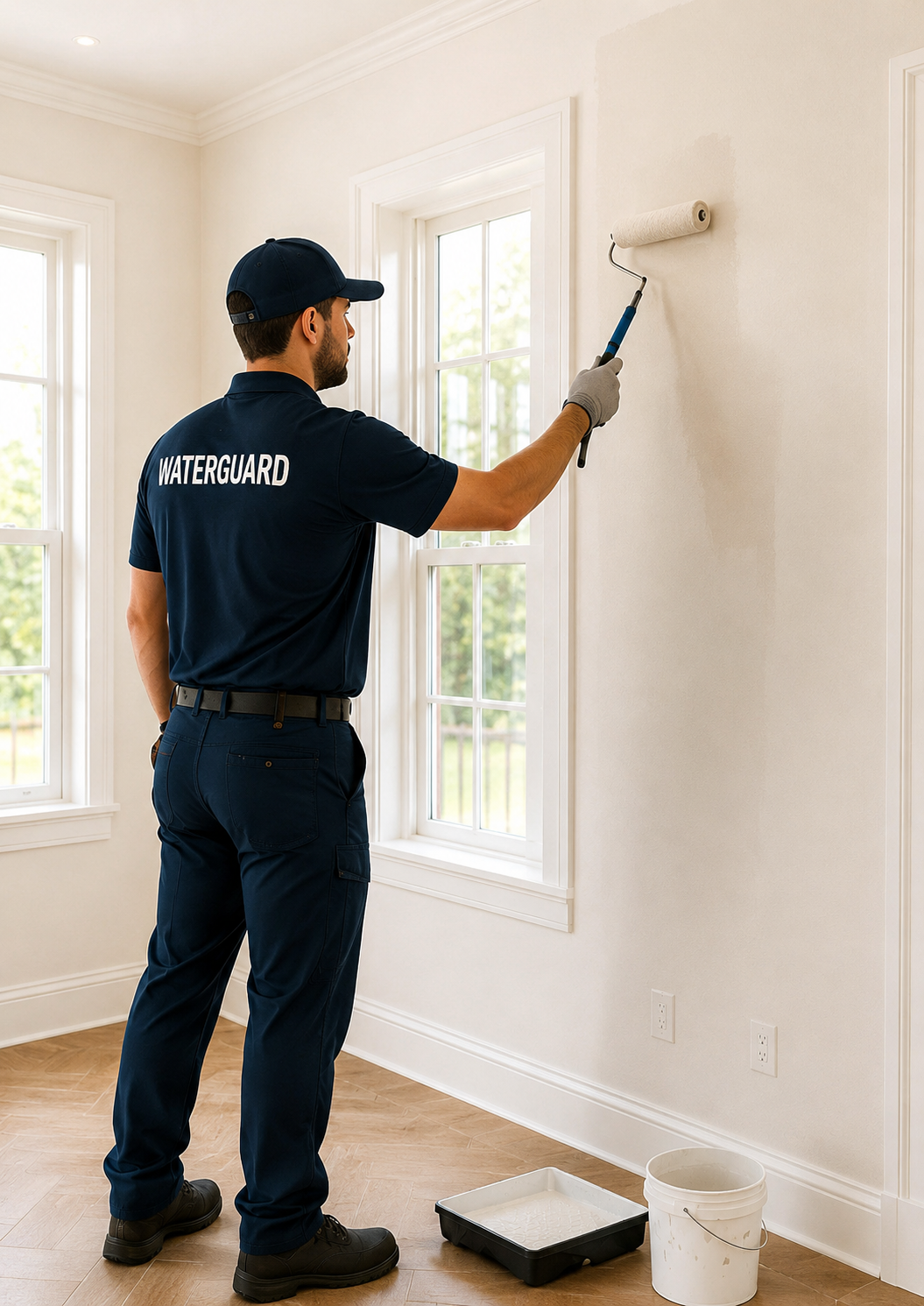
WaterGuard technician painting a freshly repaired wall during the reconstruction phase after water damage
07

Reconstruction

Restoration aims to return the property to a pre-loss standard. Our in-house reconstruction crew handles drywall, baseboards, flooring, cabinetry, paint, and finish carpentry, so you deal with one licensed local team from the first phone call through the last coat of paint.

  • Drywall repair, texture, and paint matched to existing finishes
  • Baseboard, trim, and flooring replacement
  • Cabinetry and vanity repair or replacement
  • Final walk-through before the project is closed out
Before & After

See the Difference Professional Restoration Makes

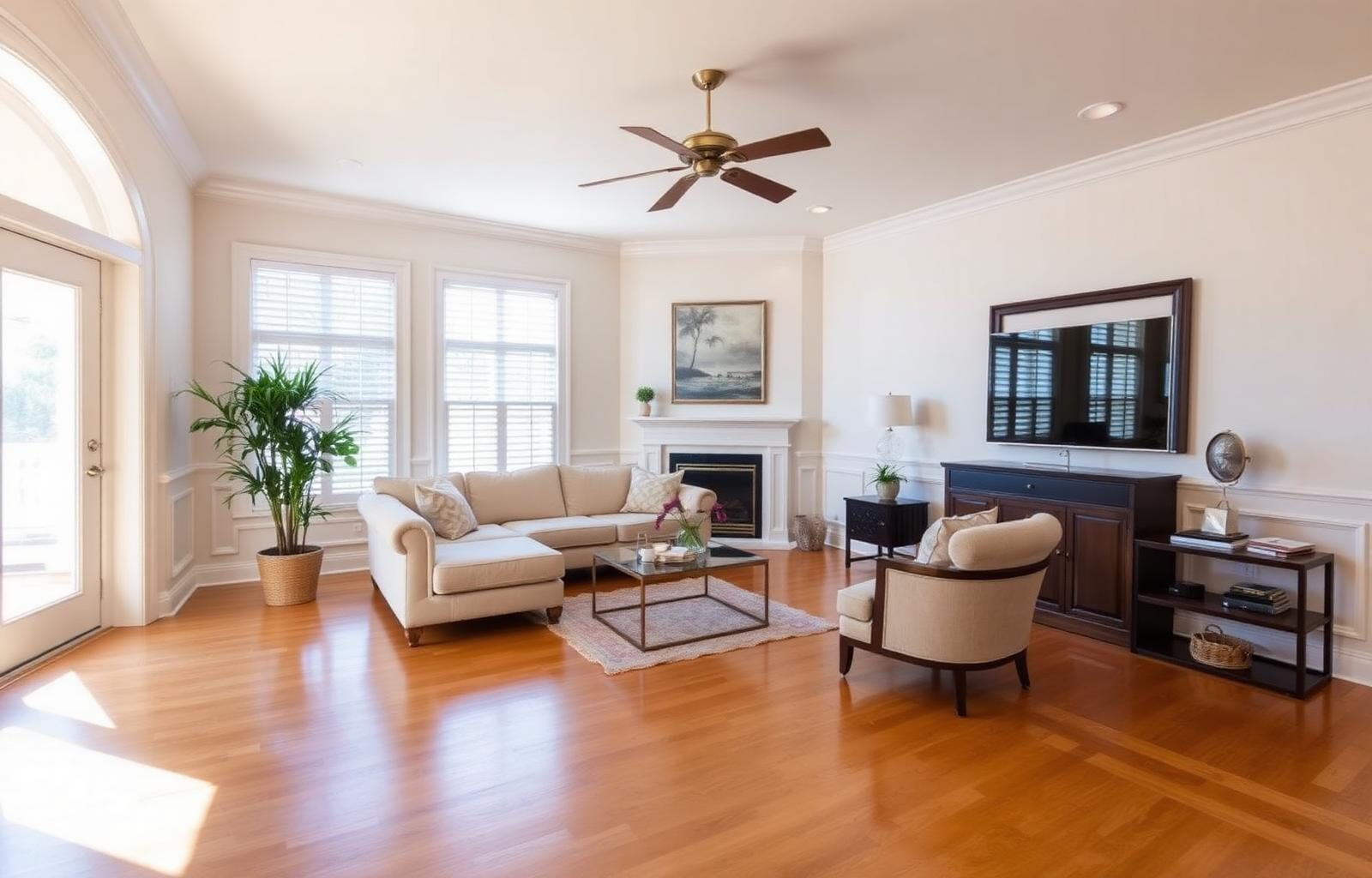
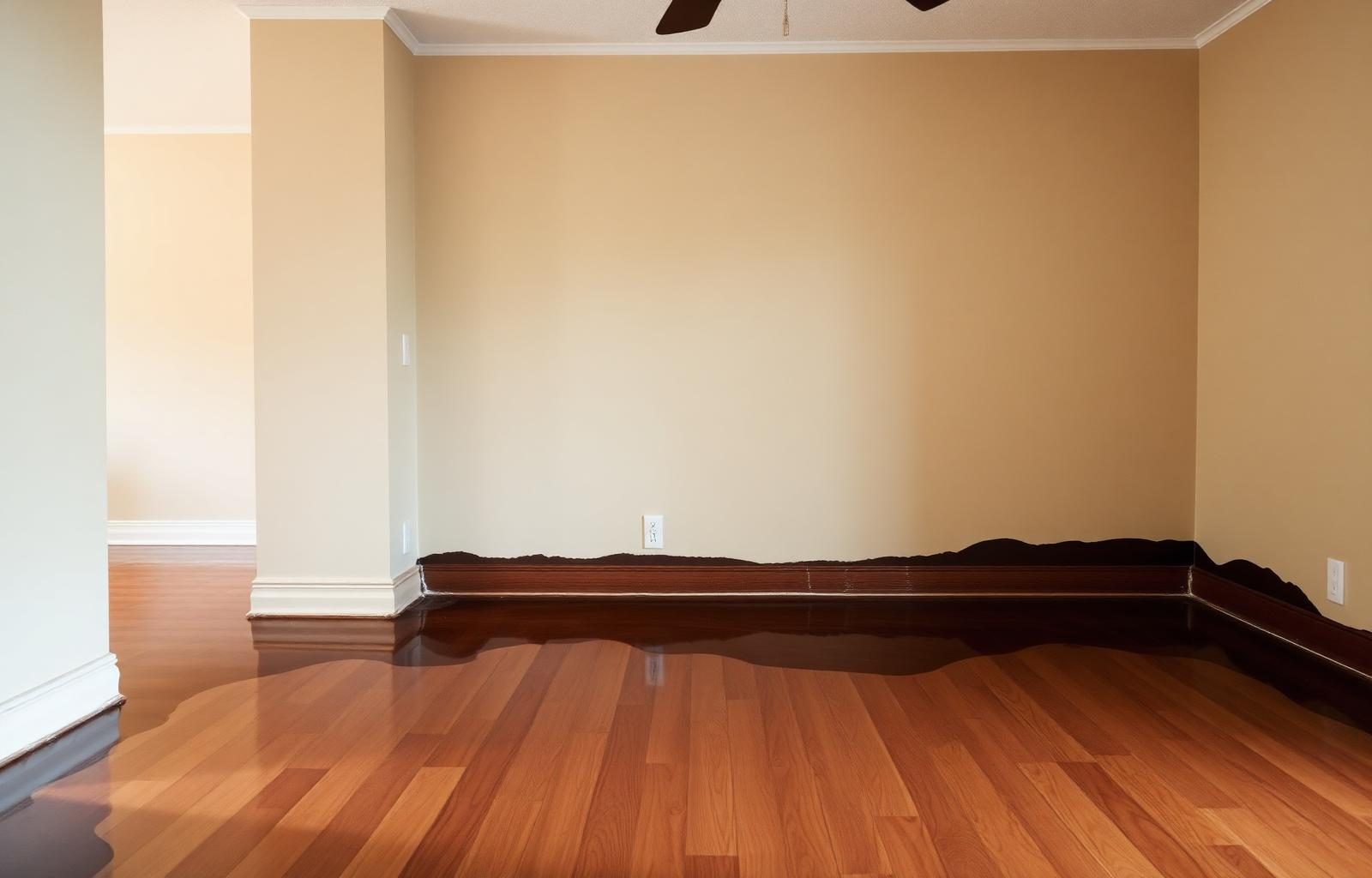
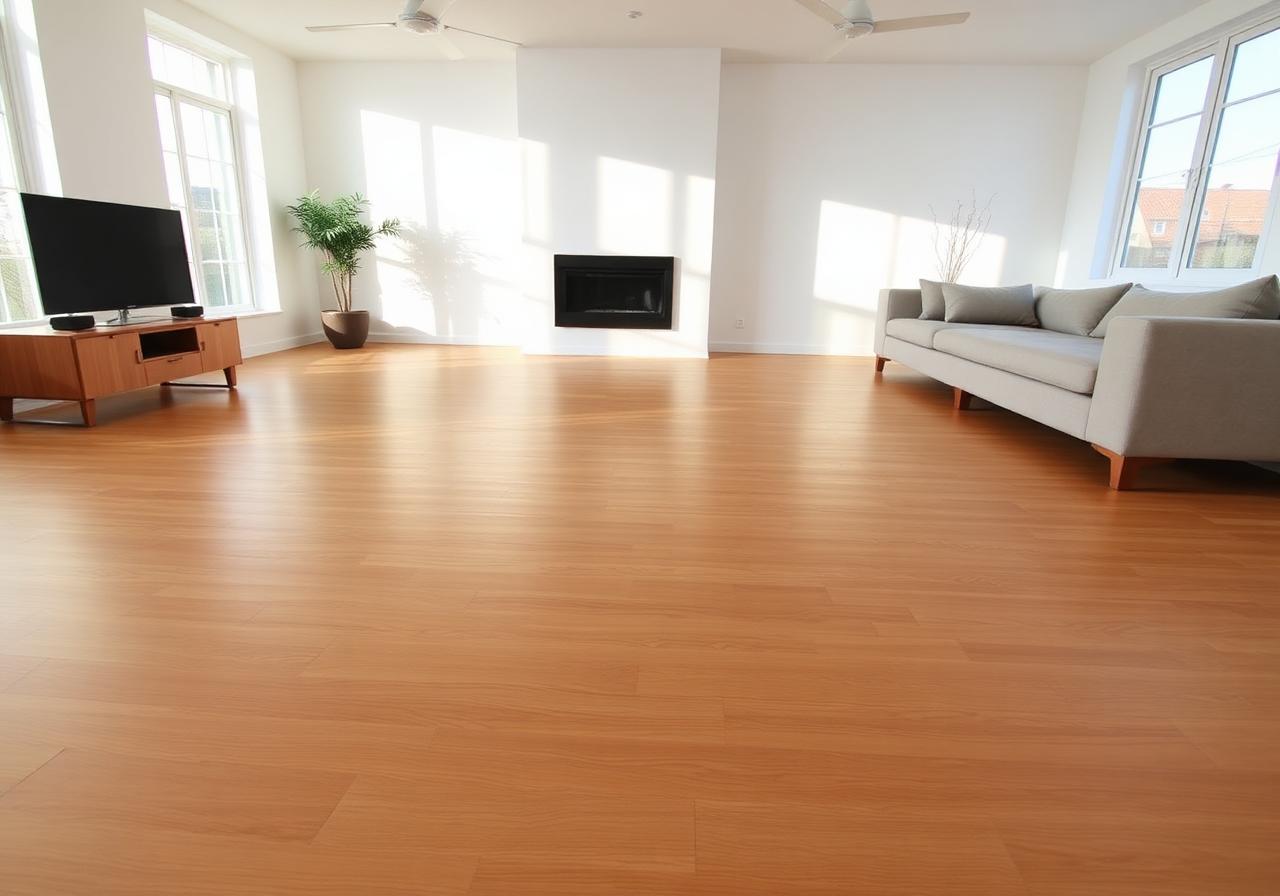
Drag the slider to compare a water-damaged living room with the same room after WaterGuard drying, mold prevention, and reconstruction.

Fully restored luxury Boca Raton living room after professional water damage restoration
Living room showing water damage on hardwood floor and baseboards before professional restoration
Before
After
Project Gallery

More Restoration Results

A few recent WaterGuard projects across South Florida — from kitchen floods to ceiling leaks — restored to a pre-loss standard.

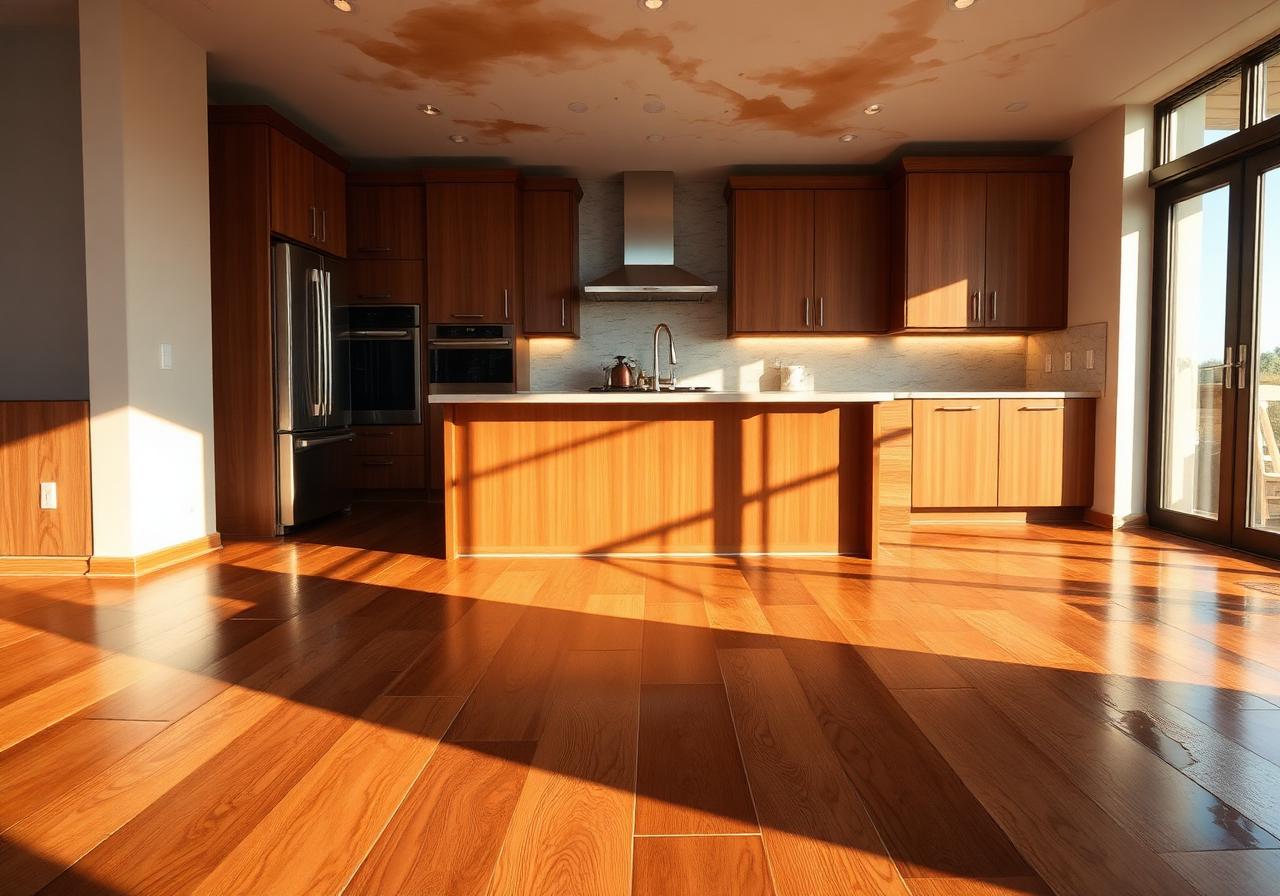
Kitchen Water Damage Restoration in Boca Raton, FL — before restorationBefore
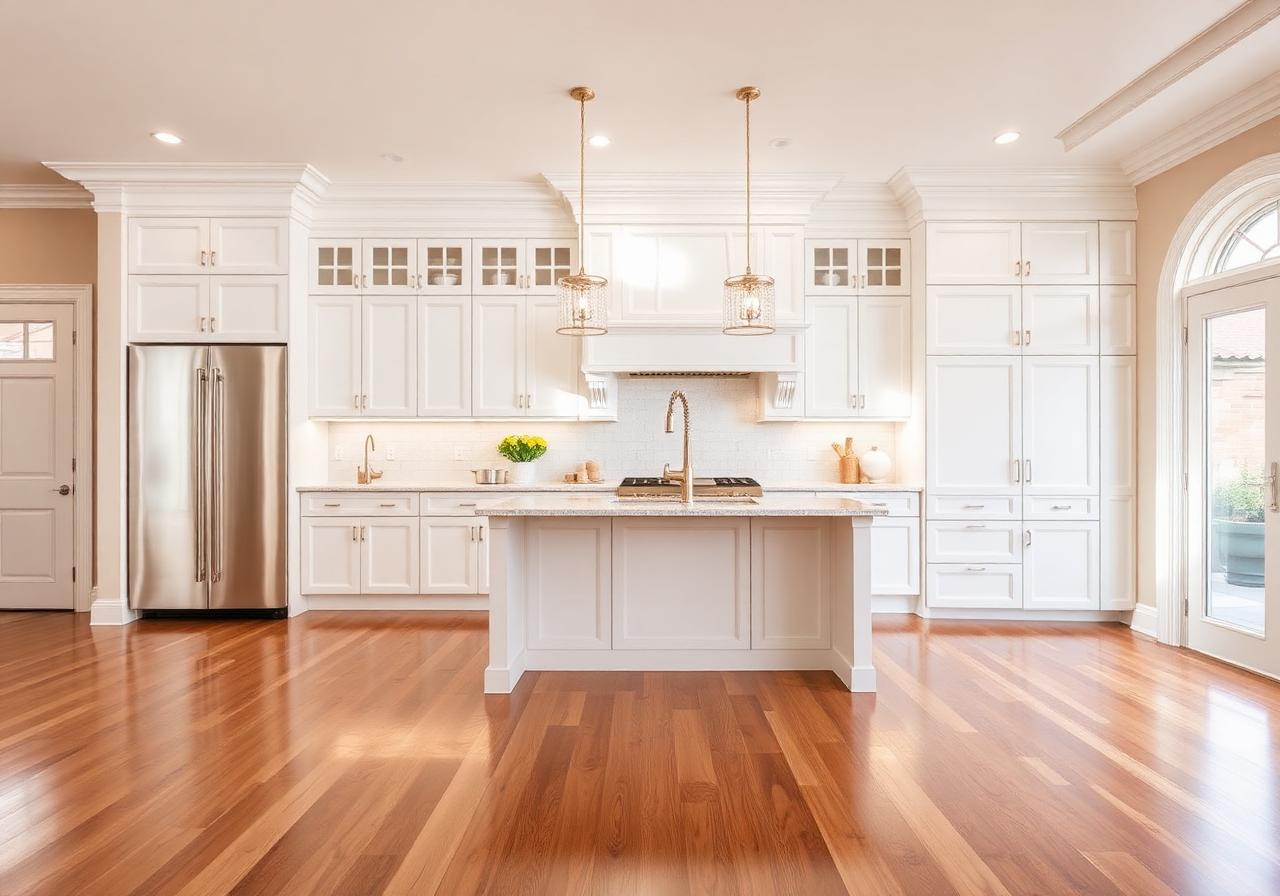
Kitchen Water Damage Restoration in Boca Raton, FL — after restorationAfter

Kitchen Water Damage Restoration

Boca Raton, FL

Full kitchen restoration after a supply-line failure — hardwood floors dried in place and cabinetry refinished to a near-pre-loss standard.
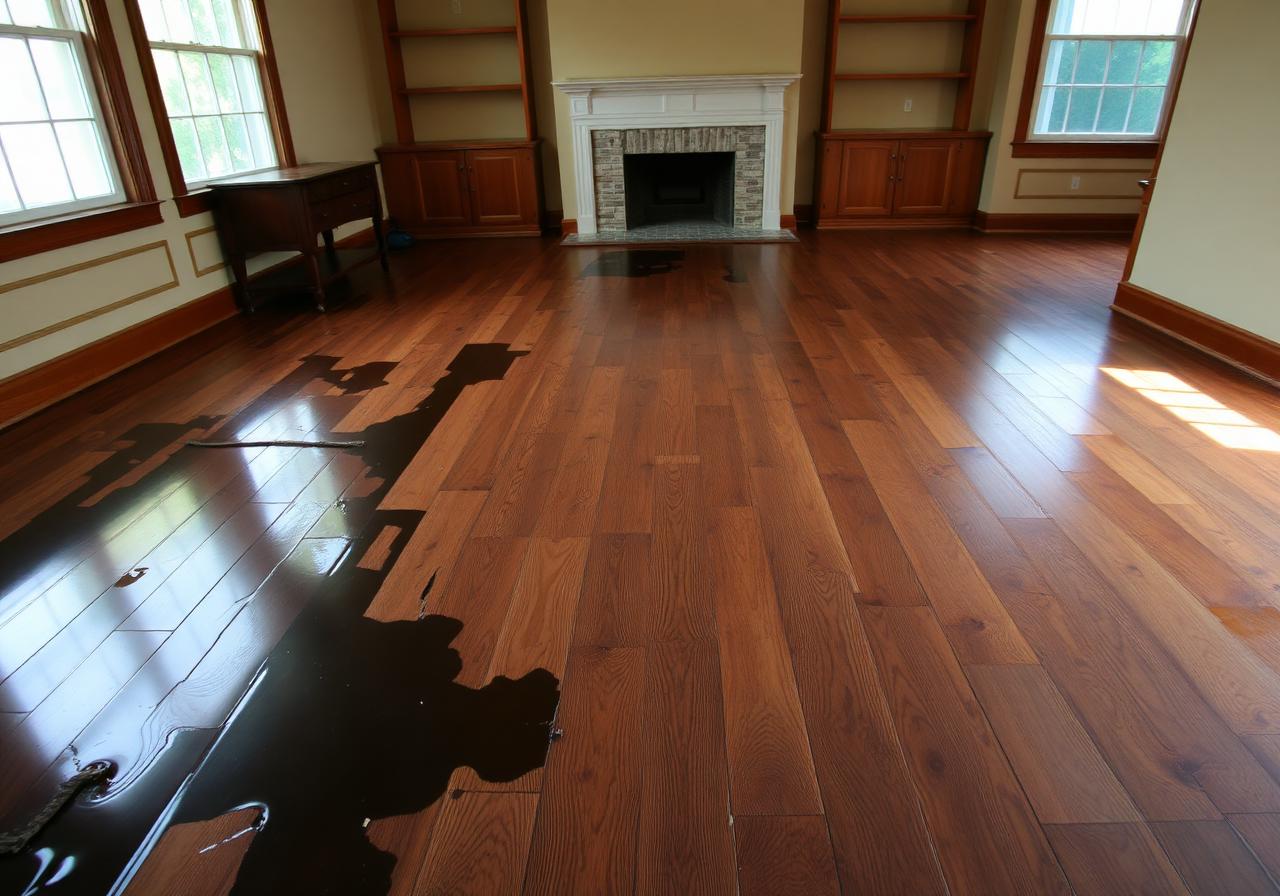
Hardwood Floor Water Damage in Delray Beach, FL — before restorationBefore
Hardwood Floor Water Damage in Delray Beach, FL — after restorationAfter

Hardwood Floor Water Damage

Delray Beach, FL

Cupped hardwood planks saved with specialty drying mats and controlled LGR dehumidification — a full replacement was avoided in this project.
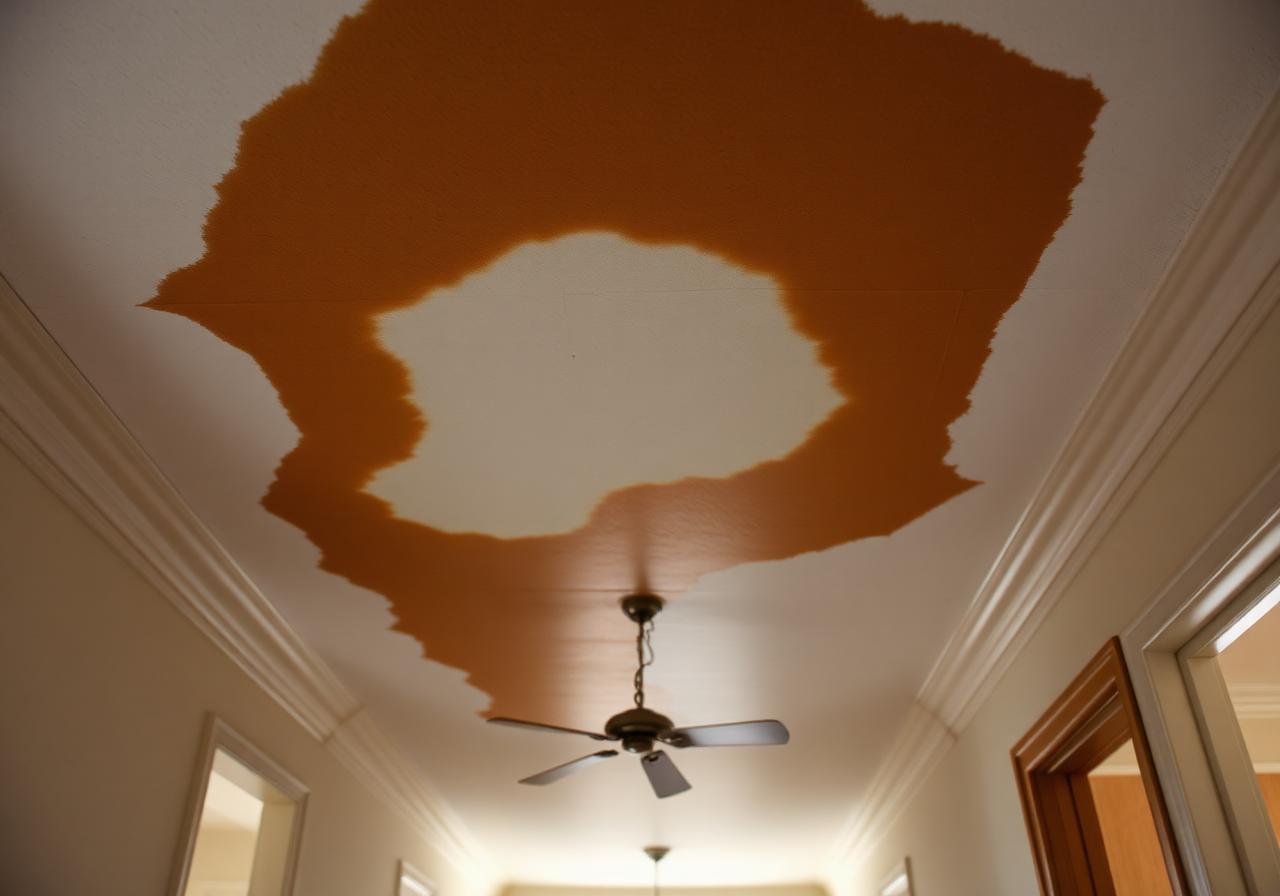
Ceiling Leak Restoration in Boynton Beach, FL — before restorationBefore
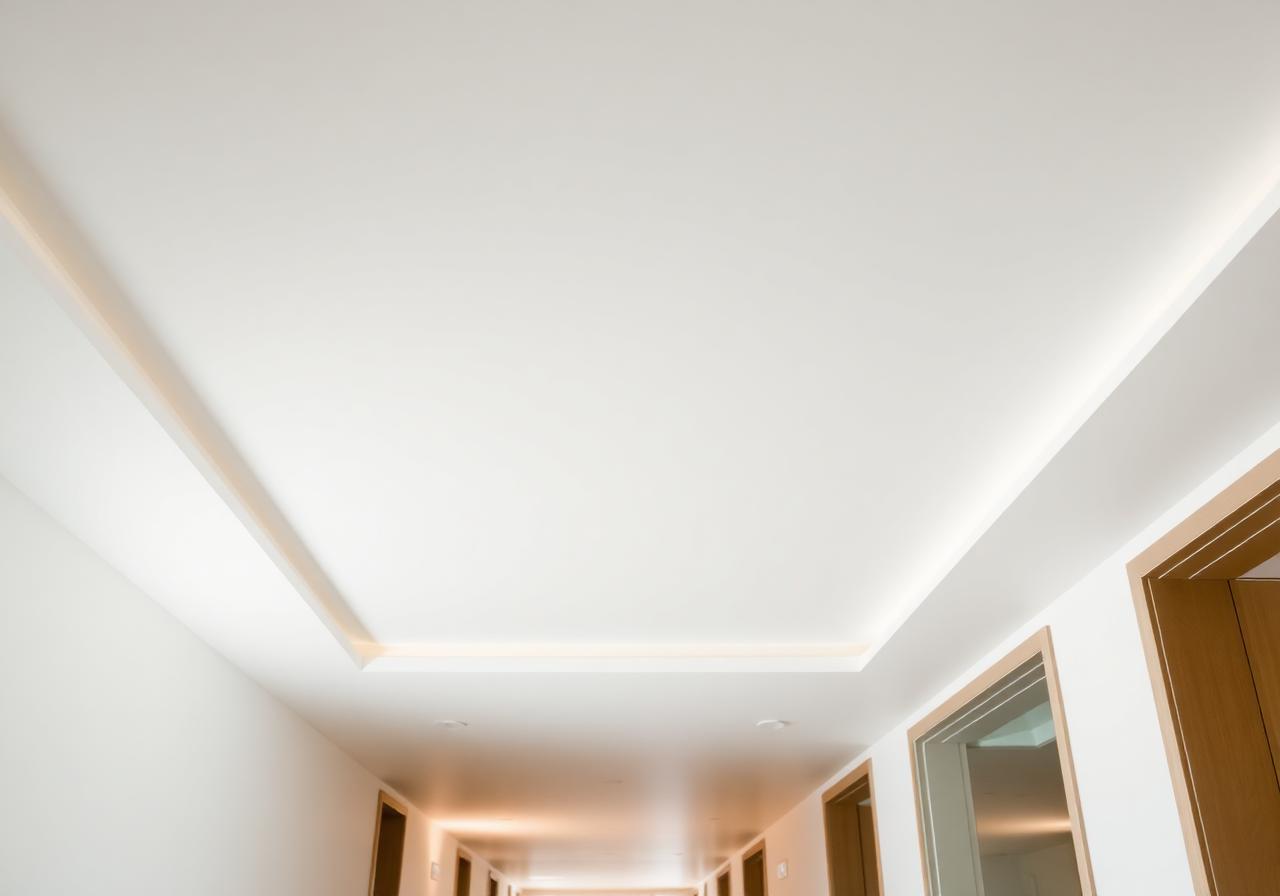
Ceiling Leak Restoration in Boynton Beach, FL — after restorationAfter

Ceiling Leak Restoration

Boynton Beach, FL

Roof leak dried inside the ceiling cavity, drywall patched, texture matched, and repainted so the finish blends seamlessly.

Verified Reviews

What South Florida Homeowners Say

Real feedback from Palm Beach and Broward County homeowners we've assisted. Individual experiences vary based on the specific conditions of each property, materials, and scope of work.

Identity confirmed Published with permission Project on file
Verified
A supply line burst overnight and the WaterGuard crew arrived quickly. Calm, professional, and their moisture logs and daily photos made the insurance claim process much easier for us.

Project on file

Overnight supply-line burst — kitchen & living room

Jennifer M.

Boca Raton, FL

Verified Google Review · March 2025

Verified
From extraction to reconstruction it was one team and one point of contact. Communication was excellent and the hardwoods were saved. Very happy with how the kitchen came out.

Project on file

Second-floor bathroom leak — hardwood floor drying

David R.

Delray Beach, FL

Verified Google Review · January 2025

Verified
They found hidden moisture two other companies missed. Every day we got readings and updates. Truly professional service — I would recommend them to a neighbor.

Project on file

Hidden moisture behind drywall — thermal imaging survey

Sofia L.

Coral Springs, FL

Verified homeowner referral · November 2024

Reviews are shared by homeowners who consented to publication. Names may be shortened to protect privacy. Testimonials describe individual experiences and are not a promise, prediction, or guarantee of any specific outcome, timeline, or insurance result on your project.

Why WaterGuard

Why Homeowners Choose WaterGuard

Six specific reasons Boca Raton and South Florida property owners call us — and refer their neighbors.

24/7 Emergency Response

A live team answers the phone day or night. When it matters, a technician is dispatched promptly across Boca Raton and South Florida.

Insurance Claim Assistance

Photo documentation, moisture logs, and adjuster-ready scopes of work. We provide the paper trail your claim needs to move.

Advanced Moisture Detection

Thermal cameras, pin and pinless meters, and structured moisture mapping locate hidden water before it becomes a mold problem.

Daily Moisture Monitoring

Readings are recorded every day of drying. Equipment is adjusted based on data, and drying is only called complete when materials verify dry.

Full Reconstruction

Drywall, flooring, cabinetry, paint, and finish work — completed in-house so nothing is handed off to a stranger mid-project.

One Company From Start to Finish

Emergency response, drying, mold prevention, and reconstruction under one licensed local roof. One point of contact, one accountable team.

Equipment

Professional Restoration Equipment

Restoration is measured in moisture readings, not effort. We deploy the same commercial-grade LGR dehumidifiers, high-velocity air movers, HEPA air scrubbers, and thermal-imaging tools used by top national restoration firms — sized to your specific loss.

LGR Dehumidifiers

Commercial low-grain refrigerant units that pull moisture out of the air and materials in South Florida humidity.

High-Velocity Air Movers

Positioned around the affected area to accelerate evaporation from walls, subfloors, and cabinetry.

HEPA Air Scrubbers

Multi-stage HEPA filtration that captures airborne particulate during drying and containment.

Moisture Meters

Pin and pinless meters that verify moisture levels in drywall, wood, and concrete before equipment is removed.

Thermal Imaging

Infrared cameras that reveal hidden moisture behind walls and above ceilings without invasive demolition.

Commercial Extractors

Truck-mounted and portable extractors sized to remove standing water quickly from tile, hardwood, and carpet.
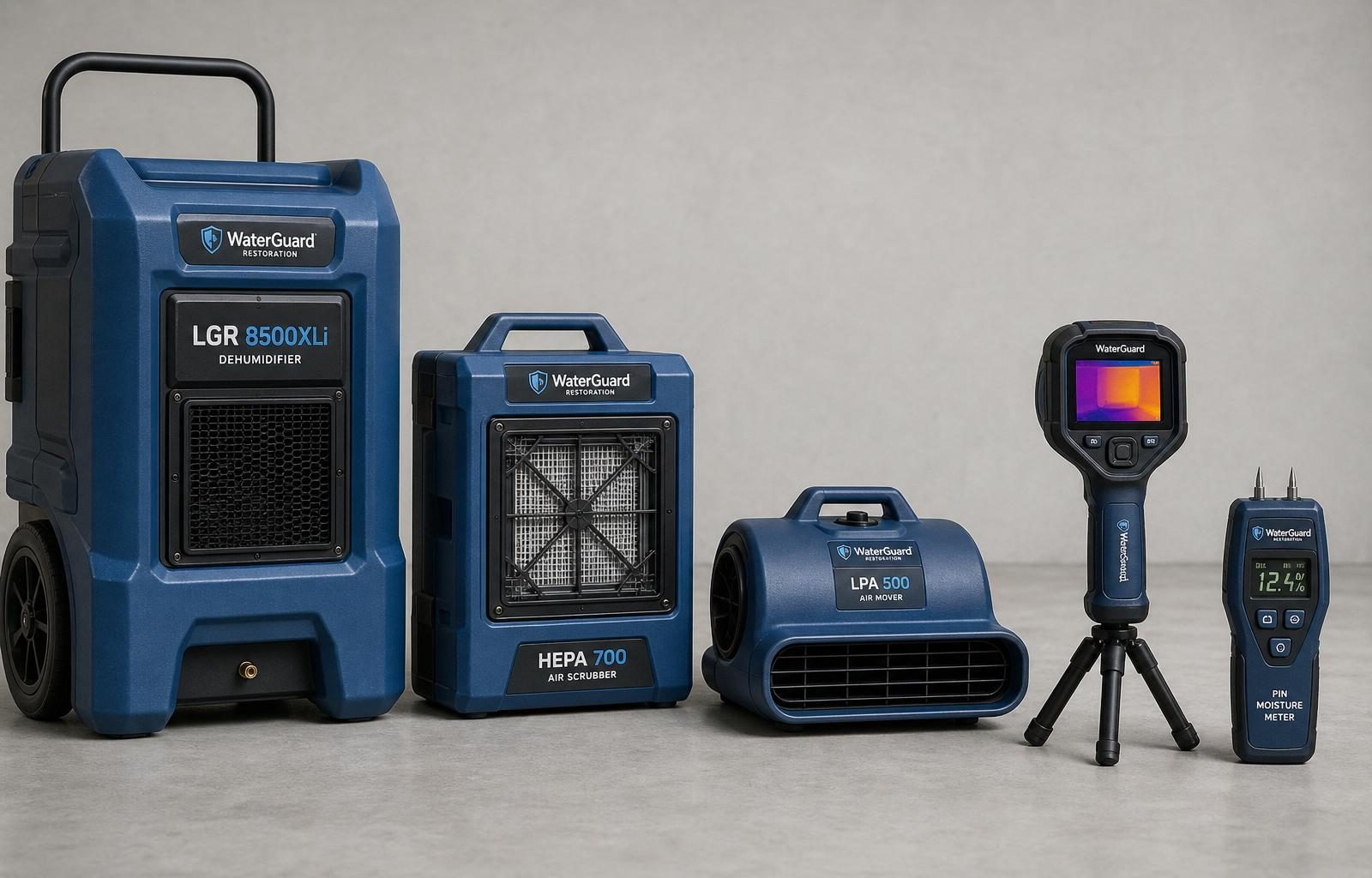
Professional water damage restoration equipment: LGR dehumidifier, air mover, HEPA air scrubber, moisture meter, and thermal imaging camera

Equipment is placed based on cubic footage, materials, and moisture readings — not a fixed template — and monitored daily until materials verify dry.

Adjuster-Ready Reporting

A written scope, moisture logs, and photo documentation — packaged for your carrier.

Works With Most Major Insurance Companies

Documentation That Supports Your Insurance Claim

We prepare adjuster-ready documentation that helps streamline your insurance claim.

WaterGuard builds a complete record of your loss — photos, moisture logs, scope of work — and communicates directly with your carrier when it helps move the claim.

  • Insurance Documentation
  • Daily Moisture Logs
  • Photo Reports
  • Communication with Adjuster
  • Written Scope of Work
  • Claim Support
24/7 Emergency Response Florida Licensed & Insured Serving South Florida Insurance Claims Assistance

Coverage varies by policy. We do not guarantee claim outcomes. We provide thorough documentation that supports your conversation with your insurer.

Warning Signs

Early Signs of Water Damage in Your Home

Catching water damage early is one of the largest factors in reducing repair scope and cost. If you notice any of these signs, call for a professional moisture inspection.

Water Stains

Yellow or brown rings on ceilings and walls typically indicate water has already migrated behind the surface.

Musty Odor

A persistent damp or musty smell — especially in closets, bathrooms, or near AC handlers — is a strong early sign of hidden moisture.

Warped Flooring

Cupping, crowning, or lifting boards indicate that hardwood or engineered flooring has absorbed water from below.

Peeling Paint

Paint bubbling, peeling, or blistering usually means moisture is trapped between the drywall and the finish coat.

Soft Drywall

Drywall that feels spongy, sags, or crumbles at the baseboard has been saturated long enough to compromise its structure.

Hidden Moisture

Cold spots on walls, condensation on windows, and unexplained high humidity often point to moisture you cannot yet see.

FAQ

Water Damage Restoration Questions

Detailed answers to the questions Boca Raton homeowners ask most — including timing, cost, insurance, mold, and what really gets saved.

How fast do you respond to a water damage emergency in Boca Raton?

WaterGuard operates a 24/7 emergency response line for Boca Raton, Delray Beach, Boynton Beach, Deerfield Beach, Parkland, Coral Springs, West Palm Beach, and every community in between. In most cases a technician is dispatched within minutes of your call, and arrival times vary based on your address, traffic, and the time of day. Overnight, weekend, and holiday calls are handled by the same in-house team, not by a national call center that hands the job off. When you call, we walk you through steps you can safely take before we arrive — shutting off water at the main valve, moving valuables away from the affected area, and staying clear of standing water near outlets and electrical panels. Fast response is one of the largest factors in reducing the final scope of a water damage restoration project, because — depending on time, environmental conditions, contamination, and affected materials — Category 1 water may deteriorate into a more contaminated category if not addressed promptly. That is why we staff after-hours dispatch year-round and pre-stage equipment throughout Palm Beach and Broward County so a fully-loaded truck is generally close to your address.

How long does professional structural drying take?

Most residential drying projects take three to five days from the day equipment is placed to the day the last reading verifies dry. The exact timeline depends on the volume of water involved, the materials affected (drywall, hardwood, engineered flooring, concrete slab, cabinetry, insulation), the ambient humidity in the home, whether the property is occupied, and how quickly water extraction began after the loss. We monitor moisture readings every day the equipment is on-site and only remove air movers and dehumidifiers once materials have returned to a normal, verified moisture level in line with drying practices informed by applicable IICRC S500 guidance. Pulling equipment early — before the numbers say dry — is one of the most common causes of mold problems weeks later and one of the reasons homeowners end up hiring a second restoration company. If your loss involves hardwood floors, cabinetry, or a large square footage, drying can extend to seven days or more, and we will explain that timeline before work begins. See our full structural drying page for the drying standard we work to.

Will my homeowners insurance cover water damage restoration?

Many standard homeowners policies written in Florida cover sudden and accidental water damage — burst supply lines, appliance failures, roof leaks caused by covered storm events, water heater ruptures, and similar unexpected incidents — subject to the terms, conditions, and exclusions of your specific policy. Long-term seepage, gradual leaks that were visible for weeks or months, and flood water from rising surface water are typically excluded from a standard policy and may require separate flood insurance through the National Flood Insurance Program or a private flood carrier. WaterGuard provides the documentation your carrier needs to evaluate the claim professionally: dated inspection photos, moisture meter readings by area and material, affected-area diagrams, equipment placement logs, daily drying progress notes, and a written scope of work. We do not guarantee claim approval — no restoration contractor can — but a clear, complete file helps support your claim and can reduce the back-and-forth with your adjuster. Our water damage insurance guide walks through what many Florida policies commonly include, what they often exclude, and the questions to ask your agent before a loss happens.

What does water damage restoration cost in South Florida?

Cost depends on four factors: the size of the affected area in square feet, the class and category of the water (clean, gray, or contaminated), how many days of drying the materials require, and how much reconstruction is needed after drying is complete. A small isolated leak under a bathroom vanity might resolve with two to three days of controlled drying and minimal reconstruction — typically a few thousand dollars. A whole-floor loss with soaked cabinetry, engineered flooring, and drywall throughout the affected rooms can involve extended drying followed by a full rebuild that runs well into five figures. Category 3 water, sewage backups, and flood water typically cost more because of contaminated-material removal and additional PPE. Rather than quote a range that will not fit your situation, we provide a written scope of work after inspection, share it directly with your insurer when helpful, and only invoice for work that is actually performed. Homeowners who catch damage early and call within the first hours typically see lower total project costs.

Can water damage really lead to mold in 24 to 48 hours?

Yes — moisture left untreated can increase the risk of mold growth, depending on the material, humidity, temperature, and airflow around the wet material. In South Florida, mold can begin to develop within 24 to 48 hours under favorable conditions, but that is not guaranteed. Drywall paper, wood framing, cabinetry, carpet pad, and insulation are especially vulnerable because they hold moisture in an organic substrate at a temperature that supports rapid microbial growth. Professional water extraction and controlled drying — with LGR dehumidifiers and commercial air movers, not household box fans — is a highly effective way to reduce mold risk after a water loss. Homeowners who wait hoping the area will dry on its own are often the ones who need a second phase of mold remediation. If visible mold is already present, we contain the affected area, run HEPA air scrubbers, remove contaminated materials safely, and take clearance readings before reconstruction begins. See mold remediation for the containment protocol we follow.

Can my hardwood floors be saved after water damage?

Often yes, when drying begins early and the right equipment is used. Both engineered and solid hardwood floors can respond well to specialty drying mats combined with LGR dehumidification, which pull moisture out of the wood at a controlled rate rather than surface-drying the finish while the underside stays wet. Floors that have cupped (edges higher than the center) may relax back to flat over several days of controlled drying; floors that have crowned (center higher than edges) or delaminated at the seams usually need partial replacement rather than drying-in-place. A professional moisture assessment — not appearance alone — is what determines whether your floor is a candidate for drying or partial rebuild, because a floor that looks fine on top can still be saturated underneath. Waiting before starting drying can significantly reduce the chance of saving hardwood, especially in South Florida's humidity. If replacement is required, our in-house reconstruction team handles removal, subfloor drying, and installation of matching or comparable flooring so you deal with one company through the entire process.

Can water-damaged cabinets be restored?

It depends on how the cabinets are built and how long they were exposed to water. Solid wood cabinet boxes with sealed finishes often dry successfully if we reach them early, using targeted drying under the toe kicks, inside the cabinet boxes, and behind the units. Particle board and MDF cabinets — extremely common in modern kitchens and vanities — swell, delaminate, and lose structural integrity once saturated and typically require replacement of the affected sections rather than drying in place. Cabinets that were installed over a wet subfloor usually need to be pulled to allow the substrate underneath to dry properly, because trapping moisture under a cabinet base is a direct path to mold. We evaluate each run of cabinetry individually rather than replacing everything by default, and where partial replacement is needed our reconstruction team matches finishes as closely as possible or coordinates with your cabinet manufacturer. See reconstruction after water damage for how the rebuild phase is handled.

What should I do about a water-stained ceiling?

A stained ceiling typically indicates water is currently — or was recently — above it. Even after the leak stops, insulation and framing above the ceiling can hold moisture for weeks, and painting over the stain without drying the space above it traps the moisture, ruins the new paint, and creates conditions for mold to develop in the ceiling cavity. WaterGuard scans the ceiling assembly with thermal imaging and moisture meters, determines whether the cavity is still wet, and dries it before any drywall is patched or repainted. If the moisture is coming from an active roof leak, an AC condensate line, a supply line in the attic, or a second-story bathroom, we help identify the source or coordinate with a roofer or plumber. Once the source is stopped and the assembly is dry, our reconstruction team handles drywall repair, texture match, and paint so the finished ceiling blends with the rest of the room. The inspection step matters even for what looks like a small isolated stain — small ceiling stains often reveal much larger wet areas hidden by the drywall.

What is the difference between water mitigation and water damage restoration?

Water mitigation is the emergency phase of the project: stopping the source of the water, extracting standing water, setting up containment where needed, and getting drying equipment on-site to prevent additional damage from spreading. It is time-sensitive work measured in hours, not days, and it is what most insurance policies specifically require immediately after a loss. Water damage restoration is the broader process that includes mitigation plus the repair work that returns the property to a pre-loss standard — drywall removal and reinstall, baseboard and trim, flooring replacement, paint, cabinetry, and finish carpentry. Many restoration companies only handle one side of the project and hand the other off to a separate contractor, which adds cost, delays, and communication problems for the homeowner. WaterGuard handles both mitigation and restoration under one roof with in-house crews, so your project stays with one team from mitigation through reconstruction. That single-team model is one of the main reasons Boca Raton and Delray Beach homeowners choose us for larger losses.

Do you handle commercial water damage as well as residential?

Yes. WaterGuard restores single-family homes, luxury residences, condominiums, and multi-family properties, as well as offices, retail spaces, restaurants, medical offices, dental practices, and hotels across South Florida. Commercial projects add specific requirements that residential projects usually do not: scheduling around business operating hours to keep the tenant open where possible, coordination with property managers and HOAs, documentation that meets commercial insurance carrier standards, and often after-hours work to minimize interruption. All of that is built into how we run those jobs. Equipment is scaled to the size of the loss, from a small tenant space handled overnight to a full floor of a mid-rise building running multiple air-mover banks and industrial LGR units for days. For condominium losses we routinely coordinate with the HOA, adjacent units, and building management to control the affected area and prevent damage from spreading between units — a very common issue in high-rise Boca Raton and West Palm Beach buildings. Contact us to discuss your specific commercial or multi-family scope.

Do I need to leave my home during drying?

In most cases, no — the majority of drying projects can be completed with the family in place. Drying equipment is concentrated in the affected rooms, and the rest of the home usually remains fully livable throughout the process. Air movers and dehumidifiers do produce a steady mechanical noise and warm, dry air, and the affected area is often sealed with plastic sheeting to speed drying and contain dust, which some households find inconvenient at bedtime. If the affected footprint is very large, if contamination is involved (Category 3 water, sewage, or storm water intrusion), or if the household includes anyone with asthma, respiratory sensitivities, young infants, or elderly family members, temporary relocation may be worth considering — and many insurance policies include Additional Living Expenses coverage that may help pay for a hotel while the home is being dried. We will explain the tradeoffs clearly rather than making the choice for you, and the decision is yours based on comfort and your household's specific needs.

What causes most water damage emergencies in South Florida homes?

The recurring patterns in South Florida are consistent year over year: AC condensate line backups (extremely common in the summer months), water heater failures, supply-line failures under sinks and behind toilets, dishwasher and washing machine hose failures, refrigerator ice-maker line leaks, roof leaks during storm season, and slab or wall-cavity leaks in older construction. Coastal humidity, salt air, and the age of many South Florida homes mean small leaks turn into large losses more quickly here than in most parts of the country. Two habits help homeowners avoid the worst outcomes: knowing exactly where the main water shut-off valve is located and being able to close it without a tool, and having AC condensate lines flushed and inspected annually as part of your HVAC service. Adding an automatic water shut-off device on your main line and leak sensors under sinks, behind toilets, and at the water heater is a small investment that has saved many of our clients from a five-figure loss. See our flood cleanup page for storm-driven water intrusion specifically.

What is your emergency water extraction process?

Emergency water extraction starts the moment you call: we gather the essential details, dispatch the closest crew, and stay on the line to help you take safe first steps such as shutting the water off at the main and moving valuables. On arrival, the technician confirms the water source is stopped, performs a rapid moisture and safety survey (electrical hazards, structural concerns, contamination), and begins extraction with commercial equipment sized to the volume of water present. Truck-mounted and portable extractors remove water from tile, hardwood, carpet, and pad far faster and more thoroughly than any wet-vac or shop vac, and we extract from wall cavities and under cabinetry wherever access is possible. Extraction runs until standing water is removed from all accessible areas, at which point drying equipment is placed, containment is set up if needed, and daily moisture monitoring begins. This entire emergency phase — from dispatch to fans running — is typically underway within the first few hours of your initial call, and it is one of the most important parts of protecting your flooring, cabinetry, and subfloor from unrecoverable damage.

Do you provide 24/7 emergency service on weekends and holidays?

Yes. Water damage does not respect business hours, so neither do we. WaterGuard dispatches around the clock every day of the year, including weekends, holidays, and overnight — the same emergency response line, the same in-house team, and the same equipment fleet. If a supply line fails at 2 a.m. on a holiday weekend, calling us right then rather than waiting until Monday morning can meaningfully reduce the final scope of the restoration project, because the hours between the loss and the start of extraction often influence how much of your flooring, cabinetry, and drywall can be preserved. There is no premium billed for after-hours dispatch and no separate line to call for emergencies versus normal business inquiries — one number reaches a live dispatcher at every hour of the day, and a technician is usually on the way within minutes for most Boca Raton, Delray Beach, and Boynton Beach addresses. Call us the moment you discover the loss, even if you are not yet sure of the scope.

Do you work with all major insurance companies?

WaterGuard works with homeowners whose claims involve many major insurance carriers active in Florida, including Citizens, State Farm, Universal, Tower Hill, Progressive, Allstate, USAA, and specialty commercial carriers commonly used by condominium associations and property managers throughout Palm Beach and Broward County. We provide the documentation your adjuster expects — dated photos, moisture readings, affected-area diagrams, equipment logs, daily notes, and a written scope of work — and we communicate directly with the adjuster when that helps move the claim forward. Importantly, WaterGuard remains an independent restoration contractor and not a preferred vendor, approved vendor, or affiliate of any insurance company, which means our scope reflects what the property actually needs rather than what a vendor program dictates. You review and approve the scope before work begins. When appropriate and permitted by the claim process, we can provide invoices and supporting documentation to the insurance carrier. Any deductible and homeowner-responsible amounts are explained transparently before billing. In many Florida insurance claims, homeowners are generally free to choose their preferred restoration contractor, subject to the terms, conditions, and limitations of their insurance policy — and we are happy to walk you through that decision. Coverage, reimbursement, and contractor selection are always governed by your specific policy terms.

Important Information

Every water loss is different. The information on this page is for general guidance and does not constitute insurance, legal, or restoration advice. Response times, drying durations, and outcomes depend on the specific conditions of your property, materials, weather, and the scope of damage. Insurance coverage, reimbursement, and your right to choose a contractor are governed by your individual policy terms. WaterGuard recommends reviewing your policy and contacting your carrier directly for coverage details. A written scope of work will be provided before any work begins.

Service Area

Water Damage Restoration Across South Florida

WaterGuard & Mold Restoration Inc. provides emergency water damage restoration, structural drying, mold prevention, and full reconstruction throughout Palm Beach and Broward County. Local dispatch means shorter arrival times — and shorter drying schedules.

NSJupiterWest Palm BeachBoynton BeachDelray BeachHighland BeachBoca RatonDeerfield BeachParklandPompano BeachFort LauderdaleHollywoodMiramarHialeahMiami-DadeAtlanticOceanSouth Florida

South Florida homes face a specific set of water damage risks: aging AC condensate lines, wind-driven storm intrusion during hurricane season, high year-round humidity that accelerates mold growth, and slab construction that traps moisture beneath tile and hardwood.

Local dispatch and an in-house reconstruction crew mean arrival is typically measured in minutes — and your project doesn't get handed off to a second company after drying.

  • Licensed & Insured
  • Residential & Commercial
  • 24/7 Emergency Response
  • Insurance Claim Assistance
  • Industry-Recognized Drying Standards
Emergency Response · 24/7

Water Damage Doesn't Wait. Neither Should You.

Fast response can help limit the extent of the damage. Talk to a WaterGuard technician now — a local team is standing by across Boca Raton and South Florida.

Licensed & Insured Residential Commercial Industry-Recognized Drying Standards

Your Home Restored. Your Life Back to Normal.

From emergency response to the final walkthrough, WaterGuard is with you every step of the way.
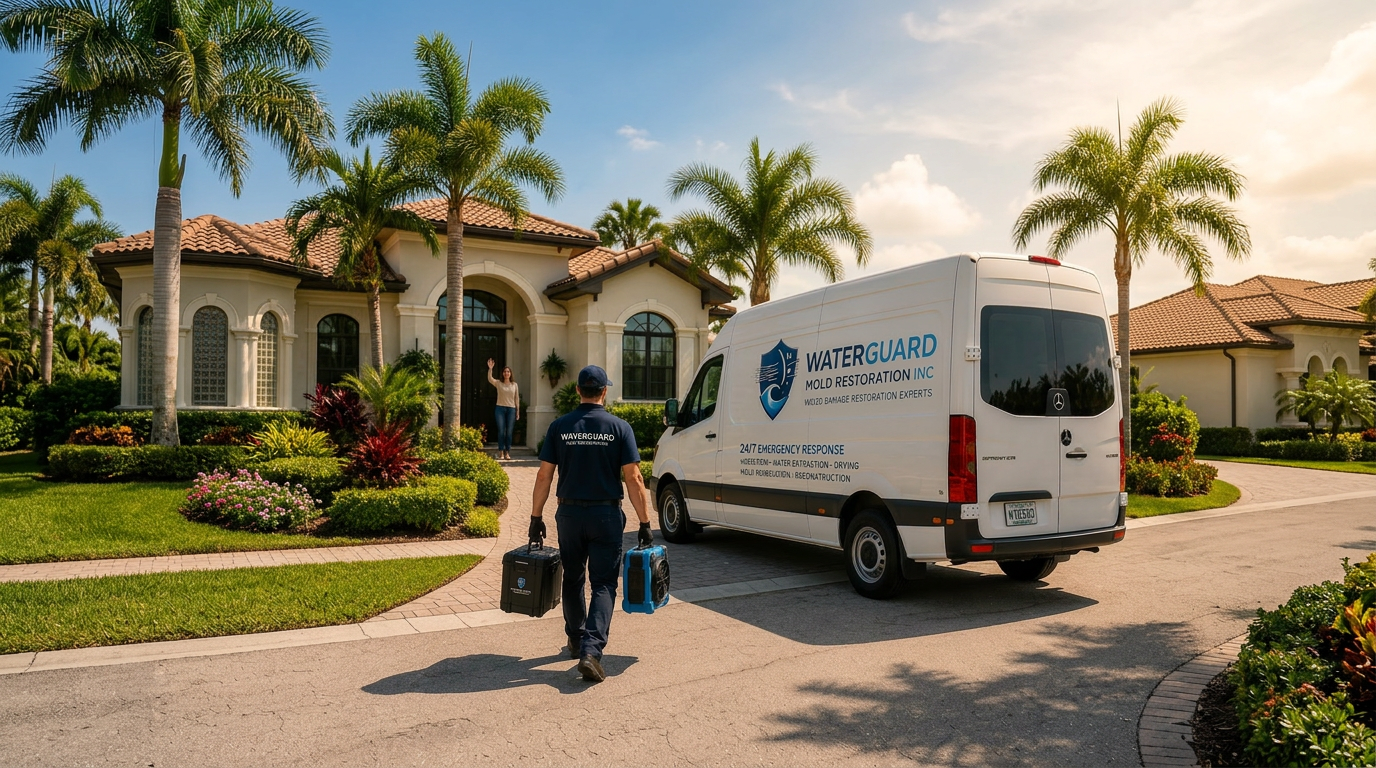
WaterGuard technician and branded van leaving a restored luxury Florida home after a completed water damage restoration project